Skip to content
Gardening is a journey of trial, error, and discovery—and one of the biggest frustrations I’ve faced is dealing with pests. If you’ve ever walked out to check your plants and discovered chewed-up leaves or disappearing crops overnight, then you know exactly what I mean.
In this post, I’m sharing my personal experience with creating a natural pest repellant for garden plants—a homemade bug spray that I tested on my own zucchini, potato, and sweet potato plants. I’ll walk you through my recipe, how I applied it, what results I saw, and tips for making it work in your own garden.
Whether you’re growing in containers, raised beds, or a backyard plot, natural pest control for garden health is possible—without harsh chemicals.
Why I Needed a Natural Pest Repellant for My Garden
Let me take you back to when I discovered the problem. My cabbages had been devoured—completely destroyed by something overnight. Not a nibble… but whole leaves missing. I’d also spotted beetles crawling in the containers with my zucchini plants. As a new gardener, I panicked.
But I didn’t want to resort to store-bought sprays filled with synthetic chemicals. I grow food because I want a healthier life. It didn’t make sense to coat my vegetables in something toxic.
So, I started researching. I needed a natural pest control for vegetable garden plants—something that would repel insects but keep my crops safe to eat.
The Bug Spray Recipe for Plants That Actually Worked
After digging through blogs, YouTube videos, and forums, I found a few common ingredients that seemed promising: red onion, cayenne pepper, and Castile soap. Here’s the exact recipe I used:
DIY Natural Pest Repellant Spray
Ingredients:
- 1 medium red onion (chopped)
- 1 tsp cayenne pepper
- 4 cups water
- 1 tsp unscented Castile soap (optional)
Instructions:
- Blend the onion, cayenne, and water together.
- Let the mixture sit (preferably in the fridge) for several hours—or overnight for maximum potency.
- Strain it through cheesecloth or a fine strainer to remove solids.
- Add the optional Castile soap and stir well.
- Pour into a spray bottle and use within 5–7 days.
This mix is designed to irritate pests and repel them naturally, not kill them. The sulfur in onions deters insects and fungal spores, while the heat from cayenne pepper makes leaves taste unbearable to chewing pests.
Patch Test First—Always!
This was my first time using a homemade natural pest spray, so I played it safe. I tested the solution on one leaf per plant before spraying the entire thing.
Why? Because even natural ingredients can cause leaf burn if they’re too strong or applied at the wrong time.
After spraying:
- I waited 24 hours
- Checked the leaf in the morning
- No damage!
That told me it was safe to use on the rest of the plant.
When to Apply the Spray
Timing is everything when it comes to any natural pest repellant for garden use. Always spray:
- Early in the morning before the sun is strong
- OR in the evening just before sunset
Spraying in full sun can cause leaf burn, especially with spicy ingredients like cayenne pepper. Rain will wash away the spray, so reapply every 5 to 7 days or after any rainfall.
The Results on My Garden Plants
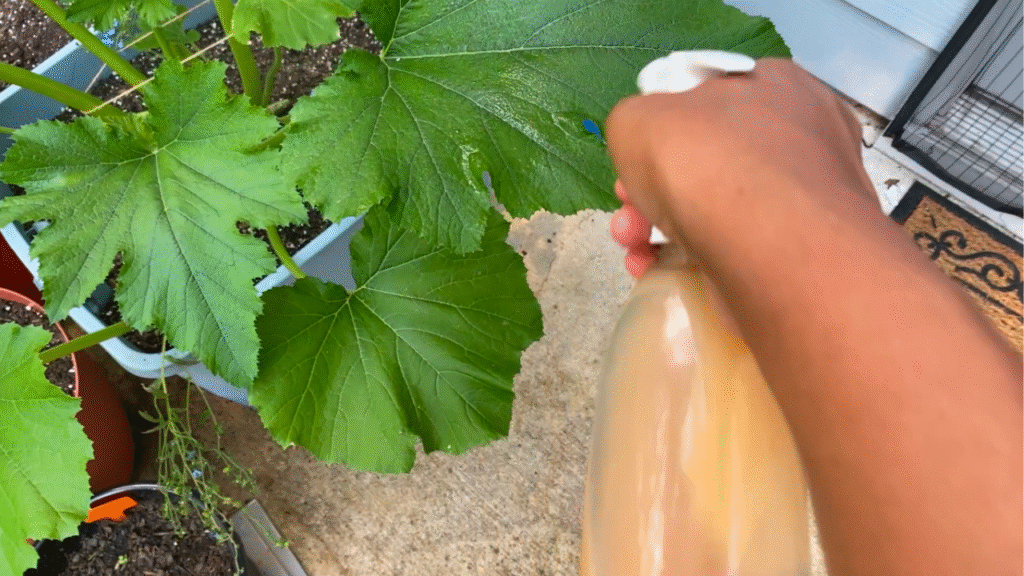
After my successful patch test, I sprayed:
- My sweet potato vines
- Zucchini leaves
- Organic red potato plants
And guess what? I noticed an immediate difference. While I can’t say it eliminated every single bug overnight, I did see a major reduction in beetle activity, and the leaves that were previously under attack stopped getting worse.
The mixture has a strong, spicy, garlicky scent that pests hate—and it sticks well to leaves (especially with Castile soap added).
It was a win.
Why Natural Pest Control for Garden Plants Matters
So many beginner gardeners quit because pests destroy their hard work. But you don’t have to give up or resort to chemicals.
Here’s why natural pest control for garden vegetables is worth it:
- Protects pollinators (like bees and butterflies)
- Keeps your food safe to eat
- Reduces environmental harm
- Encourages beneficial insects to stick around
And best of all? It’s affordable. Most of the ingredients are already in your kitchen.
Tools You’ll Need
To make and apply your spray easily:
- Blender
- Fine mesh strainer or cheesecloth
- Large bowl
- Funnel
- Spray bottle
- Gloves (trust me—you don’t want cayenne on your hands)
Also: don’t forget to label your bottle, especially if you have kids or pets.
My Gardening Secret Weapon: “Sow What? Monthly Grow Guide Bundle”
Dealing with pests is only one part of gardening. The other part? Knowing what to plant and when.
That’s why I created the Sow What? Monthly Grow Guide Bundle. It’s perfect for beginners who want a simple plan for each month, based on their USDA zone.
Here’s what’s inside:
- Monthly planting chart by zone (what to start indoors and direct sow)
- Fertilizing tracker & cheat sheet
- Container size + soil mix guide for small space gardeners
- Beginner crop cheat sheet
- Printable journal page to track progress
- Bonus companion planting guide
I designed it because I was tired of feeling behind and confused. Now, I just check the current month and know exactly what to do—even when dealing with bugs!
Grab your copy here and grow with confidence.

A Few Tips for Safer Spraying
If you’re making your own natural pest repellant for plants, here are some pro tips to make sure your efforts pay off:
1. Strain Well
Unstrained particles can clog your spray nozzle—especially cayenne flakes.
2. Use Unscented Soap
Essential oils and scents can harm plants or attract pests. Stick to plain Castile soap if you use it at all.
3. Wear Gloves
Cayenne burns. Onion lingers. Protect your skin, and never touch your eyes after handling the mix!
4. Label and Store in Fridge
Your solution will last about a week. Keep it cold and clearly labeled.
What Pests Does This Spray Repel?
This DIY spray can help deter:
- Aphids
- Beetles
- Caterpillars
- Spider mites
- Whiteflies
The onion sulfur and cayenne combo masks the plant’s natural scent, making it unappealing to pests. It won’t kill bugs—it simply makes your plants an unpleasant place to hang out.
When Not to Use This Spray
As much as I love this bug spray recipe for plants, it’s not always the answer.
Avoid spraying:
- On seedlings under 2 weeks old
- In full sun
- On hot days (above 85°F)
- Near plants that are already stressed or wilting
Use common sense, monitor the plant’s reaction, and adjust the strength of your mix if needed.
Final Thoughts: Gardening Is About Learning
This experience taught me a lot—not just about pest control, but about paying attention to my plants, trusting my instincts, and trying natural solutions before reaching for store-bought sprays.
I’m so glad I tested the natural pest repellant for garden use first. It worked better than I expected, and it gave me peace of mind knowing I wasn’t adding anything harmful to my food.
Want Help Knowing What to Grow and When?
If you’ve ever stood in your garden wondering, “Is it too late to plant this?” or “What should I be starting now?”—you’re not alone.
That’s why I made the Sow What? Monthly Grow Guide Bundle. It walks you through what to plant each month, how to track your feedings, and how to garden confidently in a small space.
You don’t have to Google every single step. I’ve done the research, made the mistakes, and packaged the solutions—all for you.
Click here to grab your bundle and make gardening simpler, season by season.
Watch the video version of the article on my Youtube channel!