Skip to content
My Unexpected Marigold Blessing
If you had told me a year ago that marigolds would become one of the most meaningful plants in my garden, I probably would have smiled politely and kept walking. Back then, gardening was a curiosity, not a calling. I thought you planted seeds, watched them sprout, and that was it. What I didn’t realize is that gardening would become one of the richest spiritual classrooms of my life.
This story begins with a handful of marigold seeds—Cracker Jack African marigolds, to be exact. I planted them with modest expectations. In my mind, I pictured one or two cheerful blooms that might brighten my small garden space. But what unfolded went far beyond flowers. These marigolds became a living lesson in patience, trust, resilience, and the way God provides for us in both expected and unexpected ways.
Meet the Cracker Jack Marigolds
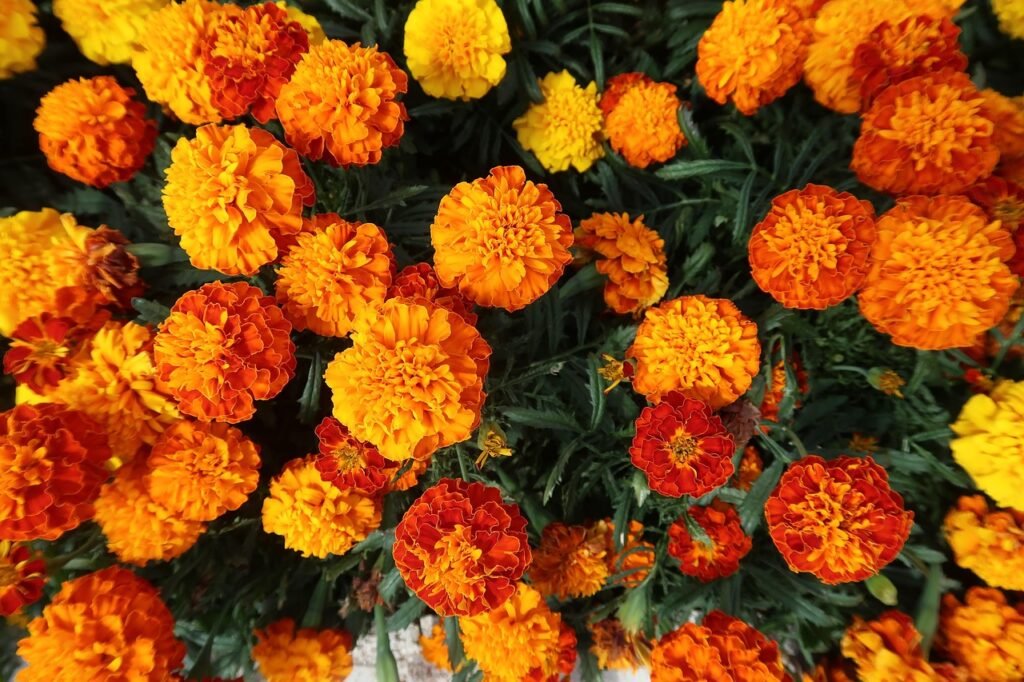
The variety I planted is called Cracker Jack, one of the African marigold (Tagetes erecta) types. These aren’t your petite border marigolds. They’re tall, statuesque plants that can grow between three to four feet high, with large, pom-pom-like blooms in bright oranges and yellows. They have a way of making their presence known—not just visually, but in the way they invite pollinators like butterflies, bees, and beneficial insects into the garden.
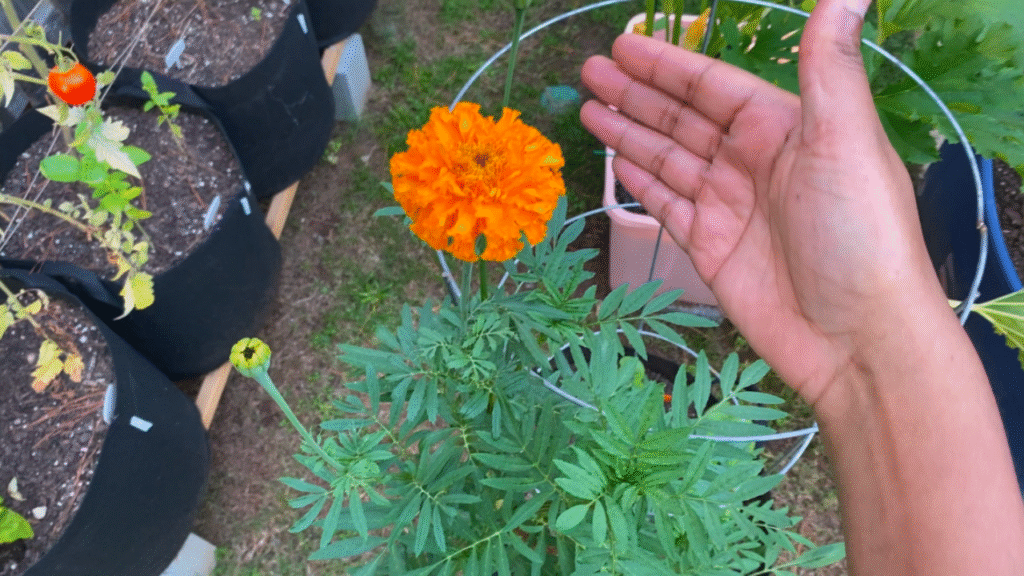
When I first planted my Cracker Jacks, I had no idea they were a tall variety. I only saw leaves for weeks on end. Day after day, I would check them, wondering if I had done something wrong. Had I planted too deep? Overwatered? Not fertilized enough? My impatience began to creep in, and I was close to giving up on them altogether.
It wasn’t until a kind person in the comments section of one of my gardening videos told me that African marigolds take their time—and grow tall before they bloom—that I decided to keep them. That single piece of encouragement kept me from throwing them away. And I’m so glad I didn’t.
From Doubt to Bloom – Why I Almost Gave Up
For weeks, all I saw were stems and leaves. It’s easy to get discouraged in that stage, especially when you’re used to instant results in other parts of life. Social media gives us instant likes. Online shopping gives us next-day delivery. Even cooking can be “instant” these days.
Gardening doesn’t work that way.
One morning, I walked outside and noticed something different. Small buds were forming at the tops of the stems. Within days, those buds unfurled into bold, golden blooms. Not only did my original plant produce flowers, but two new branches had formed, each preparing to bloom as well. It was a reminder that sometimes growth is happening in ways you can’t see—and the harvest will be greater than you imagined.
The Pollinator Magnet – Why Marigolds Matter
As my marigolds bloomed, they began to draw in a parade of pollinators—bees buzzing from flower to flower, butterflies floating gracefully in the morning light, and even beneficial predatory insects that help keep pests at bay.
Marigolds are known for more than just their beauty. In the garden, they can:
- Attract pollinators that help your vegetables produce more fruit.
- Repel certain pests, such as nematodes in the soil.
- Add vibrant color that keeps your garden visually alive.
Seeing this interaction reminded me of how everything in creation has a purpose, even the smallest blooms. Just as these marigolds play a role in my garden’s ecosystem, we each have a role in God’s larger plan.
Gardening as a Spiritual Journey
Somewhere between watering my plants and watching those blooms open, I realized my gardening journey had shifted. I wasn’t just tending to plants anymore. I was learning life lessons—God’s lessons—through the process.
Here are five powerful spiritual truths gardening has been teaching me.
Lesson 1: Waiting (Patience)
When you plant a seed, it doesn’t sprout overnight. The same is true with God’s promises.
In the garden, some seeds—like parsley—can take up to 21 days just to germinate. During that time, the soil looks the same on the surface, but deep below, life is stirring. If you dig it up too soon out of impatience, you’ll disrupt the growth entirely.
In my own life, patience is something I’ve struggled with. I like results. I like to know what’s happening and when. But gardening has been teaching me that waiting is not wasted time—it’s preparation time. God is doing something in the unseen.
If you’re waiting for something—a healing, a breakthrough, a relationship, a door to open—remember that God’s timing is perfect. The wait might be the very thing that prepares you to handle the blessing when it comes.
Lesson 2: Trust (Faith)
Planting a seed is an act of faith. You place something tiny into the ground, cover it up, and trust that it will become what it was created to be.
It’s the same with trusting God. When we can’t see what He’s doing, we must believe that He’s working behind the scenes. In gardening, I can’t see what’s happening beneath the soil after planting, but I trust that in time, that seed will push through.
When the first leaves—called cotyledons—break through the soil, it’s a joyful reminder that the wait was worth it. And when God finally brings your answered prayer to light, you’ll see that trusting Him through the uncertainty was worth it too.
Lesson 3: Failure & Grace
Not every seed germinates. Not every plant thrives. And that’s okay.
Early in my gardening journey, I took every plant loss personally. If something didn’t grow, I wondered what I did wrong. Over time, God began showing me that failure is not the end—it’s an opportunity to learn.
Sometimes conditions are beyond your control. Sometimes you need to try again with a different approach. In gardening and in life, the key is to give yourself grace. Gather the lessons from what didn’t work and move forward with wisdom.
Lesson 4: Provision
There’s something deeply humbling about watching a tiny seed turn into food. The process reminds me that God is the ultimate provider.
A cucumber seed no bigger than a grain of rice can produce a plant that climbs, flowers, and yields more fruit than you could imagine. Watermelon seeds can grow into sprawling vines that bear heavy, sweet fruit. The abundance is built into the seed from the start—God’s design in action.
I used to think provision came mainly from my paycheck. Now, I understand that all provision comes from God. He might use a job, a friend, or even a surprise opportunity, but He is the source.
Lesson 5: Stewardship
The Bible tells us in Genesis that Adam’s job in the Garden of Eden was to “tend and keep” it. Gardening has made me more aware of what stewardship looks like in practice.
Even with a small garden, I spend time each day tending to the plants—watering, pruning, checking for pests, and ensuring they have what they need. In the same way, we’re called to tend to the blessings God has given us, whether that’s our family, our work, or our resources.
Scripture Reflections – Matthew 6:28-30 and Beyond
One verse that’s been on my heart lately is Matthew 6:28-30:
“Consider the lilies of the field, how they grow: they neither toil nor spin, yet I tell you, even Solomon in all his glory was not arrayed like one of these. But if God so clothes the grass of the field… will he not much more clothe you?”
Every time I look at my marigolds—burning bright under the sun, thriving without worry—I’m reminded of God’s care for me. If He cares for flowers that are here today and gone tomorrow, how much more does He care for you and me?
Practical Marigold Care Tips for Beginners
If you’re feeling inspired to grow your own Cracker Jack marigolds, here are some tips:
- Sunlight: Marigolds thrive in full sun.
- Soil: Well-draining soil is best.
- Watering: Water at the base to avoid fungal issues; don’t overwater.
- Spacing: Give each plant enough room—African marigolds can get large.
- Deadheading: Remove spent blooms to encourage more flowers.
- Companion Planting: Marigolds do well alongside vegetables, repelling pests and drawing pollinators.
Why You Should Start Gardening Today
You don’t need a big yard or years of experience. You can start with one container on a balcony, a few herbs on a windowsill, or a small raised bed. Gardening will meet you where you are and teach you lessons you didn’t know you needed.
Free Garden Kickstart Kit
If you’re ready to start but feel unsure about where to begin, I’ve created a Free Garden Kickstart Kit. Inside, you’ll find:
- Easy crops to start with
- A container size guide
- Simple watering and fertilizing tips
You can grab it here—it’s my way of helping you skip the overwhelm and start growing with confidence.
Closing Encouragement
When I look at my marigolds now, I see more than flowers. I see patience rewarded, faith strengthened, grace extended, provision given, and stewardship honored. Gardening is about so much more than plants—it’s about what God is growing in us.
So, plant the seed. Water it. Wait. Trust. Learn. And watch what God will do.