Skip to content
When I first heard about topping tomato plants, I’ll be honest—I didn’t think it was something I’d ever need to do. I was just happy that my tomato plants were alive, producing, and filling up my little backyard space. This was my very first season growing tomatoes, and I was already over the moon about pulling even a small harvest. But as the weeks went by, I realized my tomato plants were quickly getting out of control.
I started with six plants, including one beefsteak variety that I almost gave up on. At first, I pruned it way too heavily, cutting back more branches than I probably should have. The plant struggled, and I thought I’d lost it. But then it bounced back, throwing out fresh leaves and clusters of tomatoes. I was thrilled…until I realized most of those tomatoes were tiny and not ripening the way I hoped.
That’s when I learned that pruning tomatoes isn’t just about cutting away leaves—it’s about finding a balance. And when tomato plants keep reaching higher and higher, especially in containers or small spaces, sometimes you need to do more than prune. You need to top them.
In this post, I’m sharing my first experience with topping tomatoes, what I’ve learned so far, and why this method is especially useful for gardeners with limited space or a short growing window. My hope is that by telling my story, you’ll feel confident knowing when and how to try topping your own tomato plants.
Snipping the Top – What Topping Tomato Plants Really Means
Before this season, I had never even heard the term “topping tomato plants.” Pruning, sure—I knew gardeners snipped away leaves and suckers to control growth. But topping? That sounded intense. Once I saw my own tomato plants towering above me, sending out more flowers and branches than I could keep up with, I finally understood why gardeners do it.
So what does it actually mean? Topping tomatoes is simply cutting off the main growing tip at the top of the plant. You’re not pulling the whole plant out or destroying it—you’re just telling the plant, “Hey, stop growing taller and focus on what’s already here.” In practice, it looks like taking a clean pair of pruners and snipping just above a set of leaves or a fruit cluster.
Now here’s where topping is different from regular pruning. When you prune tomato plants, you’re usually removing suckers (those little shoots that grow in the “V” between the main stem and a branch) or thinning out leaves for better airflow. But when you top a tomato, you’re making a deliberate cut at the very top of the plant to stop upward growth completely.
Why does this matter? For one, tall tomato plants can quickly get unmanageable, especially in containers or small gardens like mine. More importantly, once you’re at the end of the season, those new flowers at the top don’t have time to become ripe tomatoes. By topping, you’re redirecting the plant’s energy into ripening the fruit that’s already hanging on the vine.
When I first picked up my pruners to cut off the top of my tomato plant, I felt guilty. The plant was lush and full of potential, and it felt like I was taking something away. But the truth is, topping gave me control. It meant I could focus on ripening the tomatoes I already had instead of letting the plant waste energy on new growth that would never reach maturity before frost.
Topping tomato plants might sound intimidating at first, but once you understand what it is—and why it works—it becomes a practical tool in your gardening toolkit.
Why Gardeners Top Tomato Plants
Every gardener has their own reason for topping tomato plants, and for me, it came down to two things: space and timing. I garden in a really small area, and by the end of September, my six tomato plants had completely taken over. They were spilling out of my 15-gallon grow bags, climbing higher than I could manage, and tangling into each other. On top of that, my growing window was closing. Fall was approaching, and I needed those same containers for the crops I had planned next.
That’s when I realized topping wasn’t just about controlling wild tomato plants—it was about being intentional with the energy they still had left. When tomatoes keep growing taller, they pour energy into new flowers and branches. But late in the season, those flowers don’t have enough time to become full-sized, ripe fruit before frost hits. By cutting off the top, you send a clear message to the plant: stop stretching higher and put everything you’ve got into ripening what’s already hanging on the vine.
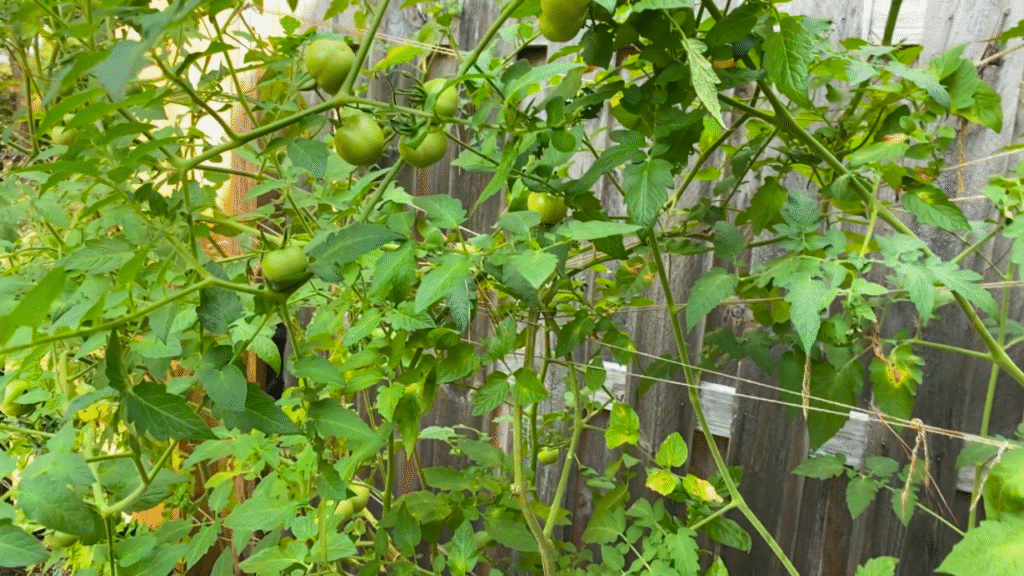
Another big reason gardeners top is airflow and plant health. Thick, overgrown plants can trap humidity and encourage disease. Snipping the top helps open things up, making it easier for air and sunlight to reach the tomatoes that matter most.
For me, it was also a way to let go of “what could have been” and focus on the harvest that was already forming. Instead of a jungle of tall tomato plants with tiny fruit, I wanted fewer, bigger, and riper tomatoes—and topping was the way to get there.
My First Experience Growing Tomatoes
This year was my very first time growing tomatoes, and let me tell you—it’s been a ride. I went into it excited but completely unsure of what to expect. I had six plants, all started in 15-gallon grow bags, and only one of them was a beefsteak variety. Honestly, I didn’t think that beefsteak was going to survive. It looked so weak in the beginning that I almost pulled it out altogether.
Part of the problem was me. I was so eager to do the “right” thing that I ended up pruning way too aggressively early on. I snipped off branches left and right, thinking I was helping the plant breathe and focus. Instead, I set it back so far that it looked like it wasn’t going to recover. At one point, I stood there with my pruners in hand and thought, “Maybe it’s better to just cut my losses.” But I didn’t. Something in me said to give it more time.
And sure enough, the beefsteak bounced back. It pushed out fresh leaves, new stems, and little clusters of tomatoes. That should have been my victory moment—but then I realized another problem. Most of the fruit it produced was small. Cute, yes, but not what you expect from a beefsteak tomato. Looking back, I know why. I had gone from one extreme to the other: first cutting too much, then letting everything grow wild. By the time I stopped pruning, the plant had become a tangled mess.
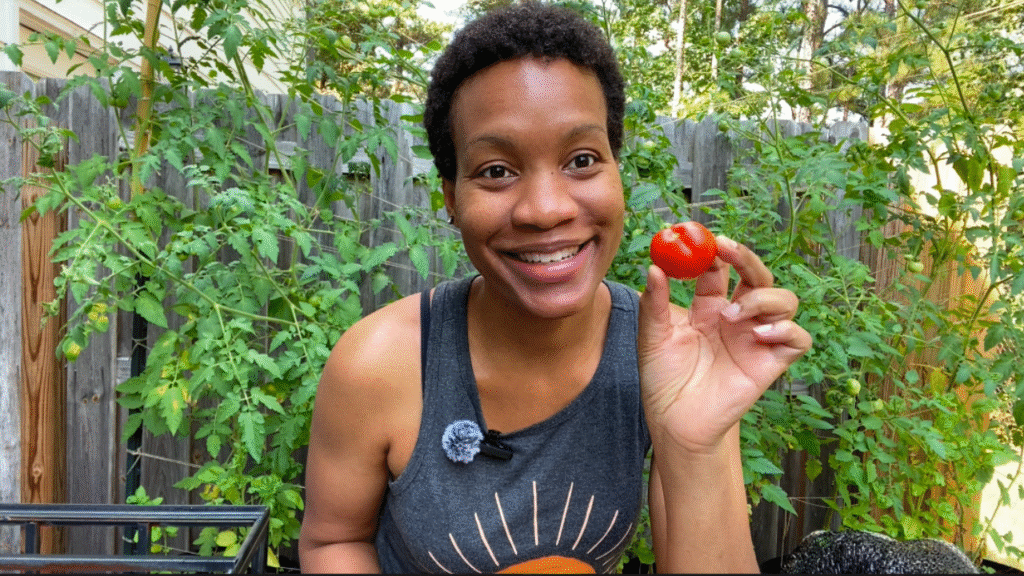
Walking out to the garden and seeing those tiny tomatoes was humbling. I had to admit that I didn’t know everything, and that’s okay. Gardening has a way of keeping you honest like that. It was a reminder that plants don’t need perfection—they just need us to pay attention, learn, and adjust.
The other five plants were no different. They filled up my small space so quickly that by September, it looked like a tomato jungle. At first, I loved it. There’s something magical about seeing vines covered in green fruit. But as the season moved on, I realized I had created more chaos than control. I couldn’t even reach some of the tomatoes, and the plants were shading each other out.
That’s when I started looking into topping. It felt like the missing piece I hadn’t tried yet—a way to balance growth, focus on ripening, and maybe save myself from the overwhelm of managing six massive plants in such a tiny space.
When to Top Tomato Plants
One of the hardest parts of learning new gardening techniques is figuring out the timing. With topping tomato plants, timing can make all the difference between helping your plants finish strong and cutting them back too soon. For me, the decision came at the end of September, right as I was looking ahead to fall crops.
In Zone 8, where I garden, the first frost usually shows up between late October and mid-November. That gave me only a few weeks of warm-enough weather left. My plants were still pushing out flowers and new shoots, but the reality was clear—there wasn’t enough time for any of that new growth to mature into ripe fruit. If I left them alone, the plant would waste precious energy chasing new blossoms that would never make it to the plate.
That’s when topping makes sense: when your plants are at the end of the season and you want them to concentrate on ripening the tomatoes they’ve already produced. It’s like telling the plant, “Don’t worry about growing bigger, just finish what you’ve started.” In my case, topping was also about practicality. I needed my 15-gallon grow bags back for fall crops. Topping allowed me to start transitioning while still squeezing out every bit of fruit the plants had left.
It’s also a smart move if your tomato plants have outgrown their space. Mine were taller than me, sprawling into each other, and blocking airflow. By cutting off the top growth, I could manage their size and prevent disease from spreading in the dense canopy.
So, when should you top? The best time is when your growing season is winding down, frost is on the horizon, or your plants are simply too tall to handle. The key is to focus on what fruit is already on the vine and give it the best chance to ripen.
For me, it was a mix of necessity and learning. I didn’t top my tomatoes early in the season, but as the window closed, it became the right tool for the job. And honestly, it was less about perfection and more about making the most of the time and space I had.
How to Top Tomato Plants Step by Step
When I finally decided to top my tomato plants, I’ll admit—I was nervous. The plants were tall, loaded with leaves, flowers, and tiny fruit. Cutting off the top felt dramatic, almost like I was undoing all the growth I had waited months for. But once I understood the process, it made sense. Topping isn’t about destroying the plant; it’s about giving it focus. Here’s exactly how I went about it.
Step 1: Find the main stem.
Every tomato plant has a main leader stem that keeps stretching upward. That’s the growth tip you want to stop. For me, my plants had already grown taller than me, so finding the very top wasn’t hard—it was climbing right out of reach.
Step 2: Choose your cutting point.
The key is to cut just above a cluster of leaves or fruit that you want to keep. On one branch, I noticed fresh flowers forming, but I knew there wasn’t enough time left in the season for them to ripen. That’s where I made my cut. It felt tough to snip away potential fruit, but I reminded myself those flowers would never mature before frost.
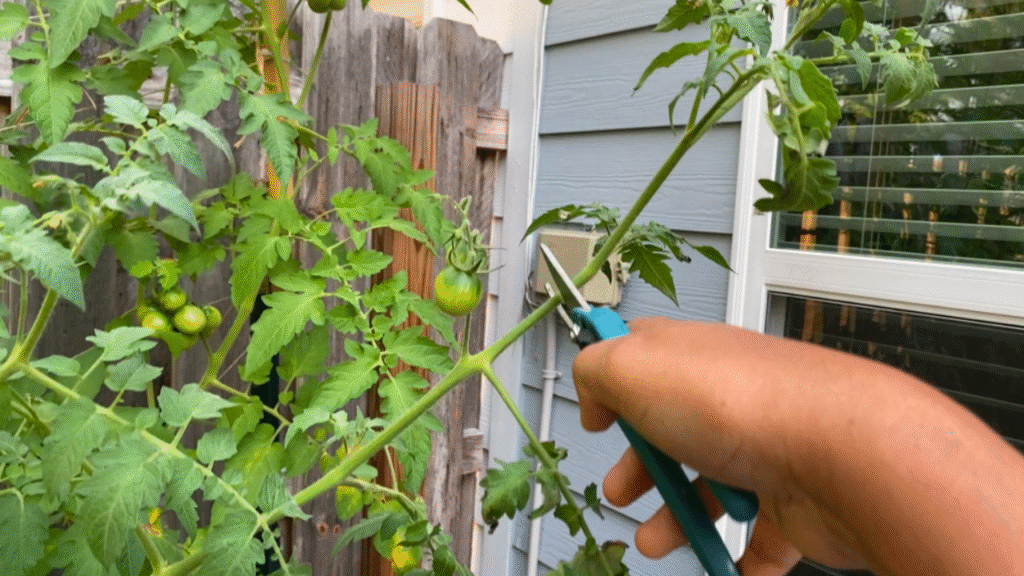
Step 3: Use clean tools.
I grabbed my hand pruners (a good pair is worth investing in)— and made a clean cut through the stem. Don’t rip or twist; a smooth cut heals faster and keeps the plant healthier.
Step 4: Remove suckers and extras.
This was the part I had neglected most of the season. My plants were filled with suckers—those little shoots growing between the main stem and side branches. Left unchecked, they turned my plants into a jungle. As I topped, I also went through and snipped suckers and a few dense leaves to open things up.
Step 5: Step back and breathe.
I won’t lie—cutting off big, leafy sections of a thriving plant feels wrong at first. But as I looked at the trimmed tomato vines, I could see the fruit more clearly. Sunlight could reach the clusters that mattered. Airflow improved immediately. And most importantly, the plant’s energy was no longer being wasted on flowers and shoots that had no chance of ripening.
Topping tomato plants is one of those things that seems intimidating until you do it. Once I made those first cuts, I realized it was simply about prioritizing the fruit I already had. For a small-space gardener with a limited growing window, that one step made all the difference.
The Benefits of Topping Tomato Plants
The moment I finished topping my tomato plants, I could feel the difference—not just in the way the garden looked, but in how manageable everything suddenly felt. For weeks, the plants had been overwhelming me with growth. After topping, there was a sense of order. The plants no longer looked like they were competing with each other for space and light.
One of the biggest benefits was focus. Instead of scattering its energy into endless new branches and flowers, the plant now concentrated on ripening the fruit that was already hanging. I started to notice tomatoes coloring up faster, and even though they weren’t massive, they were finally moving toward maturity. That simple shift made me realize how much power we have to guide our plants if we’re willing to make cuts at the right time.
Another benefit was airflow. Dense, overgrown tomato plants can become a breeding ground for pests and disease, especially when nights get cooler and moisture lingers. By removing the top and opening the canopy, I reduced that risk. I could actually see the breeze moving through the leaves, which made me feel more confident that the fruit wouldn’t rot before it ripened.
For container gardeners, topping also gives you control over space. My tomato plants were taller than me, spilling out of 15-gallon grow bags and shading out everything else nearby. After topping, they were more contained, and I could start planning where my fall crops would go. Without that step, I would have been stuck waiting weeks for tomatoes that may never ripen while my containers sat unavailable for new plantings.
Finally, topping helped me as a gardener. It taught me that it’s okay to intervene and redirect growth. For someone like me—still learning, still experimenting—topping was a reminder that gardening isn’t about letting plants run wild, it’s about finding balance. The payoff wasn’t just fruit, but the peace of knowing I was making the most of the season I had.
In the end, the real benefit of topping tomato plants is that it buys you time—time for your current tomatoes to ripen, time to prepare for the next season, and time to enjoy the garden instead of being buried under it.
Mistakes to Avoid When Pruning or Topping Tomatoes
Topping and pruning are powerful tools, but like anything in gardening, it’s easy to go wrong if you don’t understand the “why” behind the cut. Looking back, there are a few mistakes I either made myself or nearly stumbled into that are worth avoiding.
The first mistake is cutting too low on the plant. When you top, you want to remove just the growing tip or a section of unnecessary growth—not chop the plant in half. Taking off too much at once can shock the plant, slow ripening, or even reduce your harvest. A good rule is to leave clusters of tomatoes and healthy leaves below the cut so the plant can keep feeding what’s already growing.
Another common mistake is forgetting to sanitize your tools. It’s a small step, but dirty pruners can spread disease from one plant to another. A quick wipe with rubbing alcohol before you cut saves you from bigger problems later.
A third mistake is poor timing. Topping too early in the season limits the plant’s ability to keep producing, while topping too late—when frost is only days away—means you won’t give the plant enough time to ripen its existing fruit. Knowing your frost dates and paying attention to your local climate is key.
Finally, don’t make the mistake of ignoring the plant afterward. Topping isn’t the end of the story. You’ll still want to water consistently, check for pests, and support any heavy fruit clusters so the plant can finish strong.
Avoiding these simple mistakes can turn topping from something intimidating into a confident step toward healthier, more productive tomato plants.
Preparing for the Next Season
One of the biggest reasons I decided to top my tomato plants was to make space for what’s coming next. As much as I’ve enjoyed watching the vines take over my grow bags, I know that fall is just as important for gardening as the summer season. To keep food growing, I had to start thinking ahead.
My plan is to begin a new round of crops indoors while the tomatoes finish ripening. I’ll be starting broccoli, cabbage, bok choy, and lettuce from seed under lights so they’ll be ready to move outside once the weather cools down a little more. Starting indoors gives these cool-weather crops a head start while I wait for the tomatoes to wrap up. By the time I pull the last of the tomato plants, the seedlings will be strong enough to take their place in the containers.
I’m also planning to add beans into the mix. Even though beans are usually thought of as summer crops, certain varieties do well in the early fall if they’re given enough warmth at the start. Since I garden in Zone 8, I still have a little window before frost to sneak in a quick harvest. Planting beans in the same grow bags once the tomatoes are cleared will give me another layer of productivity before winter sets in.
Topping the tomatoes wasn’t just about ending a season—it was about opening the door to a new one. Making room for broccoli, cabbage, bok choy, lettuce, and beans keeps my garden active, my containers productive, and my small space working as hard as possible.
Final Reflections – First-Time Lessons on Growing and Topping Tomatoes
If there’s one thing this season taught me, it’s that gardening is as much about courage as it is about care. Topping my tomato plants was completely new to me, and honestly, it felt like a gamble. I had spent months nurturing these vines, and the idea of cutting them back went against my instincts. But taking that step showed me that gardening is really about making choices with the season in mind, not just the moment.
What surprised me most was how much confidence I gained from the process. Instead of standing back and feeling overwhelmed by plants that were taller than me, I felt in control of my garden again. I wasn’t just reacting to the chaos—I was guiding it. That sense of partnership with the plants, of shaping their growth to fit both their needs and mine, felt like a turning point in my journey as a beginner gardener.
Another lesson was the value of flexibility. My first tomato season wasn’t perfect—I pruned too much, then too little, and eventually had to find a middle ground. But I realized it’s okay not to get everything right the first time. Each cut, each decision, is part of learning. By trying topping for the first time, I added one more tool to my gardening toolkit, one that I know I’ll use again in future seasons.
In the end, topping wasn’t just about tomatoes—it was about growth, mine as much as the plants’.
Looking Ahead: Growing Smarter Every Season
This first tomato season taught me more than I ever expected. I went from over-pruning, to letting the plants grow wild, to finally learning the balance by trying something completely new—topping. It wasn’t always easy, and it definitely wasn’t perfect, but it reminded me that gardening is a journey of small steps, experiments, and lessons that carry us into the next season stronger than before.
By topping my tomato plants, I wasn’t just cutting back growth; I was learning how to redirect energy, reclaim my space, and set myself up for the crops to come. It gave me the confidence to know that I can adapt as the seasons change, even in a small-space garden. And that’s really the heart of gardening—figuring out how to make the most of the time, space, and resources we have.
If you’re a new gardener like me, you don’t have to figure it all out on your own. One of the biggest struggles I had in the beginning was knowing what to plant and when. That’s why I created my Monthly Planting Guide. It takes the guesswork out of the process by showing you exactly what you can start indoors and what you can direct sow each month, based on your zone. Whether you want to maximize a small garden, plan for succession planting, or simply stay on track, this guide makes it simple.
Grab your free Monthly Planting Guide and start planning your next season with confidence. Your garden will thank you, and you’ll enjoy the process even more.