Skip to content
When I first started growing radishes, I thought it would be one of the easiest crops to grow. Everyone online made it sound so simple: “fast harvest,” “perfect for beginners,” “ready in under a month.” So I grabbed some seeds, filled my containers, and waited for my first big harvest. But when the time came, my radishes were tiny. Some didn’t form bulbs at all, and the ones that did were surprisingly spicy. I honestly didn’t know if that was normal or if I had done something terribly wrong.
That moment became the start of my radish-growing journey, one filled with trial, error, and a lot of learning along the way. I discovered that radishes might be quick to mature, but they still require the right soil, consistent watering, and just the right amount of patience.
In this post, I’ll walk you through my personal experience, from my first failed attempt to a more successful second harvest. You’ll learn what went wrong, what worked better the next time, and how you can avoid the same mistakes in your own garden. Whether you’re just starting out or you’ve grown a few seasons already, I hope my journey gives you both encouragement and practical insight into how to grow radishes the right way, even in small spaces or containers.
Because gardening, just like life, is all about progress, not perfection.
My First Attempt at Growing Radishes
When I planted my first batch of radishes, I was full of excitement and confidence. Everyone says radishes are one of the easiest vegetables to grow, so I figured it would be a quick win in my gardening journey. I planted two varieties, Cherry Belle and Icicle Short Top, in containers, gave them water, and waited for those little red bulbs to form.
A few weeks later, curiosity got the best of me. I pulled one up, expecting a perfect, round radish, but instead, it was tiny, barely the size of a marble. I pulled another one, and another, only to find the same thing. They were all small, some thin like little roots, and others didn’t form at all. That’s when I realized I had made a rookie mistake: impatience.
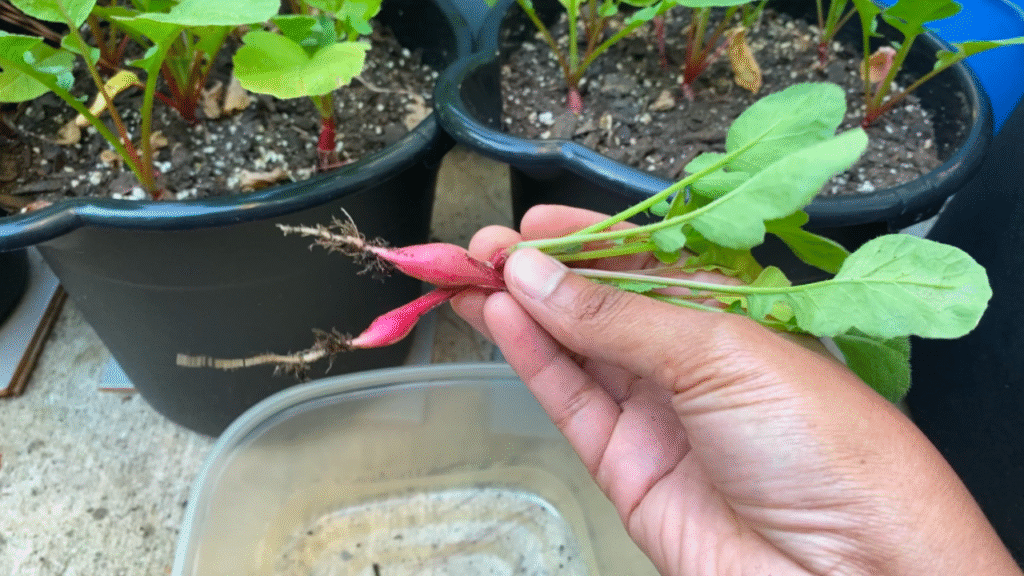
I had harvested too early. The leaves looked mature, and I assumed the roots were too, but radishes can be deceiving. Beneath the soil, they still needed more time to develop. To make things worse, the ones that did grow were extremely spicy. Not the mild, crisp taste I was expecting.
After doing a little research, I learned that a few key factors were working against me. Inconsistent watering can cause radishes to either bolt early or turn woody, and overcrowding can stunt their growth. I had both issues. My soil was compacted, and I didn’t thin my seedlings enough, which meant each plant was fighting for space and nutrients.
That first harvest was far from perfect, but it was eye-opening. It taught me that growing radishes isn’t just about planting seeds and waiting, it’s about understanding timing, spacing, and patience. Instead of giving up, I decided to replant, amend my soil, and approach my next attempt with more care and observation. That decision changed everything.
Soil Preparation: The Secret Behind Healthy Radishes
After my first radish harvest didn’t turn out the way I expected, I realized that the secret to growing radishes successfully begins long before the seeds even touch the soil. I had focused on the act of planting, but not enough on what the plants were actually growing in. That’s when I started learning about the importance of soil health, especially for root vegetables like radishes.
Radishes develop underground, so they need loose, well-draining soil to grow freely. My first mix was too compact, which made it harder for the roots to expand and form properly. For my second attempt, I completely changed how I prepared my containers. I started by mixing organic potting mix with compost to improve texture and aeration. Then I added a generous amount of worm castings, which quickly became my go-to amendment for almost everything I plant.
Worm castings act like a natural multivitamin for soil. It’s full of beneficial microbes, gentle nutrients, and organic matter that improves structure and moisture retention. The best part is that they don’t burn your plants, even if you add a little extra. They slowly release nutrients, giving your radishes a steady food source without overwhelming them.
Because radishes aren’t heavy feeders, this combination of potting mix, compost, and worm castings was more than enough. The improved soil not only supported better growth but also reduced issues like splitting and uneven sizing. Loose, crumbly soil allows radish roots to push downward easily, creating smoother, more uniform bulbs.
If you’re looking to replicate my setup, here are a few of the products I use and recommend:
- Organic Potting Mix – lightweight and formulated for container gardening.
- Compost Blend – adds organic matter and improves drainage.
- Worm Castings – a natural source of nutrients that enhances soil structure.
- Hand Trowel – for mixing and amending soil easily in containers.
Now, before sowing new seeds, I always take time to “feed the soil.” Once you build healthy soil, your plants will naturally follow. I learned that lesson through trial and error, but it completely changed how I garden. The next time I planted my radishes, I was finally confident that I had given them the right foundation, and it showed.
Watering and Care Tips: Finding the Right Balance
When it comes to growing radishes, consistent watering is one of the most important yet overlooked steps. During my first attempt, I didn’t realize how much of an impact uneven watering could have. Some days I would water heavily, and then let the soil dry out completely before watering again. The result was a batch of radishes that split, turned woody, or barely formed at all.
I learned that radishes need soil that stays evenly moist from the day you plant them until harvest. Too much water, and the roots may rot. Too little, and the bulbs stay small and tough. The goal is to strike a balance, damp but never soggy. To check moisture, I lightly press my finger into the soil; if the top inch feels dry, it’s time to water.
Because I grow most of my radishes in containers, they tend to dry out faster than garden beds. In warmer weather, I water daily; in cooler months, usually every other day is enough. Adding a thin layer of mulch (like straw or shredded leaves) helps the soil stay moist longer and keeps the temperature more stable. It’s one of the simplest tips I can share for anyone learning how to grow radishes successfully.
Watering consistency also affects timing. If you’ve ever wondered when radishes are ready to harvest, moisture plays a role. Uneven watering causes uneven growth, which means some roots mature faster than others. By keeping the soil moisture steady, you’ll notice more uniform bulbs and clearer signs of readiness, like the tops pushing slightly above the surface and firming up beneath your fingers.
I also use a gentle organic fertilizer once or twice during the growing period, especially if I notice the leaves turning pale. My go-to is diluted fish emulsion. It gives a mild nitrogen boost without overwhelming the roots. Because radishes grow so quickly, they don’t need heavy feeding. Too much fertilizer will cause leafy growth instead of root growth.
A soft-spray nozzle or watering can is another small change that made a big difference. Gentle watering prevents the soil from compacting or washing away those tiny seedlings. Over time, I realized that growing radishes isn’t about perfection, it’s about consistency. Once I found a steady rhythm of watering and care, my radishes grew smoother, fuller, and far closer to what I had hoped for when I first started learning how to grow radishes.
When Are Radishes Ready to Harvest?
During my first attempt at growing radishes, I made one of the most common mistakes beginner gardeners make. I harvested too soon. The leaves were full and lush, so I assumed the roots below were just as ready. I remember tugging on that first plant, expecting a plump red bulb, only to find a tiny, underdeveloped radish barely the size of a marble. I tried a few more, but they all looked the same. That’s when it hit me. I had been impatient.
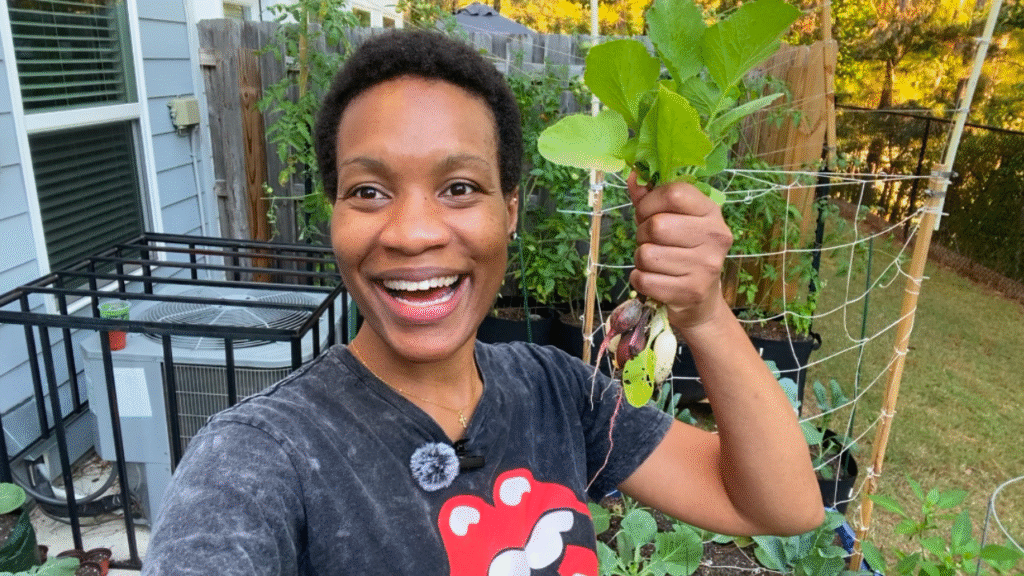
I decided to leave the rest in the soil for a couple more weeks to give them time to mature. When I came back, the difference was noticeable. The bulbs had pushed slightly above the soil surface, and the tops felt firm when I pressed my fingers around them. Those are two of the clearest signs to look for when radishes are ready to harvest.
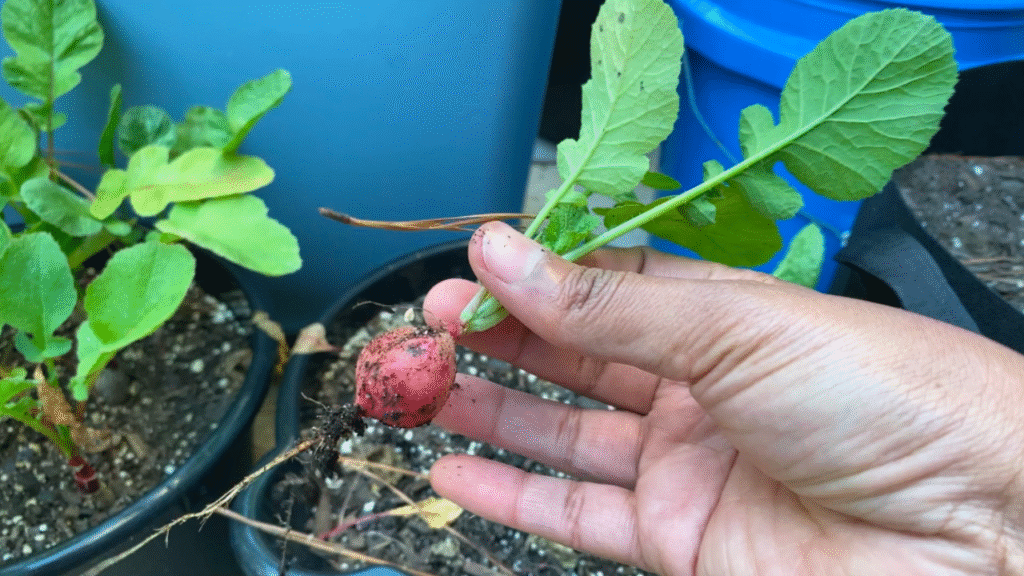
Most varieties, like the Cherry Belle and Icicle Short Top I planted, take about 25 to 35 days from seed to harvest. But days alone aren’t always reliable. Temperature, watering, and sunlight all affect how fast they grow. I learned that it’s better to check your radishes visually and by touch rather than depending solely on the calendar.
Here are a few signs I now look for to know when to harvest radishes:
- Bulbs visible above the soil: Mature radishes naturally push their shoulders above the surface.
- Firmness: A ready radish should feel firm to the touch, not soft or spongy.
- Uniform color: The roots should have even color with no cracks or wrinkles.
- Timing: For most small varieties, around four to five weeks after planting is the sweet spot.
If you wait too long, radishes can split or become pithy and overly spicy, something I learned firsthand. A few of mine cracked open because I had left them in the soil too long after that first failed harvest. The key is finding the right balance between patience and timing.
Another factor I discovered while learning how to grow radishes is that temperature influences flavor. Radishes grown in cooler weather tend to be milder, while those that mature in warmer conditions develop more heat. So if your radishes taste stronger than expected, it might not be the variety. It could simply be the season or how long they stayed in the ground.
Now, before harvesting, I gently loosen the soil around each plant with my hand or a small trowel to avoid damaging the roots. I prefer harvesting in the morning when the soil is cool and moist. Once they’re out, I trim the leaves about an inch above the bulb to help them stay fresh longer.
Knowing when to harvest radishes takes a little practice, but with time, you start to recognize the subtle signs. Every harvest teaches you something new, and every mistake brings you closer to mastering the rhythm of growing radishes.
Taste Test and Lessons Learned
After finally figuring out when to harvest radishes, I couldn’t wait to see how they tasted. Even though some of my radishes were smaller than expected, I was proud of the progress. I rinsed one off, took a bite, and instantly felt the heat. It was so spicy it cleared my sinuses! I honestly wasn’t expecting that kind of kick from something that looked so harmless.
That first bite taught me something new about growing radishes. The flavor can vary depending on a few factors: how long they stay in the soil, the temperature, and how consistently they’re watered. When radishes are left in the ground too long, especially during warm weather, they tend to become woody and develop a sharper, peppery taste. On the other hand, radishes that grow quickly in cooler, moist conditions usually stay crisp and mild.
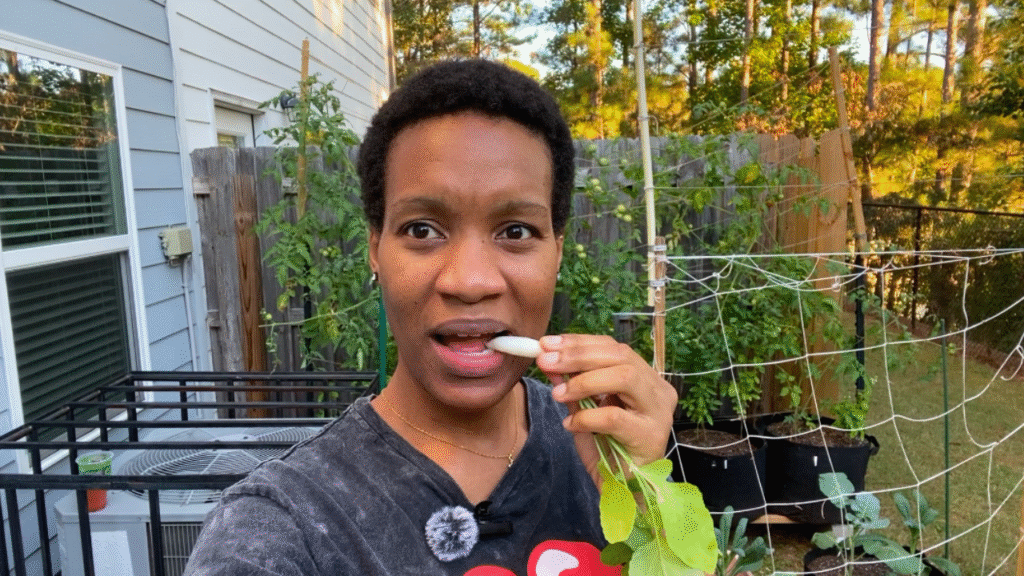
I also discovered that the leaves are edible, which was a pleasant surprise. The greens can be sautéed, added to soups, or even blended into smoothies. It felt good knowing that nothing from my harvest had to go to waste.
That experience (from the first failed harvest to finally tasting homegrown radishes) reminded me why I love gardening so much. It’s not just about the end result; it’s about the process. Growing radishes taught me patience, observation, and how small changes can make a big difference.
For anyone learning how to grow radishes, my advice is simple: don’t be discouraged by mistakes. Every crop teaches you something new. Whether your first harvest is picture-perfect or full of tiny spicy surprises like mine, it’s still progress. The next round will be better and each time, you’ll learn more about your soil, your watering habits, and the patience that gardening naturally cultivates.
Replanting and Continuous Learning
After my second harvest, I didn’t stop there. I decided to take everything I learned about growing radishes (from soil prep to watering and timing) and put it right back into practice. Gardening, to me, is one big cycle of learning and replanting. Each season gives you a chance to improve on the last.
I took the same containers, removed the old roots, and mixed in fresh compost and a scoop of worm castings to replenish the nutrients that the previous plants had used up. That’s something I recommend for anyone learning how to grow radishes continuously. Because radishes grow so quickly, the soil can get depleted fast, especially in containers. Giving it a small refresh between plantings helps maintain healthy, fertile ground for new seeds.
Then I sowed another round of seeds, spacing them carefully and keeping track of the dates again. This time, I wanted to see how much better I could do now that I understood the importance of consistency. I focused on watering evenly, checking moisture daily, and resisting the urge to harvest too soon.
As the new seedlings sprouted, I could already see a difference. The leaves looked stronger, the roots formed more evenly, and I felt more confident about recognizing when radishes are ready to harvest.
What I love most about gardening is that every crop, even the ones that don’t turn out perfect, teaches you something valuable. Replanting isn’t starting over; it’s growing forward. With each new attempt, I find myself becoming a little more patient, a little more observant, and a lot more grateful for the lessons hidden beneath the soil.
Tools and Soil Amendments I Recommend
As I’ve grown more confident in growing radishes, I’ve learned that the right tools and soil amendments don’t just make gardening easier, they make it more rewarding. In the beginning, I used whatever I had on hand, thinking the seeds alone would do all the work. But with each new planting, I started paying closer attention to what truly supports healthy growth beneath the soil.
For anyone learning how to grow radishes, good soil is the foundation. But what really made the difference for me was understanding how to maintain that soil between plantings. Radishes grow quickly and draw nutrients fast, so recharging the soil after every harvest keeps the next round strong. That’s where the right amendments come in.
Here are a few items that have become essential in my garden:
- Organic Potting Mix – I like using a high-quality mix that’s light enough for roots to breathe but rich enough to support growth. Good potting mix also holds moisture evenly, which helps prevent splitting.
- Compost Blend – Compost is my go-to for adding organic matter back into the soil. It keeps the texture loose and replenishes nutrients naturally.
- Worm Castings – These have become a staple in everything I plant. Worm castings encourage microbial activity, which leads to stronger roots and healthier plants.
- Hand Trowel – A sturdy hand trowel makes it easier to loosen compacted soil and gently harvest radishes without damaging the bulbs.
I didn’t realize it at first, but investing in quality soil products changed how I view gardening. It taught me that growing radishes isn’t just about what’s visible above the soil, it’s about nurturing the unseen foundation beneath it. Once I focused on soil health and used these tools consistently, my plants became more resilient, and every harvest improved.
My Key Takeaways From Growing Radishes
Looking back, my journey with growing radishes taught me far more than how to plant a seed and watch it grow. It taught me patience, observation, and the value of paying attention to the little details that make a big difference in the garden.
The first thing I learned is that good results come from consistency. From watering schedules to checking soil texture, everything in the garden depends on rhythm. When I finally found that balance, my radishes responded with healthier leaves and smoother, fuller bulbs.
The second lesson was understanding timing. I now know when to harvest radishes just by looking at the way they sit in the soil and how firm they feel. I no longer rely on dates alone. Instead, I read the signs my plants give me, which makes every harvest feel more intentional.
I also learned that simplicity often wins. Compost, worm castings, and a light organic mix can outperform complicated fertilizer routines. The healthier the soil, the less you have to interfere. This is a truth that applies to most of gardening and even to life itself.
For anyone just starting to learn how to grow radishes, remember this: mistakes aren’t failures; they’re the foundation for better harvests. Gardening rewards those who stay curious and keep learning. Each season, each planting, and each bite of a homegrown radish is proof that growth takes time, both above and below the surface.
Grow Along With Me
If my journey with growing radishes has taught me anything, it’s that gardening is an ongoing learning process. Every seed planted is another opportunity to grow, not just food, but experience, patience, and confidence. Whether you’re starting your first container garden or already experimenting with multiple crops, I hope my story shows that it’s okay to learn as you go.
One of the tools that helps me stay consistent is my Monthly Planting Guide. I created it to take the guesswork out of what to plant and when to plant it, especially for gardeners who want to grow food all year long. The guide breaks down exactly what you can start indoors and what you can direct sow outdoors each month based on your USDA zone.
If you’ve ever wondered what to plant next after harvesting your radishes, this guide will help you plan your next round of crops with confidence. It’s perfect for small-space gardeners, beginners, and anyone who wants to stay organized and productive throughout the seasons.
You can find my Monthly Planting Guide on my website, and it’s the same resource I use to plan my garden year-round. By following it, you’ll always know what’s in season, and you’ll never run out of things to grow.
So, if you’re ready to grow more food, learn through experience, and celebrate progress along the way, come grow with me. Let’s keep planting, experimenting, and thriving together, one seed at a time.
*This post contains affiliate links, which means I may earn a small commission if you make a purchase through them, at no extra cost to you.