Skip to content
If you’ve ever wondered how to grow garlic at home, let me tell you- it’s one of the most rewarding gardening projects you can take on, but it definitely tests your patience. This is actually my second attempt at growing garlic, and let’s just say the first one didn’t go quite as planned. When I first started my gardening journey, I planted my cloves with so much excitement, only to have the weather turn against me. It snowed. It rained. And I didn’t protect my plants. The green shoots that once looked so promising didn’t make it.
But one of the beautiful things about gardening, especially when you’re growing garlic from cloves, is that there’s always another season to try again. This time, I’m doing things differently. I’ve learned how to amend my soil properly, how to protect my containers from heavy rain, and most importantly, how to be patient enough to let nature take its course.
In this post, I’m walking you through my entire process. From preparing the soil and planting whole garlic cloves to watering, protecting, and waiting for those bulbs to mature. Along the way, I’ll also share the exact products I use to feed and protect my plants, so you can follow along at home and set yourself up for success on your own garlic-growing journey.
When to Plant Garlic (Timing Matters!)
If you’re learning how to grow garlic at home, one of the most important things to understand is timing. Garlic is a patient crop. It doesn’t rush, and neither should you. Unlike fast-growing vegetables like lettuce or radishes, garlic takes its time. From the moment you plant those cloves to harvest day, you’re looking at eight to nine months of growth. That’s why planting it at the right time sets the entire process up for success.
If you live in the South, like I do here in Georgia, the best time for planting garlic is in the Fall, usually around October. The soil is still warm enough to help the cloves develop strong roots before the cold months arrive. By late winter, the bulbs will be settled underground, ready to push out those green shoots in early spring. For gardeners in northern zones, aim to plant in late September or early October, giving your cloves enough time to root before the first freeze.
In other words, garlic loves a head start. Think of fall planting as setting your bulbs up for a slow, steady journey that ends with a summer harvest around June. It’s a lesson in patience and preparation, something I’ve learned to appreciate more with each gardening season.
Recommended Tools for Planting Garlic
- Planting Calendar or Planner: Track your planting dates and expected harvests.
- Gardening Gloves: Protect your hands when loosening soil or separating cloves.
- Moisture Meter: Helps prevent overwatering. Garlic dislikes soggy soil.
- Small Hand Trowel: Perfect for digging small holes about 3–4 inches deep for each clove.
These small tools make a big difference when timing your planting perfectly and setting your garlic up for success.
Choosing Where to Grow Garlic – Garden Bed or Container?
One of the best things about learning how to grow garlic at home is that you don’t need a large backyard or fancy setup to make it happen. Garlic is incredibly versatile. It can grow in raised beds, small garden plots, or even containers. For me, growing garlic in containers has been the perfect fit for my space and lifestyle. I garden in Zone 8a here in Georgia, and every inch of my small garden counts. Containers allow me to control my soil quality, drainage, and placement without worrying about heavy clay or compacted ground.
If you’re working with limited space, planting garlic in containers is one of the easiest and most rewarding methods. Choose containers that are at least 10–12 inches deep with good drainage holes. I like to use fabric grow bags because they allow air to circulate through the soil and help prevent root rot, a common problem in enclosed pots. The flexibility of grow bags also makes it easier to adjust your setup if you need to move them during storms or sudden cold snaps.
Now, one of my biggest challenges as a Southern gardener is heavy rain. When I first started, I didn’t realize how quickly excess water could drown a crop, especially one that prefers well-drained soil like garlic. This year, I’m experimenting with moving containers under partial cover when I know a storm is coming, and I plan to top them with straw mulch to protect from cold snaps and conserve moisture.
Tool Recommendations for Growing Garlic in Containers
- Fabric Grow Bags: Promote airflow and prevent root rot.
- Organic Potting Mix: Provides a rich, well-draining base for garlic roots.
- Compost or Worm Castings: Boost nutrients and microbial activity in container soil.
- Straw Mulch: Helps regulate soil temperature and protects bulbs during winter rain.
- Moisture Meter: Ensures your containers never get too soggy or too dry.
Whether you’re gardening on a balcony, patio, or small backyard, containers give you flexibility and control. And trust me, once you see those first green shoots pop up, you’ll know that your container-grown garlic is thriving in its own little world of care and protection.
How to Grow Garlic at Home from Whole Cloves
Learning how to grow garlic at home really comes down to mastering a few simple steps, but doing them with care and patience. This is the process that transformed my garlic-growing experience the second time around. Last year, I rushed it. I dropped my cloves into whatever soil I had, skipped amendments, and hoped nature would take over. This year, I slowed down, prepared my soil properly, and made every decision intentionally, from the cloves I planted to the mulch that will protect them this winter.
Step 1: Selecting the Right Garlic Cloves
If you’ve ever wondered where to start when growing garlic from cloves, it begins with choosing the right bulbs. Not every garlic bulb from the grocery store is suitable for planting. Many are treated to prevent sprouting. Instead, look for organic seed garlic from a reputable source. You can find several options online, including hardneck and softneck varieties.
Since I garden in Georgia’s mild winters, I use softneck garlic, which stores well and adapts easily to southern climates. The key tip I’ve learned: the bigger the clove, the bigger the bulb. When you break apart your bulb, set aside the largest cloves for planting and save the smaller ones for cooking.
Recommended Products:
- Organic Seed Garlic: Look for certified disease-free varieties for reliable growth.
- Mesh Storage Bag: Keeps bulbs dry and airy before planting.
Step 2: Preparing the Perfect Soil Mix
Garlic loves rich, loose, well-draining soil. If the soil is heavy or compacted, the bulbs won’t expand properly, something I learned the hard way. To fix that, I now start with a high-quality organic potting mix, mix in compost, and add several amendments to strengthen the soil before planting garlic.
Here’s exactly what I use and why:
- Compost: Builds soil structure and feeds beneficial microbes.
- Worm Castings: Add a nutrient boost and improve moisture retention.
- All-Purpose 4-4-4 Organic Fertilizer: Provides balanced nutrients for early shoot growth.
- Bone Meal: Encourages strong root development and bulb formation.
Once everything’s mixed, I work the soil evenly through my 10-15 gallon fabric grow bags, my favorite for growing garlic in containers because they promote airflow and prevent rot.
Recommended Products:
These are the same soil amendments I personally use, and they’ve made all the difference in my garlic’s growth.
Step 3: Planting the Cloves
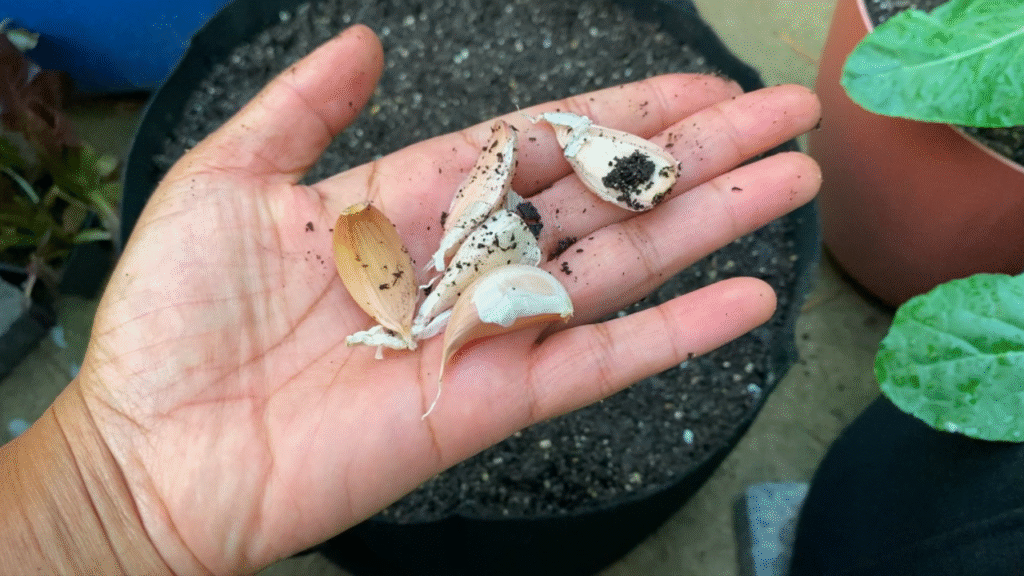
Now comes the part everyone gets excited about. that is planting the cloves. Start by gently separating your garlic bulb into individual cloves, leaving the papery skin intact. That thin layer acts like natural armor, protecting the clove as it begins to root.
Each clove should be planted about 3–4 inches deep and 3–4 inches apart, with the pointed tip facing upward. I always make sure my containers are deep enough to allow the bulbs to form without restriction.
As you press each clove into the soil, imagine how it will multiply beneath the surface over the next several months. I like to arrange my cloves around the edges of the container, leaving room in the middle to tuck in a few fast-growing crops like lettuce or radishes for a little companion gardening.
After planting, water thoroughly until you see drainage from the bottom of your container. This settles the soil and eliminates air pockets. From there, only water when the top 1–2 inches of soil feel dry. Garlic prefers consistent moisture but never soggy roots.
Recommended Products:
- Hand Trowel
- Plant Labels (for tracking dates and varieties)
- Moisture Meter (to avoid overwatering)
Step 4: Mulch and Protect Your Garlic
One of the biggest mistakes I made during my first attempt at planting garlic was skipping mulch. That left the bulbs exposed to fluctuating temperatures and heavy rain. This year, I’m not taking any chances.
After planting, I’ll be topping my containers with straw mulch to help regulate soil temperature, retain moisture, and protect the bulbs during colder nights. If you live in an area that experiences frost or snow, mulch is your garlic’s best friend. It acts like a cozy blanket that keeps your bulbs insulated while still allowing air to circulate.
And if you’re expecting rainstorms or unpredictable winter weather, a light frost blanket or clear garden tarp can create a mini-greenhouse effect, keeping your soil protected without blocking sunlight.
Recommended Products:
- Straw Mulch (natural insulation)
- Frost Blanket or Clear Garden Tarp (for weather protection)
Step 5: Patience and Care
Garlic is the definition of delayed gratification. Once your cloves are planted and covered, the hardest part begins, waiting. Over the next few months, you’ll see little to no visible change, but beneath the soil, your garlic is hard at work developing roots and forming the foundation for next summer’s bulbs.
By spring, those beautiful green shoots will start to appear, and that’s your signal that everything underground is progressing exactly as it should. Continue watering only as needed, and resist the temptation to overfeed or disturb the soil.
Every time I walk past my containers and see those green tips peeking through, it’s a quiet reminder that patience pays off, and that the best things in gardening really do take time.
When you follow these steps for how to grow garlic at home, you’re not just planting cloves; you’re planting the promise of a future harvest. Each step, from choosing healthy bulbs to protecting them from the elements, builds toward success. So whether you’re working with raised beds or growing garlic in containers like me, take your time, prepare well, and trust the process. Your garlic will reward you in the months to come.
How to Protect Garlic from Weather and Pests
When I first learned how to grow garlic at home, I thought once you planted the cloves, the hard part was over. But I quickly learned that protecting your garlic is just as important as planting it. Weather and pests can turn a healthy crop into disappointment almost overnight if you’re not prepared.
My first attempt at planting garlic taught me that lesson the hard way. I had beautiful green shoots growing until a sudden cold snap hit, followed by days of heavy rain. I didn’t have any mulch or cover over my containers, and the result was heartbreaking. The shoots froze, the bulbs became waterlogged, and everything I’d planted rotted away.
This year, I’m doing things differently. The first line of defense for garlic is mulch. As soon as I finish planting, I cover the soil with a 2- to 3-inch layer of straw mulch. Mulch helps regulate the soil temperature, keeps the moisture level balanced, and protects the bulbs from frost. It’s also incredibly helpful for preventing weeds from competing with your garlic for nutrients.
If you’re gardening in containers like I am, heavy rain can be another challenge. Garlic doesn’t like sitting in waterlogged soil, that’s a fast track to bulb rot. During long rainy periods, I plan to move my containers under partial cover or use a clear plastic garden tarp to shield them from the heaviest downpours while still allowing light through.
For those in colder climates, a frost blanket is another must-have. It acts like a lightweight shield, keeping your garlic warm and safe during freezing nights. Just remember to remove it when temperatures rise to prevent overheating.
As for pests, the good news is garlic naturally repels many of them. However, keep an eye out for aphids or mites on young shoots in early spring. A simple spray of neem oil can help keep them under control without harming your plants or the environment.
Recommendations for Protection
- Straw Mulch: Protects bulbs from frost and helps retain moisture.
- Frost Blanket: Shields plants from sudden temperature drops.
- Clear Garden Tarp: Protects containers from excess rain while letting in light.
- Neem Oil Spray: Keeps aphids and mites away naturally.
Protecting your garlic isn’t complicated. It’s about creating a balance between warmth, airflow, and moisture. Once your garlic is covered and cozy, it can focus on doing what it does best: growing strong, healthy bulbs beneath the surface, just waiting for summer’s harvest.
How Long Does Garlic Take to Grow? (Patience Required)
If there’s one thing I’ve learned from gardening, it’s that every crop teaches you something about patience, and garlic might be the best teacher of them all. When people ask me how to grow garlic, I always tell them the truth: it’s easy to plant but slow to mature. Garlic doesn’t rush. It takes its time beneath the soil, developing layer by layer until the warm months arrive.
So, how long does garlic take to grow? On average, you’re looking at about eight to nine months from planting to harvest. That’s right, nearly an entire growing season. If you plant your cloves in the fall, like I did in October, don’t expect to harvest until around June or early July of the following year. It’s a long process, but every stage has its purpose.
During the Fall, your cloves focus on root development. Even though you might not see anything happening above the surface, a lot is going on underground. Those roots are anchoring the bulbs and preparing them for the cold months ahead.
In Winter, garlic goes into a sort of dormancy. Growth slows down, but that’s exactly what it’s supposed to do. The cold actually helps trigger the bulb formation process. Then, as Spring arrives and the weather warms, the garlic wakes up again. You’ll start to see those beautiful green shoots push through the mulch, a reassuring sign that all your waiting has been worth it.
By early Summer, the bulbs begin to swell underground. You’ll notice the lower leaves starting to yellow, which is the plant’s natural way of signaling that it’s almost ready to harvest. It’s tempting to pull them early, but patience really pays off here. Garlic bulbs need that extra time to develop their full size and flavor.
Every time I walk past my garlic containers, I remind myself that gardening isn’t just about the harvest, it’s about what happens in between. Garlic forces you to slow down and trust the process. It teaches you that even when you can’t see progress, growth is still happening quietly beneath the surface.
So, if you’re new to planting garlic or this is your first time trying how to grow garlic at home, don’t let the long timeline discourage you. The wait is absolutely worth it. When you finally dig up those full, firm bulbs next summer, you’ll feel a deep sense of satisfaction that only comes from seeing patience turn into something you can hold in your hands and taste in your kitchen.
Harvesting and Curing Garlic
After months of waiting and watching, the most exciting part of how to grow garlic at home finally arrives. Harvesting time! This is when all your patience, preparation, and care pay off. But knowing exactly when and how to harvest makes all the difference between full, healthy bulbs and ones that are underdeveloped or over-cured.
The first sign that your garlic is ready to harvest is in the leaves. Once the bottom two or three leaves start to yellow and dry, while the upper leaves remain green, it’s time to take a closer look. Gently brush back some soil to check the bulbs. If the cloves inside the wrapper look plump and distinct, your garlic is ready.
When you’re harvesting, resist the urge to pull the plants by hand, especially if you’re growing garlic in containers. Instead, use a small hand fork or trowel to carefully loosen the soil around each bulb. Garlic bruises easily, and damage during harvesting can affect how long it lasts in storage.
Once harvested, don’t wash the bulbs. Simply brush off the excess soil and keep the outer layers intact. Next comes curing, which is the process that dries and hardens the outer skin for long-term storage. Lay your bulbs in a single layer in a shaded, well-ventilated area for about two to three weeks. Good airflow is key here (garages, covered patios, or shaded porches all work well).
During this time, avoid direct sunlight, as it can cause the garlic to over-dry or split. You’ll know your garlic is fully cured when the wrappers are papery and the necks are dry.
Once cured, trim the roots and tops, and store your bulbs in a cool, dry space. Properly cured garlic can last up to eight months, a reward well worth the wait for anyone learning how to grow garlic from start to finish.
How to Store Garlic After Harvest
While I haven’t reached the storage stage yet in my own garlic-growing journey, I’ve done my homework so I’ll be ready when that time comes. After all, learning how to grow garlic at home doesn’t stop at planting and harvesting. The final step is knowing how to store your hard-earned bulbs so they last for months.
Once your garlic has finished curing, the goal is to keep it cool, dry, and well-ventilated. The outer skins act as natural protection, so you’ll want to keep those layers intact. Don’t wash the bulbs, and avoid sealing them in airtight containers or plastic bags, as trapped moisture can cause mold or sprouting.
The ideal storage spot is somewhere with consistent temperatures, around 55–60°F (13–16°C), and low humidity. Many gardeners store garlic in mesh baskets, paper bags, or even hanging braids in their pantry or kitchen. The key is airflow. Whether you hang your bulbs or place them in open bins, make sure air can circulate freely around them.
Another tip I came across is to separate the largest, healthiest bulbs for replanting next season. Since the biggest cloves produce the biggest bulbs, saving your best garlic for replanting helps improve your yield year after year.
Properly cured and stored, your garlic can last six to eight months, sometimes longer if conditions are right. Even though I’m not at that stage yet, I’m already planning where my garlic will go once it’s ready. I’ve waited this long to grow it; I definitely want it to last as long as possible.
Learning every step ahead of time helps me stay prepared, and when those bulbs finally cure, I’ll be ready to store them the right way, from my container garden straight to my kitchen.
Want to Know What to Plant Next? Grab My Monthly Planting Guide
One thing I’ve learned since starting my garden is that once you finish one crop, you’re already thinking about the next. Gardening has a rhythm, and knowing what to plant each month keeps that rhythm going strong. That’s exactly why I created my Monthly Planting Guide.
If you’ve ever stood in your garden wondering, “What should I plant now?” or “Is it too early for this crop?” This guide answers those questions for you. It’s built for gardeners like me who want to make the most of small spaces, keep containers productive year-round, and avoid the guesswork.
The guide tells you what to plant every month based on your USDA growing zone, so you’ll always know what’s in season. It breaks down exactly what you can start indoors and what you can direct sow outside, making it perfect for container gardeners and beginners alike. Whether you’re mapping out your fall garlic or planning your spring greens, it helps you stay one step ahead of the seasons.
I use this same guide to plan my entire garden year. It’s how I stay organized, consistent, and confident with every new planting. If you’re ready to grow more food, and grow it intentionally, this is where to start.
You can grab it right on my website and start planning your next garden season today.
Conclusion: My Garlic-Growing Journey Continues
Every crop I plant teaches me something new, but garlic has been one of my greatest teachers so far. Learning how to grow garlic at home has reminded me that success in gardening isn’t just about getting it right the first time. It’s about showing up again after it didn’t work out the first time. My first attempt failed, but instead of giving up, I took those lessons and came back better prepared, with improved soil, stronger protection, and a deeper understanding of what my plants need.
That’s what gardening is all about- progress, not perfection. Whether your first garlic crop thrives or struggles, you’ll gain something valuable either way. You’ll learn patience, observation, and how to read your garden’s signs. And when harvest time finally comes, those bulbs will mean so much more because of the care and time you’ve invested.
If you’re thinking about starting your own garlic-growing journey, now is the time. Start small, stay curious, and give yourself permission to learn along the way. And if you ever wonder what to plant next after your garlic, my Monthly Planting Guide can help you plan ahead, so your garden stays productive all year long.
Every clove you plant is a promise. One that, with a little care and patience, will grow into something worth waiting for.
*This post contains Amazon affiliate links, which means I may earn a small commission if you make a purchase through them, at no extra cost to you.