Skip to content
It’s finally sweet-potato harvesting time, and this season marks my very first experience growing sweet potatoes in containers. When I first started, I honestly wasn’t sure what to expect. I had no backyard, limited space, and no prior success with regular potatoes, but I was determined to see if I could make it happen right here in my small container garden. Five months later, here we are, digging into the soil to uncover the results of patience, hope, and a whole lot of learning along the way.
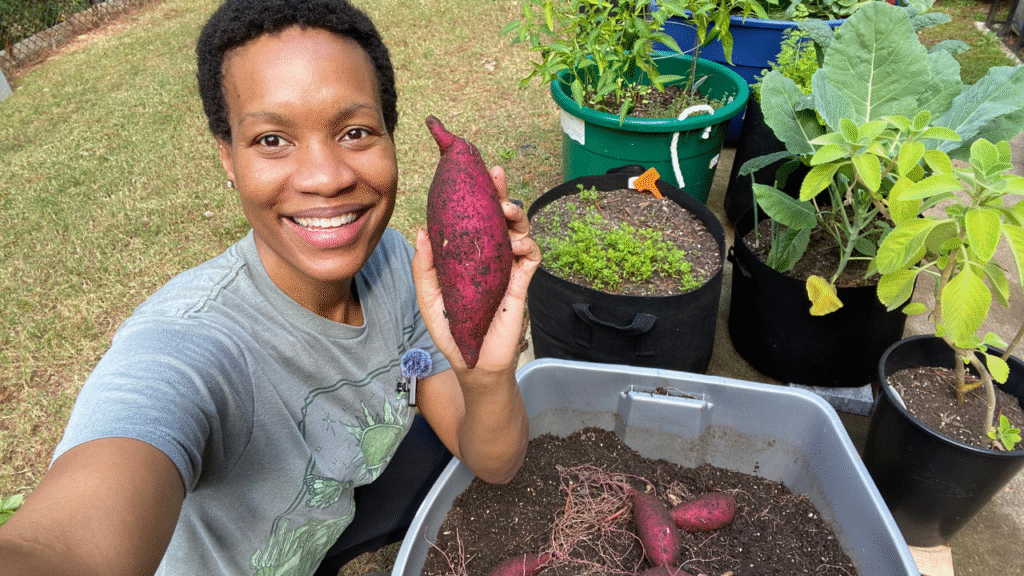
In this post, I’ll be sharing everything I learned from my first attempt at growing sweet potatoes in containers, including how to choose the right 30-gallon container, what type of potting mix helped the tubers form evenly, how I used banana-peel water to feed my plants, and what signs to look for when deciding when sweet potatoes are ready to harvest. Whether you’re working with a balcony, patio, or small corner of a porch, this method proves that you don’t need a large garden to grow your own food successfully.
More than just a how-to guide, this post is also my story. A beginner’s journey filled with trial and error, lessons learned, and the pure excitement of uncovering those first homegrown sweet potatoes. If you’ve ever wondered how to grow food in small spaces, stay with me, because this journey might just inspire you to dig in and start your own harvest story.
Why I Decided to Try Growing Sweet Potatoes in Containers
The reason I decided to try growing sweet potatoes in containers is simple; I love sweet potatoes. They are hands down my favorite kind of potato to eat. Whether I’m roasting them for dinner, adding them to a stew, or baking them for a quick snack, sweet potatoes are always a staple in my kitchen. So naturally, it made sense that at some point, I’d want to try growing my own. What I didn’t know was just how much patience and excitement this crop would bring into my gardening journey.
I don’t have a big backyard, just a small space filled with containers and a curiosity to see what I could grow. After my first attempt at regular potatoes didn’t work out, I was hesitant to try again. But I kept thinking, if sweet potatoes are my favorite to eat, maybe they’ll also become my favorite to grow. So, I decided to give it a shot.
Sweet potatoes are surprisingly well-suited for small-space gardeners. They grow beautifully in large 30-gallon containers, and as long as the soil stays loose and well-draining, the tubers can spread freely beneath the surface. For this project, I used a mix of organic potting mix, compost, and worm castings to create a nutrient-rich base that would support strong root growth. It’s a forgiving crop, which makes it perfect for beginners who are still figuring out how often to water or feed their plants.
What also drew me to growing sweet potatoes was how versatile they are. Not only can you eat the roots, but the leaves are also edible and packed with nutrients. That means this one plant can give you two harvests, fresh greens and sweet, starchy tubers. Now that I’ve seen how much they can produce in a container, I know this won’t be my last time growing them. Sweet potatoes have officially earned a permanent place in my garden, and on my plate.
How to Grow Sweet Potatoes in Containers
When I first started growing sweet potatoes in containers, I didn’t know what to expect. I had seen other gardeners harvest big, beautiful tubers, but I wasn’t sure if I’d get the same results in a small space. What I learned, though, is that with the right container size, soil mix, and care routine, anyone can grow sweet potatoes successfully. Even without a backyard.
Choosing the Right Container
The foundation of this project was my 30-gallon container. The size and depth are key when growing root crops because sweet potatoes need plenty of space to stretch out and develop evenly. A smaller pot can restrict growth and lead to smaller tubers. For anyone starting out, I recommend using a large fabric grow bag or a sturdy plastic container with multiple drainage holes. Proper drainage prevents water from sitting in the soil and keeps the roots from rotting.
The other benefit of container gardening is control. Containers warm up faster than garden beds, which sweet potatoes love, since they’re a warm-season crop. The soil temperature stays consistently warm during the growing months, helping the tubers grow larger and faster.
Creating the Perfect Soil Mix
The secret to success lies in the soil. Sweet potatoes grow best in loose, well-draining soil that’s rich in organic matter. I mixed equal parts of organic potting mix, compost, and a handful of worm castings. This combination created a fluffy texture that allowed the roots to breathe and expand freely. Compact or clay-heavy soil can cause tubers to become misshapen or stunted, so it’s worth investing in quality materials from the start.
Sweet potatoes are not heavy feeders, but they do benefit from nutrient-rich soil. The compost adds slow-release nutrients, while worm castings help improve soil structure and moisture retention. I also added a sprinkle of 4-4-4 organic fertilizer and bone meal before planting to give the slips a gentle boost.
Planting Sweet Potato Slips
Instead of planting seeds, sweet potatoes are grown from slips, which are small shoots that sprout from mature sweet potatoes. I planted five sweet potato slips in my 30-gallon container, spacing them about 10–12 inches apart. Each slip should be buried deep enough so that at least two nodes (the small bumps along the stem) are below the surface. These nodes will develop roots and eventually form the tubers.
After planting, I gave the container a thorough watering to help the soil settle around the slips. Then came the waiting game. Sweet potatoes are slow growers, typically taking 90 to 120 days before harvest. But they’re worth every bit of patience.
Watering and Feeding
One of the biggest lessons I learned was the importance of consistent watering. Sweet potatoes prefer moist (not soggy) soil. During my growing season, I watered once or twice a week, depending on the weather. However, I’ll admit I wasn’t always consistent, and I believe that affected my overall yield.
To feed the plants, I used banana peel fertilizer water during the first few months. Bananas are rich in potassium and phosphorus, which help strengthen the roots and encourage tuber development. I’d soak banana peels in a bucket of water for several days, then use that liquid to water the plants weekly. It’s an easy, natural way to provide nutrients without relying on synthetic fertilizers.
Managing Pests and Leaf Care
Pests were one of my biggest challenge, especially caterpillars. They loved my sweet potato leaves and would chew through them almost overnight. I spent many mornings handpicking caterpillars and inspecting the undersides of leaves. While tedious, it helped prevent serious damage.
I later learned that neem oil can be used as a natural pest repellent. A light spray every one to two weeks can keep caterpillars, aphids, and other leaf pests under control. Despite the damage, my plants stayed resilient, and the leaves regrew quickly once pest activity slowed in the fall.
Patience Pays Off
The biggest takeaway from this experience is that sweet potatoes reward patience. They don’t grow fast, and you won’t see visible signs of progress above ground. But under the surface, they’re developing strong, healthy tubers. For a first-time gardener, or anyone growing in a small space, sweet potatoes are a wonderful crop to learn from.
When Are Sweet Potatoes Ready to Harvest?
One of the most confusing parts of growing sweet potatoes in containers for the first time was figuring out when sweet potatoes are ready to harvest. Unlike regular potatoes, the leaves on sweet potato vines don’t always die back to signal harvest time. In fact, mine were still lush and green even after five full months of growing. I kept looking at the leaves every week, thinking they’d eventually start yellowing or drying up, but they never did. So, I decided to trust the process, follow the general timeline, and harvest after about five to six months.
For most varieties, sweet potatoes take anywhere from 90 to 120 days to mature. However, when you’re growing sweet potatoes in containers, the timing can vary slightly depending on the soil temperature, watering consistency, and container size. Because my slips went into the container in May and I was harvesting in October, I figured it was safe to assume the roots had enough time to develop.
Another clue I noticed was the slight slowing of vine growth. Around the fifth month, the vines stopped spreading as aggressively as before. That was a subtle sign that the plant was shifting its energy underground, exactly what I was hoping for. Still, I didn’t want to rush it. I wanted to make sure the sweet potatoes had enough time to reach full size and sweetness.
When it was finally time to harvest, I went into it with mixed emotions. I was excited, nervous, and curious. I had been checking the soil surface for any visible bumps or cracks that might hint at what was going on underneath, but there wasn’t much to see. Sweet potatoes grow entirely below the surface, so it truly is a surprise until you start digging.
If you’re growing sweet potatoes for the first time and wondering when to harvest, my best advice is to mark your calendar and give them at least five months before checking. The waiting game can be tough, but the reward is worth it. When you finally dig in and uncover those first tubers, it’s one of the most satisfying moments in gardening.
Harvesting Sweet Potatoes – The Moment of Truth
The day I decided to harvest my sweet potatoes felt like a milestone. After five long months, I finally reached the moment of truth. I didn’t know what I would find beneath the soil. Maybe a handful of small tubers, or maybe nothing at all. I was ready to find out.
I started by cutting back the vines, which had grown thick and full over the summer. The leaves were still green and healthy, but it was time to clear them away to make space for the harvest. Using my gardening shears, I trimmed the vines at the base and gently pulled them back from the container. Even though it was bittersweet to see them go, I couldn’t wait to see what had been happening beneath the surface.
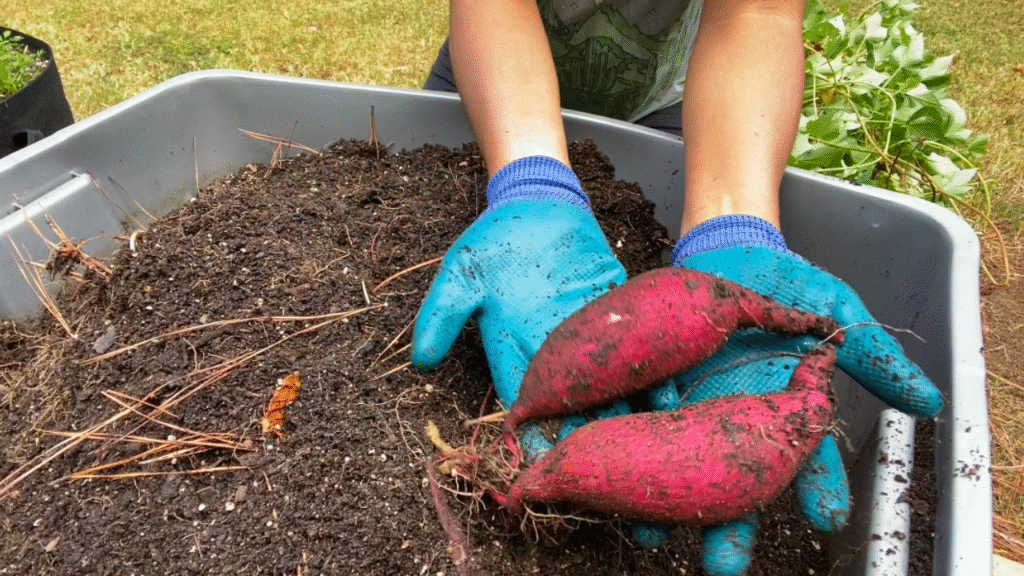
Instead of using a shovel, I decided to dig with my hands. I had heard that sweet potatoes bruise easily, and I didn’t want to damage any of them after waiting this long. The soil was still loose, thanks to the fluffy mix of organic potting soil, compost, and worm castings, so digging by hand was surprisingly easy. I carefully brushed away the soil and there they were. My very first sweet potatoes.
It’s hard to describe that feeling when you see those first orange tubers poking through the soil. It’s a mix of disbelief, joy, and pride. I remember saying out loud, “Oh my gosh, I actually did it!” After not having any success with my regular potatoes earlier in the year, seeing those sweet potatoes felt like redemption. Some were small, some were broken from my excitement, but every single one was a victory.
I realized that the beauty of container gardening is how personal it feels. You can see every step of the process, from slips to vines to harvest. Even if the yield isn’t huge, the satisfaction is unmatched. I didn’t expect a perfect harvest, and that’s what made it so rewarding. For me, this wasn’t about quantity, it was about growth, both in the garden and in myself.
After collecting them, I laid the sweet potatoes out gently to cure. They weren’t large, but they were mine. My first harvest. And that’s what gardening is really about. It’s less about perfection and more about progress. Every harvest teaches you something new, and this one taught me that even in small spaces, great things can grow.
How to Cure and Store Sweet Potatoes
Once the excitement of harvesting sweet potatoes settled in, the next step was learning how to cure them properly. Curing is what transforms freshly dug sweet potatoes from earthy and starchy to soft and sweet. It’s the process that deepens their flavor and helps them store longer without rotting. Since this was my first harvest, I wanted to make sure I did this part right.
When you harvest sweet potatoes, they’re not ready to eat immediately. Freshly dug tubers are still full of starch, and curing allows those starches to convert into natural sugars. The key is warmth, humidity, and time. Ideally, sweet potatoes should cure in a warm environment (around 80 to 85°F) with high humidity for about 7 to 10 days. After curing, the skins toughen up, the sweetness intensifies, and they can last for months when stored properly.
Because I grow in a small space and don’t have a dedicated curing area, I had to get creative. I placed my sweet potatoes in a large ceramic bowl, covered them loosely with a breathable cloth, and tucked them inside my cupboard where it stayed warm and dark. I left them there for two weeks to allow the curing process to work its magic. Even without perfect conditions, this method helps the sweet potatoes develop sweetness while protecting them from light and cold air.
After curing, the next step is storage. Once the curing period is over, move your sweet potatoes to a cool, dry, and dark place. Ideally, you want a temperature between 55 and 60°F. A pantry or cabinet works well if you don’t have a root cellar. Avoid the refrigerator, as cold temperatures can alter their texture and flavor.
During storage, check your sweet potatoes occasionally and remove any that show signs of soft spots or mold. When cured and stored correctly, sweet potatoes can last several months. Long enough to enjoy them throughout winter.
I learned that the curing process is just as rewarding as the harvest itself. It’s the final step that turns all your effort into something truly delicious. And for me, pulling out those homegrown sweet potatoes weeks later, knowing I grew them from slips in a container, made every bit of waiting worthwhile.
Lessons Learned from My First Sweet Potato Harvest
Looking back on my first experience growing sweet potatoes in containers, I can honestly say it was one of the most rewarding crops I’ve grown so far. It taught me patience, consistency, and the importance of letting nature take its course. I didn’t know what to expect when I started, but I learned valuable lessons along the way. Lessons that will guide me through every future season.
The first thing I learned was how forgiving sweet potatoes can be. Even though I wasn’t as consistent with watering as I should have been, I still ended up with a harvest. That showed me that sweet potatoes are resilient plants. They don’t demand perfection, they just need the basics: loose, well-draining soil, steady warmth, and occasional feeding. Next time, I plan to stay more consistent with watering because I know now that moisture plays a big role in the size and number of tubers that develop.
The second lesson was about the soil. The success of container gardening really comes down to what’s inside the pot. My mix of organic potting soil, compost, and worm castings gave me a good start, but I now understand how crucial soil aeration is for root crops. The looser the soil, the easier it is for the tubers to expand. I also learned the value of using banana peel fertilizer water. It provided potassium and phosphorus, which sweet potatoes love. Going forward, I’ll make that part of my regular feeding schedule from start to finish.
Another takeaway was about pest control. Caterpillars tested my patience early in the season, but handpicking and persistence paid off. I learned that sometimes, the simplest methods (like checking your plants daily) can make a huge difference. If I ever have another infestation, I’ll be quicker to apply neem oil as a preventive measure rather than waiting until the damage becomes visible.
Finally, I learned that a harvest doesn’t have to be perfect to be successful. My sweet potatoes weren’t huge, but they represented progress. From the slips I planted in May to the day I dug them up in October, I saw growth. Not just in the soil, but in myself as a gardener. Each season brings new challenges, but also new confidence. And that’s what makes this journey worth it.
Want to Know What to Plant Next?
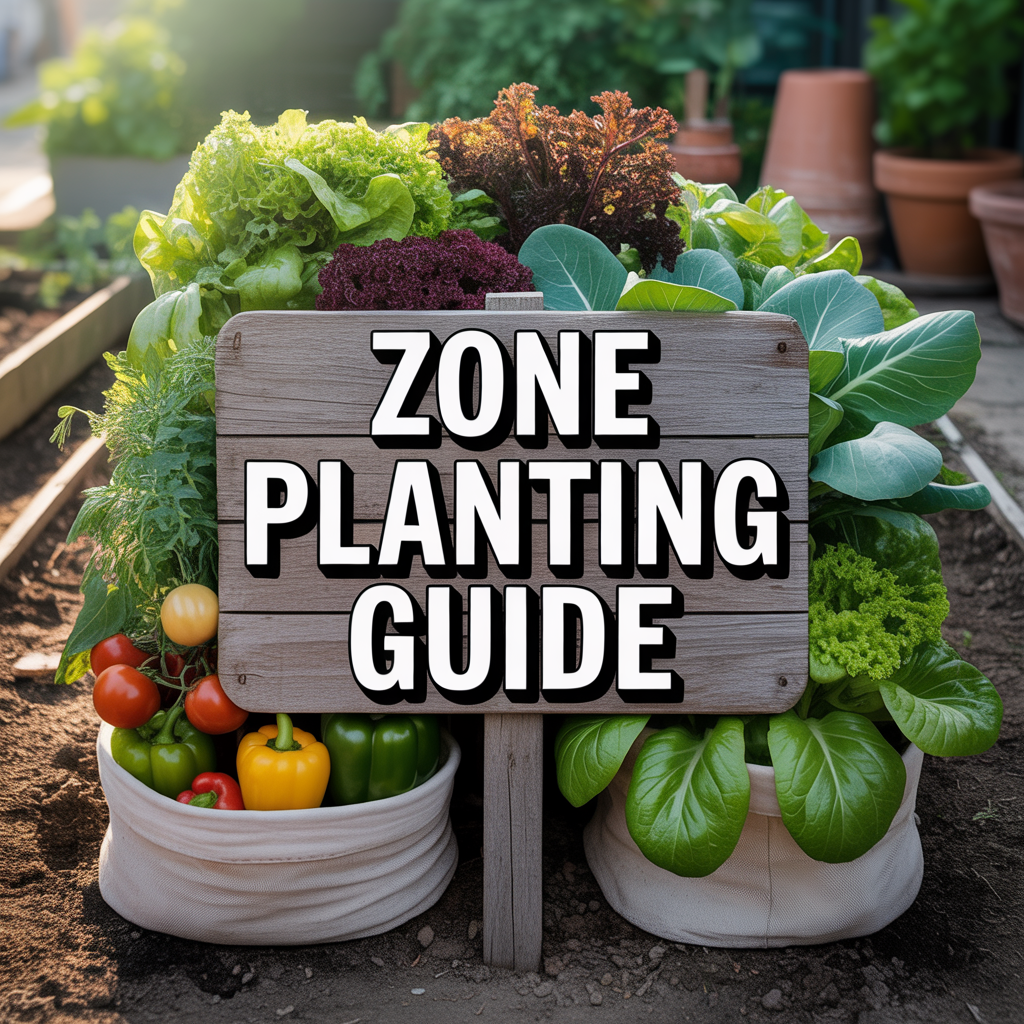
Once I finished harvesting my sweet potatoes, I found myself asking the same question many gardeners face after a successful season: What do I plant next? That’s when I realized how much my own resource, the Monthly Planting Bundle, simplifies that entire process. Not just for me, but for anyone learning to grow food in small spaces.
My Monthly Planting Bundle is designed to take all the confusion out of planning your garden. It tells you exactly what to plant each month based on your growing zone, whether you’re direct sowing outdoors or starting seeds indoors. It also includes detailed charts and checklists that make it easy to plan ahead, so you always know which crops to grow and when to grow them.
For beginners, this bundle is especially helpful because it eliminates the trial and error that so many new gardeners go through. If you’re not sure when to start your fall crops, or how long to wait before transitioning from summer harvests like sweet potatoes to your next round of vegetables, this bundle gives you the roadmap. You’ll know exactly which plants thrive in cool weather, which ones can handle the heat, and how to rotate crops season after season.
The Monthly Planting Bundle also includes bonus guides that help you with container sizes, fertilizing schedules, and companion planting- so you’re not just planting randomly, but strategically. It’s the exact system I use in my own garden to stay organized, grow more food year-round, and make the most of every inch of space I have.
Conclusion
This first experience growing sweet potatoes in containers reminded me why I fell in love with gardening in the first place. There’s something deeply satisfying about starting with a few slips, caring for them week after week, and then finally digging into the soil to uncover your very own harvest. Even though I didn’t know what to expect, the moment I pulled out those first sweet potatoes made every bit of waiting worth it.
The process wasn’t perfect. I struggled with inconsistent watering, battled caterpillars, and doubted myself more than once. But it taught me that gardening is never about perfection. It’s about progress, patience, and learning through every mistake. I discovered how resilient plants can be and how much joy comes from simply trying again. That’s what this journey represents: growth in the soil, and growth in me.
Now that my sweet potatoes are cured and stored, I’m already planning for my next planting season. If you’ve ever wanted to start a garden but didn’t know where to begin, or if you’ve been unsure what to grow next after a harvest, my Monthly Planting Bundle was created to guide you. It’s the same system I use to plan what to plant every month, how to rotate crops, and how to make the most of container space.
If there’s one thing I’ve learned, it’s that small spaces can still produce big harvests. And sometimes, all it takes is one container and a little faith to discover how much you’re capable of growing, both in your garden and in yourself.
*This post contains affiliate links, meaning I may earn a small commission at no extra cost to you.