Skip to content
When I first started gardening, I didn’t realize how important mulch for plants really was, especially in the Fall and Winter. I used to think mulching was something only experienced gardeners did or something you had to buy from the store. But now that I’m a year into my gardening journey, I’m learning that protecting your plants starts with simple habits, and mulching is one of the most powerful ones. Whether you’re using pine needle mulch, leaf mulch, or just trying to figure out what to use as mulch for plants in your own garden, this is the perfect season to start building that routine.
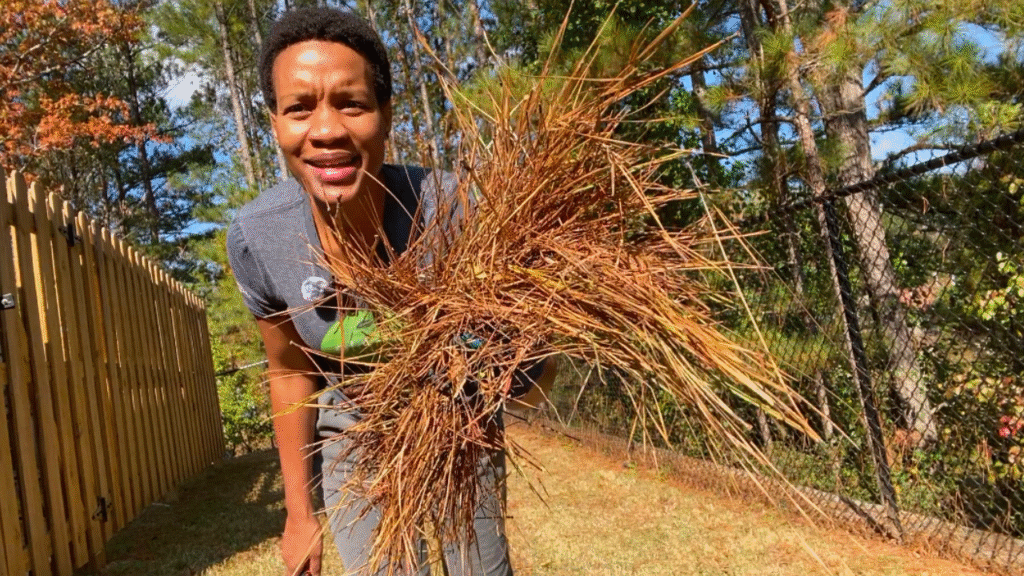
As temperatures drop and the weather becomes unpredictable, mulching becomes a quiet lifesaver in the background. It helps your plants hold onto warmth, hold onto moisture, and stay steady through all the ups and downs that Fall and Winter bring, especially if you garden in containers like I do. The best part? You don’t always have to buy bags of mulch. In my own yard, I learned that I had some of the best materials right at my feet.
In this article, I’m sharing my personal experience with mulching, what I discovered about using free natural materials, and why it has become such an important part of caring for my plants. We’ll talk about the benefits of mulching, why it matters in cold weather, and which types of mulch work best in a small-space garden. Toward the end, I’ll also share a resource that has helped me stay on track with what to plant each month, especially as the seasons change.
Let’s dive in.
Why Mulch for Plants Matters (Especially in Fall and Winter)
Mulching is one of those things I used to overlook, and honestly, I didn’t realize how big of a difference it could make until the weather started shifting this Fall. When you’re gardening in containers (especially in a small backyard or townhome like mine) your plants feel those temperature swings a lot more than in-ground gardens. That’s why mulching becomes such an important part of keeping everything healthy during the cooler months. Here are the main reasons why I realized mulching matters so much.
A. Extreme Temperature Protection
One of the biggest reasons I started paying attention to mulching in the Fall is because the cold snaps were stressing out my plants.
Here’s how mulch helps:
- Acts like a blanket for the soil, holding in warmth when temperatures drop suddenly.
- Protects the root zone, which is the most vulnerable part of the plant during cold weather.
- Helps plants transition through weather swings, like going from 60°F days to sudden 25°F nights.
- In my garden, I noticed certain plants bounced back faster after cold nights when mulched compared to the ones I didn’t get to yet.
All of this makes mulch one of the simplest ways to help your plants survive unpredictable Fall and Winter temperatures.
B. Moisture Retention (A Big Deal for Container Gardeners)
If you garden in containers like I do, you already know how fast they dry out. Even in November, I sometimes find myself watering every day.
Mulching makes a huge difference:
- Slows down evaporation, keeping the soil moist longer.
- Keeps water from escaping too quickly, especially in grow bags where air flows through the fabric.
- Saves time and effort, since you don’t have to constantly check if the soil dried out.
- Helps maintain consistent moisture, which certain crops (beans, beets, and garlic) really depend on.
Once I added pine needle mulch around some of my plants, I noticed the soil stayed damp longer, even when the days were breezy and dry.
C. Seasonal Versatility: Useful in Summer and Winter
This was something I didn’t realize at first: mulching isn’t just a cold-weather thing.
It helps during both seasons:
- Summer:
- Keeps soil cool.
- Reduces how often you need to water.
- Prevents soil crusting and surface dryness.
- Fall/Winter:
- Protects roots from freezing.
- Keeps soil warm enough for plants to stay active.
- Provides insulation as temperatures drop.
No matter the season, mulch stabilizes the soil environment, which is something container plants need way more support with.
D. Long-Term Soil Improvement
Mulch isn’t just protection for the moment. It improves your soil over time.
Here’s how:
- Natural mulches break down into organic matter, creating healthier soil.
- Pine needles and leaves add structure, aeration, and nutrients as they decompose.
- Helps build microbial activity, which is essential for strong root growth.
- For container gardens, it offers a steady supply of slow, natural composting right on top of your soil.
- You save money on soil amendments because the mulch becomes part of your next growing season.
When I started clearing pine needles from my yard, I didn’t realize I was actually collecting future soil. But seeing how they break down in my containers made me appreciate mulching even more.
Why This All Matters
Mulching seemed like such a small task at first, but once I started seeing the difference it made (healthier plants, steadier soil temperatures, fewer dry spots) it became something I now consider essential. Especially in Fall and Winter, mulch for plants becomes a layer of protection that helps everything stay stable through the cold, wind, and moisture loss. And because I garden in containers, this extra layer has become one of the easiest ways to support my plants without spending money or buying anything fancy.
What to Use as Mulch: The 3 Free Mulches I Use in My Garden
One of the things I love most about gardening (especially as someone still learning) is that the longer you do it, the more you realize you really don’t need as much as you think. Mulch for plants is the perfect example of that. For the longest time, I genuinely thought mulching meant buying big bags of straw or special wood-based mixes online. I didn’t understand that nature had already given me everything I needed, right in my yard.
So in this section, I want to share the exact mulches I personally use in my container garden, how I gather them, and how they’ve made a difference for my Fall and Winter crops. These are free, accessible, and perfect for new gardeners who want to protect their plants without breaking the bank.
1. Pine Needle Mulch (My #1 Favorite Mulch for Plants)
A. Why I Chose Pine Needles
Pine needle mulch wasn’t something I had ever seen on YouTube or in beginner gardening guides. Almost every channel I watched talked about straw mulch or wood mulch, and that’s exactly why I started searching online for straw bales. I had Amazon in my cart, ready to purchase something I wasn’t even sure I needed.
Then it hit me: I literally live beside pine trees.
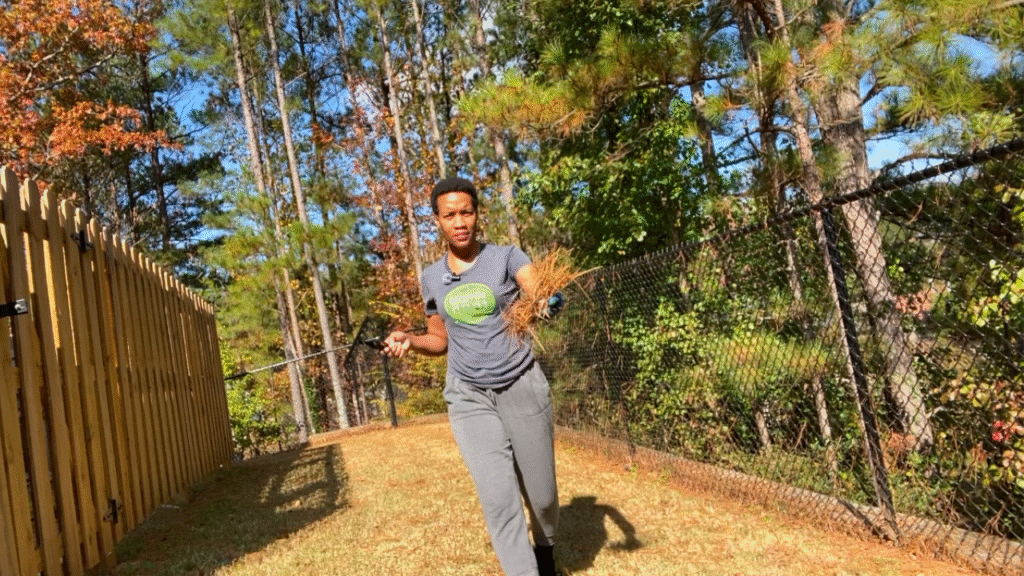
Every day, pine needles fall all over the ground by the side of my home. Some are in my yard, some are technically in my neighbor’s yard (townhome living!), but either way, they’re everywhere. And I had never once thought about using them. It wasn’t until I started researching ways to mulch for Winter that I realized pine needles are actually one of the best natural mulches you can use, especially for container gardeners.
Why? Because:
- They’re lightweight but still create an insulating layer.
- They don’t compact heavily when they get wet.
- They allow airflow while still protecting the soil.
- They break down slowly, giving long-term coverage.
- And the best part? They’re free.
Once I realized this, I stopped looking at mulch as a product I needed to buy and started looking at the ground as one of my best gardening resources.
B. How I Use Pine Needles as Mulch
My process is simple because I don’t like making things harder than they need to be.
This is exactly how I mulch my containers using pine needles:
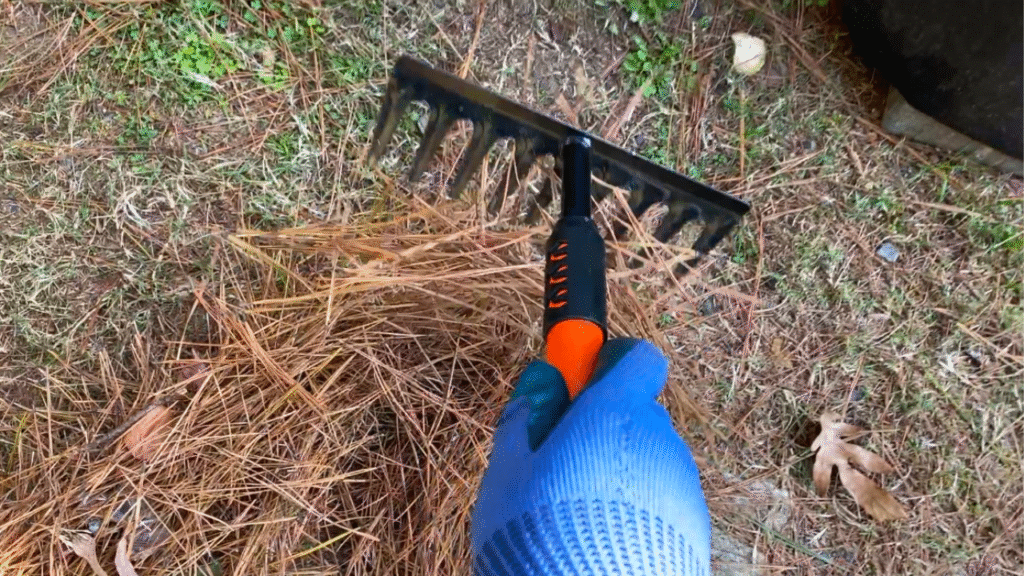
- I take my little hand shovel from Dollar Tree and walk around the yard collecting pine needles straight off the ground.
- I pile them into a bucket, sometimes mixing in small bits of leaves or twigs that fall naturally with them.
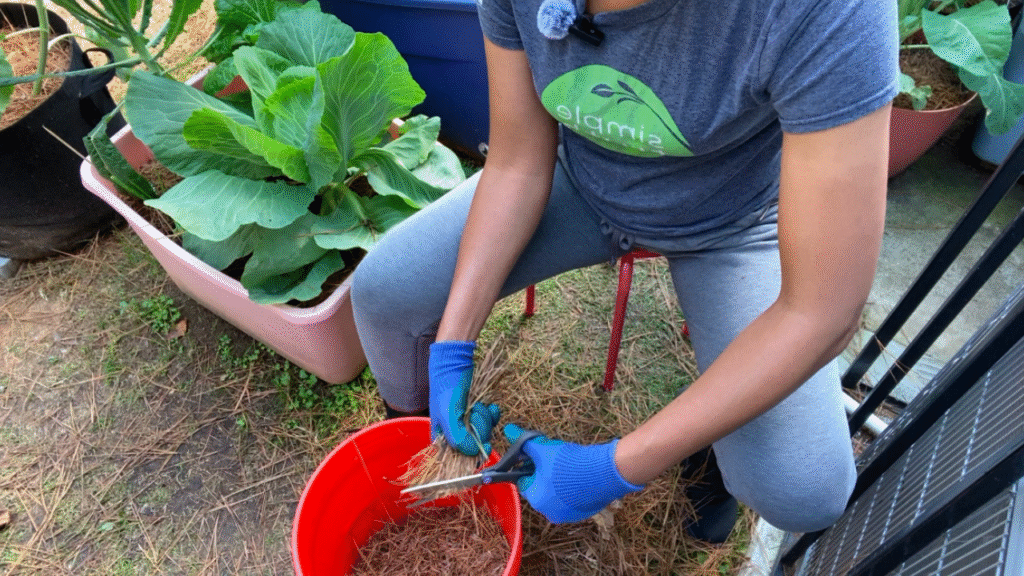
- I cut the pine needles into smaller pieces before adding them to my containers.
- This is important because long pine needles tend to fly away with the wind.
- Cutting them down helps them stay in place, especially in shallower grow bags.
- I spread them around the base of each plant, making sure not to cover seedlings or stems too deeply.
- I water the mulch in, which helps it settle and lock into place.
As soon as I started doing this, I noticed two things: My containers looked instantly neater, and the soil stayed moist significantly longer.
Another thing I appreciate is how easy it is to push the pine needle mulch aside when I’m ready to plant something new. If I’m amending the soil or dropping seeds, I just move the mulch over, plant, and then gently put the mulch back once the seedlings are established.
C. Benefits of Pine Needle Mulch For Plants(Why It’s My Go-To)
The more I use pine needles, the more I realize they might be one of the best forms of mulch for plants in small-space gardens. Here’s why:
- Breathability – Pine needles don’t suffocate the soil. Water can pass through, and the top layer stays light.
- Insulation for Winter -They help regulate soil temperature on cold nights, which is especially important for container plants.
- Moisture Retention – My beans, garlic, and brassicas now stay moist longer, even on dry Fall days.
- Wind Resistance (when cut) -They cling together just enough to resist blowing away.
- Slow Breakdown – Unlike leaves which degrade quickly, pine needles decompose slowly, giving you longer protection.
- Aesthetic Look – My containers genuinely look more “finished” with pine needle mulch.
- Free and abundant – I don’t think I’ll ever need to buy mulch again as long as I have pine trees nearby.
One thing I really love is how sustainable this option is. Instead of buying store-bought mulch that comes in bags and packaging, I’m literally recycling what nature drops at my feet. It makes mulching feel simple, affordable, and environmentally friendly.
2. Leaf Mulch For Plants (Perfect for Compost + Winter Beds)
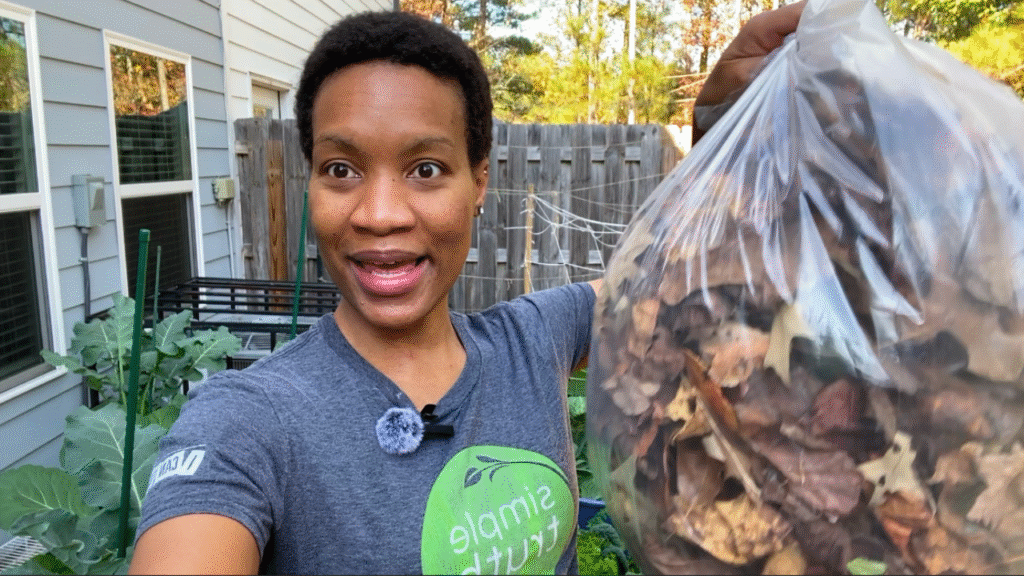
Leaves were the second natural mulch I discovered, and they also came with a personal story. My brother’s house backs up to a wooded area, and in the Fall, he ends up with mountains of leaves. He saves them in a giant trash bin, and every time I visit, I leave with a few full bags.
What I love about leaf mulch is:
- It’s soft
- It breaks down beautifully
- It becomes rich compost
- It’s easy to gather
- And it’s completely free
When I started adding leaves to my containers, I noticed how they naturally created a fluffy barrier over the soil. They help trap warmth, just like pine needles, but they break down a little more quickly. That means they double as a soil amendment!
How I Use Leaf Mulch
- I spread leaves around my containers that need extra insulation during cold spells.
- I use them heavily in my compost bin because they break down quickly.
- I layer them around garlic, brassicas, onions, and anything that appreciates a soft mulch layer.
Leaf mulch is also ideal for mulching the top of larger grow bags or raised beds, because the leaves naturally settle and flatten into the soil over time.
One thing I will say is: you may need to add more leaf mulch throughout the season because it breaks down faster than pine needles. But I don’t mind because I have endless access to them.
3. Other Free Mulches You Can Use
Even if someone doesn’t have pine needles or access to leaves like I do, there are other free or low-cost mulches that work extremely well:
A. Grass Clippings (Dried Only)
- Great for adding nitrogen back to the soil.
- Best when completely dry to avoid matting.
B. Shredded Paper or Cardboard
- Works well for moisture retention.
- Best used under another layer (like leaves) to prevent blowing away.
C. Wood Chips (If You Can Get Them Free)
- Many cities offer free mulch drop-offs.
- Good for walkways or larger beds, but not ideal for seedlings.
D. Bark, Twigs, and Natural Debris
- Can be mixed with pine needles for a varied mulch layer.
While I personally rely mostly on pine needles and leaves, I include these options because so many gardeners don’t realize how many natural materials can be repurposed as mulch for Winter. Gardening doesn’t always require expensive inputs. Sometimes the best things are literally right outside your door.
How I Apply Mulch Correctly in My Container Garden (Step-by-Step From My Real Routine)
Mulching sounds simple (and honestly, it really is) but when you’re new to gardening like I was last year, it can feel confusing. I used to wonder: How much mulch do I add? Do I bury the whole plant? Am I doing it wrong? So I want to break down exactly how I mulch my containers, using the methods I’ve learned through trial, error, and a whole lot of walking around my yard with a Dollar Tree hand shovel.
This isn’t the “perfect” method or the method you’d find in a textbook. This is the method that actually works for me in my small-space, container-filled garden, and hopefully it makes your process easier too.
A. Step 1: Collecting Material (My Favorite Part)
I literally walk around my backyard (and sometimes my neighbor’s yard since we share a space) and start scooping up pine needles with my little hand shovel. I’m not joking when I say I fill up a bucket in minutes.
Leaves are the same way. I grab bags from my brother’s house whenever I visit. He saves them for me in a giant bin because his whole backyard is surrounded by trees. When he hands me those bags, it honestly feels like he’s gifting me bags of gold for my garden.
B. Step 2: Cutting the Pine Needles Before Mulching
This is something I learned through trial and error. The first time I used pine needles, I tossed them straight on top of my containers…and then watched them fly away like confetti as soon as the wind picked up.
Now, I sit down with a small pair of scissors and chop the needles into shorter pieces. It doesn’t have to be perfect. Just cutting them down helps them hug the soil a little better instead of blowing all over the place.
It’s a small extra step, but I promise, it makes a big difference.
C. Step 3: Spreading the Mulch (Not Too Much, Not Too Little)
Once everything is chopped, I gather a handful and gently spread it around the base of my plants. I don’t pile it high or suffocate the stems. I just want it to form a soft, protective blanket over the soil.
This is especially helpful for plants like:
- Fava beans
- Garlic
- Brassicas
- Onions
- Containers that dry out fast
There’s something about seeing the soil disappear under a layer of natural mulch that makes the whole garden look cleaner and more cared for. I can always tell which containers I’ve mulched and which ones still need attention because they just look done.
D. Step 4: Watering the Mulch In
This is the step that a lot of people skip, but it makes a huge difference. Once I spread the pine needles or leaves, I water them lightly; not enough to drown the soil, but enough to help everything settle.
When you water mulch in:
- It sinks into place
- It clings together better
- It resists blowing away
- It forms a more even layer
This is especially helpful on windy days. Pine needles can be stubborn, so watering them is like giving them a reason to stay put. I’ve watched them stay in place even through rain and gusty weather simply because I watered them in that first time.
E. Step 5: Leaving Space for Germination (Big Lesson Learned)
One of my biggest lessons came from my beet container. I dropped nine beet seeds in that grow bag and used toothpicks to mark where each seed was. I did that because I needed to know where to water during germination.
But here’s the important part: I didn’t mulch that container until the beets sprouted.
Mulching too early can make it harder for seedlings to push through the soil. So now, I wait:
- I drop my seeds
- I water consistently
- I wait for the seedlings to reach a couple inches tall
- Then I mulch around them
This has saved me from accidentally suffocating seedlings or keeping their soil too cool during the germination stage.
F. Maintaining Mulch Throughout the Season
Mulch settles. It shifts. It breaks down. It disappears.
So throughout the Fall and Winter, this is what I do:
- Add more when it starts thinning
- Patch areas I missed earlier
- Push the mulch aside when planting something new
- Mix old mulch into the soil when refreshing containers
I don’t see mulching as a one-time job. It’s more like part of my weekly garden check-in. Just like harvesting, watering, or checking for pests.
Worried About Mulch Acidifying the Soil? (Pine Needle Myth)
When I first researched pine straw mulch, I kept seeing conversations online about them being “too acidic.” That made me nervous, especially since most of what I grow (beans, greens, garlic, onions ) don’t prefer acidic soil.
But after more research and personal experience, I learned:
- Pine needles do NOT make your soil overly acidic when used as mulch.
- Once they dry and brown, their acidity drops significantly.
- Most of the acid remains in the fresh green needles still on the tree – not the ones that fall.
- I’ve used pine needle mulch on brassicas, garlic, onions, beans, and even lettuce with zero issues.
If there were truly an issue, my plants would’ve told me by now. But everything has grown beautifully, and my soil tests stayed within a normal range.
Container-Specific Mulching Tips That Helped Me Most
Container gardening is different from in-ground gardening. Your soil gets hotter, colder, and drier a lot faster. Over time, I noticed patterns, and these are the tips that have helped me the most:
- Mulch deeper in containers than in beds. I use about 2 inches because containers dry out quicker.
- Leave a small breathing ring around the stem. A little open space helps prevent rot.
- Don’t mulch soggy containers. If the soil is already too wet, adding mulch can trap moisture.
- Use lightweight mulches like pine needles because heavy mulches can compact the surface in small containers.
- Refresh your mulch after heavy rain or frost. Pine needles shift slightly, so I re-fluff and rearrange as needed.
A Resource That Helped Me Stay on Track Each Month
When I first started gardening, one of the things I struggled with the most was simply knowing what to plant and when to plant it. I didn’t grow up gardening, and I definitely didn’t have anybody handing me a schedule or telling me which crops could handle the cold, which ones needed heat, or which ones should be started indoors. I wasted time, I wasted seeds, and I wasted so much energy trying to figure out the timing on my own. That’s exactly why I created my Monthly Planting Guide, to take the guesswork out of the process for new gardeners who want a clear plan to follow. This guide tells you exactly what you can plant each month based on your USDA zone, what to start indoors, and what you can direct-sow right into your garden.
Whether you’re gardening in containers, raised beds, a backyard, or even a balcony, this guide helps you stay on track so you’re planting at the right time and maximizing your harvest all year long. You don’t have to wonder if you’re too late for a crop or too early for another. You don’t have to scroll through videos or flip through random charts trying to piece together a schedule. Everything is laid out for you in one place. It’s simple, clear, and beginner-friendly. If you’re ready to grow with confidence each month and stop guessing your way through the seasons, you can check out the guide on my website.
Closing Thoughts
Mulching has become one of those small habits in my garden that creates big results without requiring a lot of effort or money. It’s something I had to learn through experience, and the more I explored it, the more I realized how much it can simplify the way we care for our plants, especially in containers. Whether I’m gathering pine needles from the ground or adding leaves around my garlic and beans, each layer helps my plants handle the changing seasons a little better.
As you continue growing your own food, remember that gardening doesn’t have to be complicated or expensive. So many of the things that support your plants are already around you. You just have to notice them. Mulching is one of those discoveries that changed how I garden, and it’s something I’ll always incorporate moving forward.
If you’re learning, experimenting, and trying to build healthier habits in your garden, you’re already on the right track. Keep exploring, keep growing, and keep finding simple ways to make your garden work for you, one season at a time. Thanks for reading and happy gardening 🙂