Skip to content
If you’re growing a fall or winter garden (especially in a small space) companion planting can completely transform the health, productivity, and overall ease of your garden. When I first started gardening here in Zone 8, I had no idea how powerful plant pairings could be. I thought gardening was just about putting plants in soil and hoping they grew. But over time, I learned that certain crops grow better, taste better, and resist pests more effectively when they’re paired with the right neighbors.
In this guide, I’m walking you through companion planting based on my real Fall/interseason garden, where I’m growing broccoli, cauliflower, carrots, collards, lettuce, bok choy, beets, onions, scallions, kale, and more – all tucked into small containers and grow bags. Whether you’re wondering what to plant with broccoli, curious about companion planting for onions, looking for what to plant with carrots, or trying to avoid bad companion plants for lettuce, this article will break everything down clearly and practically.
Companion planting isn’t just theory for me, it’s something I see working every day in my own garden. From onions confusing pests around my broccoli, to herbs attracting beneficial insects near my collards, to lettuce thriving underneath taller brassicas, these plant partnerships make gardening easier, more productive, and more enjoyable.
And if you’re new to planning your garden season by season, I’ll also introduce you to my Monthly Planting Guide, an essential tool that tells you exactly what to plant each month based on your zone.
Let’s jump in and make your garden work smarter, not harder.
What Is Companion Planting?
Before I ever learned how powerful companion planting really was, I assumed gardening success came down to soil, water, fertilizer, and sunlight. But as I got deeper into my gardening journey, especially in a small-space container setup, I quickly realized that who you plant together can be just as important as how you care for each plant individually. That’s where companion planting comes in.
Companion planting is essentially strategic matchmaking for your garden. Certain plants naturally support one another by improving growth, boosting flavor, repelling pests, enriching the soil, or maximizing space. Others, however, make terrible neighbors because they compete for nutrients, attract unwanted pests, or slow each other down. When you understand these relationships, your garden becomes far easier to manage, especially during the pest-heavy fall and winter seasons.
Why Companion Planting Works
Plants release scents, chemicals, and nutrients that affect their neighbors. Here are some core benefits:
- Natural Pest Control: Strong-scented crops like onions, garlic, rosemary, and dill can mask the scent of vulnerable plants such as broccoli, carrots, or collards. This confuses pests and keeps infestations low.
- Better Soil Health: Some plants, like fava beans, naturally fix nitrogen in the soil, supporting leafy crops like lettuce.
- Efficient Use of Space: Tall crops like broccoli create shade, allowing cool-loving plants like lettuce to thrive underneath.
- Attracting Beneficial Insects: Herbs such as cilantro, basil, and dill bring in predators that help keep pest populations under control.
- Flavor & Growth Improvements: Certain pairings (even unexpected ones) can make crops more flavorful or help them mature faster.
My Experience With Companion Planting
When I first started, I didn’t know why onions and garlic were recommended next to brassicas. But once I saw cabbage worms skip right over my broccoli while my onions stood nearby, I realized companion planting wasn’t just gardening advice but a survival strategy for small-space gardeners like me.
Throughout this guide, I’ll share the exact companion plants I’m using in my Zone 8 garden, what’s working, what to avoid, and how you can apply these pairings in your own space; whether you’re growing in containers, raised beds, or backyard plots.
Companion Planting for Broccoli
Broccoli is one of the most rewarding cool-season crops to grow, but it’s also one of the most pest-prone. If you’ve ever dealt with cabbage worms, cabbage moths, or loopers, you already know how quickly they can destroy a healthy brassica. That’s why companion planting for broccoli is more than a gardening tip, it’s a necessary strategy, especially in a small-space container garden like mine. The right plant neighbors can help protect broccoli naturally, improve its growth, and maximize your growing space.

Why Broccoli Needs Strong Companion Plants
Broccoli belongs to the brassica family, and brassicas naturally attract a variety of pests, especially during the fall and winter seasons. These pests are scent-driven, meaning they locate their host plants by smell. When you grow broccoli in containers, the scent is even more concentrated, making it easier for pests to find. This is where companion planting comes in. Certain plants help mask the broccoli’s scent or attract beneficial insects that prey on brassica pests.
The Best Companion Plants for Broccoli
1. Onions, Garlic & Scallions (Alliums)
If you’re wondering what to plant with broccoli, alliums should be at the top of your list. Their strong scent helps confuse and repel cabbage worms and loopers.
In my garden, I have scallions tucked into multiple containers, especially near broccoli. Some were even regrown from grocery store scallions, and they still work beautifully as pest deterrents. I also have onions growing near broccoli, not always in the same container, but close enough that their scent contributes to pest control.
Why they work:
- Repel cabbage worms
- Mask broccoli’s scent
- Require little space, making them ideal for container gardens
This pairing also complements companion planting for onions, since broccoli benefits from the pest protection while onions enjoy the cool-season environment.
2. Dill
Dill is another excellent companion plant for broccoli. Even though I haven’t grown dill yet, it’s well-known for attracting beneficial insects like parasitic wasps and ladybugs – predators that feed on the caterpillars destroying brassicas.
Benefits:
- Attracts natural predators
- Doesn’t compete for nutrients
- Enhances garden biodiversity
3. Lettuce
Lettuce is one of the easiest and most efficient crops to pair with broccoli. While broccoli grows tall and forms a canopy, lettuce stays low and thrives in the partial shade that broccoli naturally creates.
Why they pair well:
- Maximizes space in small containers
- Lettuce benefits from cooler soil under broccoli
- Zero competition for root space
In my garden, lettuce slips easily under the broccoli canopy, filling space that would otherwise go unused.
Plants to Avoid Growing Near Broccoli
Strawberries may seem like a cute pairing, but they are not ideal companions for broccoli. They tend to compete for nutrients and can slow down the growth of brassicas. If you’re planning strawberries, keep them in a separate container or area.
With the right companions, broccoli becomes far easier to maintain. Alliums, dill, and lettuce work together to reduce pest pressure, maximize space, and create a healthier micro-environment in your garden, especially in small spaces where every inch counts.
Companion Planting for Cauliflower
Cauliflower may look like broccoli’s quiet cousin, but in the garden it behaves very differently. If you’ve ever grown cauliflower, you already know it takes its sweet time to develop, and it can be a little picky about its growing environment. In my own garden, this is my very first season growing cauliflower, and let me just say, it’s a lesson in patience. Because cauliflower grows slowly and attracts many of the same pests as other brassicas, strategic companion planting becomes even more essential.

Cauliflower’s Growth Habit & Why It Needs Companions
Unlike broccoli, which produces side shoots and grows upright, cauliflower forms a single head that requires consistent moisture, cool temperatures, and minimal stress. Any type of pest pressure, nutrient imbalance, or overcrowding can slow development significantly. Since I’m growing mine in a 45-gallon container, space is less of an issue, but pest pressure definitely is. That’s where companion plants step in.
Cauliflower attracts pests such as:
- Cabbage worms
- Cabbage moths
- Cabbage loopers
- Aphids
These pests can quickly compromise the plant’s leaves, which are essential for forming a tight, healthy head. Companion plants help create a protective barrier while also improving soil health and biodiversity.
Best Companion Plants for Cauliflower
1. Basil
Basil is one of the most underrated cauliflower companions. Many gardeners don’t realize that basil’s strong scent helps deter pests, and it can even improve the flavor of certain brassicas. While basil is more commonly associated with warm-weather crops like tomatoes, as long as temperatures haven’t dipped too low, it can offer real benefits beside cauliflower.
Why basil works:
- Repels common brassica pests
- Enhances flavor and aromatics
- Attracts beneficial insects
Even if basil isn’t actively growing during your cool season, you can still use it during warmer transitional periods.
2. Alliums (Bunching Onions, Garlic, Chives)
If you’re already using alliums around your broccoli, continue the strategy with cauliflower. In my garden, I planted bunching onions right next to my cauliflower, and they’ve become a natural pest-repelling shield.
Benefits of alliums:
- Their strong scent confuses cabbage moths
- They repel caterpillars and beetles
- They use very little space and grow upright
If I had more room in my container (and no cabbage plant to the side), I would have added even more onions. Alliums are just that effective.
Spacing: The Most Important Consideration
Cauliflower spreads outward as it matures, forming large, leafy heads. This means companions must be placed far enough away to avoid crowding. You don’t want to limit airflow or shade the cauliflower excessively, nor do you want roots competing for the same nutrients.
A good rule of thumb:
Give cauliflower 10-12 inches of breathing room from each companion plant.
Cauliflower Companion Plants At a Glance
- Best companions: Basil, onions, garlic, chives
- Benefits: Pest control, flavor enhancement, natural predators, space efficiency
- Avoid: Any large, nutrient-heavy plants that compete for space
Companion Planting for Carrots
Carrots are one of those crops that seem simple on the surface – toss the seeds in, wait, harvest, done. But once you start growing them, especially in containers, you quickly realize carrots have their own quirks. They’re sensitive to soil structure, easily disturbed, and attract very specific pests like carrot flies. That’s why knowing what to plant with carrots (and what not to plant with them) makes a huge difference in your overall success.
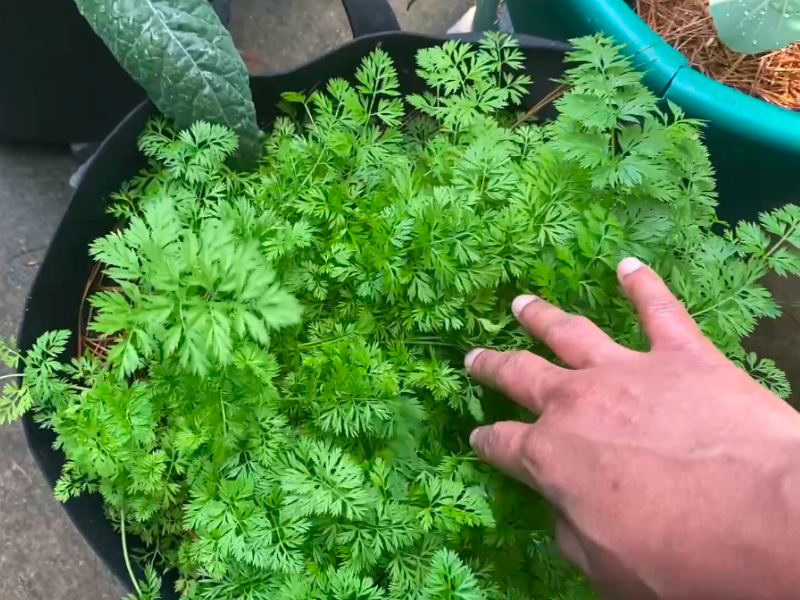
This season, I experimented with growing carrots in a large container without thinning them. I wanted to see what kind of harvest I’d get and whether companion planting alone could help them thrive. And so far, I’ve already seen carrot shoulders pushing up toward the surface. That is a good sign that the roots are developing nicely underneath.
Best Companion Plants for Carrots
1. Onions (Alliums)
When it comes to what to plant with carrots, onions are hands-down one of the best choices. Their strong scent helps mask the smell of carrot foliage, confusing carrot flies and reducing pest pressure.
In my container garden, I intentionally placed onions around my carrot bucket, not always in the same container but close enough for the scent to drift. This simple step helps protect carrots naturally without chemicals.
Why onions work well:
- Repel carrot flies
- Take up minimal space
- Thrive in the same cool-season conditions
- Complement broader companion planting for onions strategies across the garden
2. Rosemary & Sage
These fragrant herbs confuse pests with their strong aromatic oils. Their scents act as a natural shield for carrots, especially in small gardens where pests can find crops quickly.
Benefits:
- Mask the scent of carrots
- Repel a variety of insects
- Provide perennial, low-maintenance support
Place rosemary or sage near your carrot container to enhance the protection.
3. Radishes
Radishes may be one of the best functional partners for carrots. They germinate quickly and push through the soil surface, helping to loosen compacted areas so carrot roots can grow deeper and straighter.
In my garden, I planted radishes on one side of the carrot container and harvested them early. This early harvest helps:
- Break up the soil structure
- Make room for carrots to expand
- Improve airflow at soil level
Radishes also give you a fast, satisfying harvest while waiting for carrots to mature.
What Not to Plant with Carrots
1. Dill
While dill is an amazing companion for many vegetables, it is a bad match for carrots. Dill can stunt carrot growth by releasing chemicals that interfere with root development.
Avoid planting dill directly next to carrots, especially in close container environments.
Carrot Companion Planting Summary
- Best companions: onions, rosemary, sage, radishes
- Worst companion: dill
- Primary benefits: pest control, soil improvement, better root development
Companion planting takes carrots from unpredictable to productive, especially in small containers where every inch matters.
Companion Planting for Collards
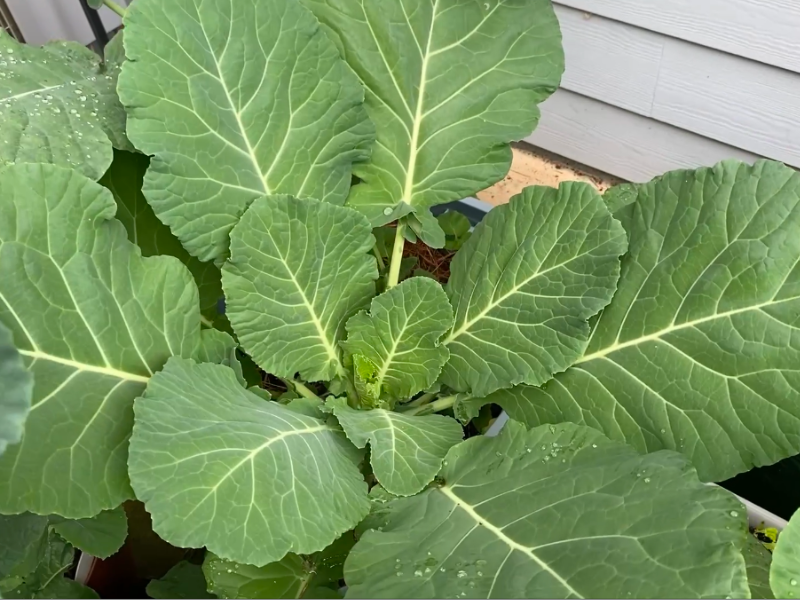
Collards may be one of the most forgiving crops in the garden, but they attract many of the same pests as other brassicas -cabbage worms, cabbage loopers, aphids, and harlequin bugs. In cooler weather, collards tend to grow slower, which is exactly what I saw in my own garden. But as long as the plants look healthy and aren’t wilting, they’re doing just fine; they’re simply responding to the cold. Companion planting plays a huge role in helping collards stay strong, pest-resistant, and productive throughout the season.
Understanding what to plant with collards can dramatically improve your results, especially in a small-space or container garden where airflow, pest pressure, and sunlight are concentrated.
Best Companion Plants for Collards
1. Garlic, Onions, and Scallions (Alliums)
Alliums are some of the best companion plants for collards, hands down. Their strong scent helps repel cabbage worms, moths, and soft-bodied pests that love brassicas. In my garden, you already use alliums universally and for good reason. They fit easily into containers, don’t outgrow collards, and work continuously as natural pest deterrents.
Why they work well:
- Reduce caterpillar and worm pressure
- Mask the scent of brassicas
- Thrive in the same cool-season environment
Planting even just one or two scallions beside your collards can have a noticeable impact.
2. Mint (in its own container)
Mint is a powerful pest deterrent, but it’s also an aggressive spreader. If you use mint near collards, always keep it confined to its own pot. Its aroma repels aphids, beetles, and several brassica pests.
Benefits:
- Strong aromatic oils confuse insects
- Helps reduce infestation naturally
- Easy to grow and maintain
Place the mint container beside your collard container, not inside it.
3. Thyme
Thyme is one of the most effective and underrated companions for brassicas. In my own garden, you’ve paired collards with thyme in the same container, and it works beautifully. Thyme stays very low to the soil, never crowds out collards, and produces small flowers that attract beneficial insects.
Why thyme is ideal:
- Attracts pollinators and predator insects
- Repels cabbage worms
- Doesn’t compete for nutrients or space
- Thrives in container setups
Thyme’s tiny blooms draw in predators like lacewings and parasitic wasps, which naturally help control pest populations.
What to Avoid Planting Near Collards
Just like with broccoli, strawberries are not ideal neighbors. They carry a higher risk of developing fungal diseases that can spread to brassicas. For the healthiest collards possible, plant strawberries in a separate area of the garden.
Collards thrive when surrounded by plants that offer protection, scent masking, and minimal competition. In small-space gardens (especially container setups) these companion choices can make the difference between stunted greens and thriving, resilient plants.
Companion Planting for Bok Choy
Bok choy is one of the fastest-growing and most rewarding cool-season vegetables, but it’s also a magnet for pests like flea beetles and cabbage worms. Companion planting can make a big difference in protecting these tender leaves, especially in small containers where pests can quickly take over.
Best Companion Plants for Bok Choy
1. Onions & Garlic (Alliums)
Alliums are excellent companions because their strong scent helps deter flea beetles and caterpillars. In my garden, I’ve planted onions and garlic beside my bok choy, and that simple pairing adds a layer of natural protection without taking up much space.
2. Cilantro
Cilantro attracts beneficial insects such as parasitic wasps and hoverflies. These are predators that feed on the pests chewing through brassicas. A small cilantro plant beside my bok choy acts like a built-in pest management system.
3. Lettuce
Lettuce grows low and wide, making it a great space-saving companion. Since lettuce and bok choy don’t compete heavily for nutrients or light, they thrive side-by-side.
4. Marigolds
Marigolds help repel soil-dwelling pests, and while you may not smell them strongly, insects do. Their scent acts as a deterrent around my bok choy containers.
With the right companions, bok choy stays healthier, grows fuller, and avoids much of the pest damage that often plagues brassicas in cooler seasons.
Companion Plants for Lettuce
Lettuce is one of the most versatile and rewarding cool-season crops you can grow, especially in containers. It matures quickly, doesn’t demand much space, and pairs beautifully with a wide variety of plants. Whether you’re growing loose-leaf lettuce or heading varieties, companion planting can help you maximize growth, reduce pest pressure, and make the most of your container garden. Understanding what to plant with lettuce (and just as importantly, what not to plant with lettuce) can help you set up a healthier, more productive garden.

Best Companion Plants for Lettuce
1. Radishes
Radishes make excellent lettuce companion plants, especially in small containers. Since radishes grow quickly and loosen compacted soil, they create better conditions for lettuce roots to spread. They’re also harvested much sooner than lettuce, freeing up space and improving airflow as the season progresses.
Benefits:
- Quick harvest
- Soil aeration
- Minimal competition
2. Fava Beans
In my garden, this is my first time growing fava beans, and they couldn’t be better companions for lettuce. Fava beans fix nitrogen in the soil, enriching it for leafy crops. They also grow upright, leaving plenty of room at the soil level for lettuce to thrive.
Why they work:
- Provide nitrogen
- Don’t shade lettuce
- Thrive in cool weather
3. Strawberries
Surprisingly, strawberries make great neighbors for lettuce. Their root systems occupy different soil layers, reducing competition, while their compact growth habit keeps everything tidy in small spaces.
Benefits:
- Beautiful container combinations
- Healthy soil interactions
- Mutually beneficial spacing
Bad Companion Plants for Lettuce
When it comes to bad companion plants for lettuce, the main concern is competition, either for light or nutrients. Large, heavy-feeding plants (like mature brassicas) can overshadow lettuce, causing it to stretch or bolt prematurely. Keep lettuce away from plants that grow aggressively or cast deep shade.
Also avoid pairing lettuce with anything that attracts aphids heavily, since lettuce is already susceptible.
Lettuce is incredibly easy to pair with other crops, making it one of the most flexible vegetables for small-space gardening. With the right companions, such as fast-growing radishes, nitrogen-fixing fava beans, and even strawberries, you can build healthier soil, reduce pests, and enjoy fuller harvests all season long.
Companion Planting for Kale
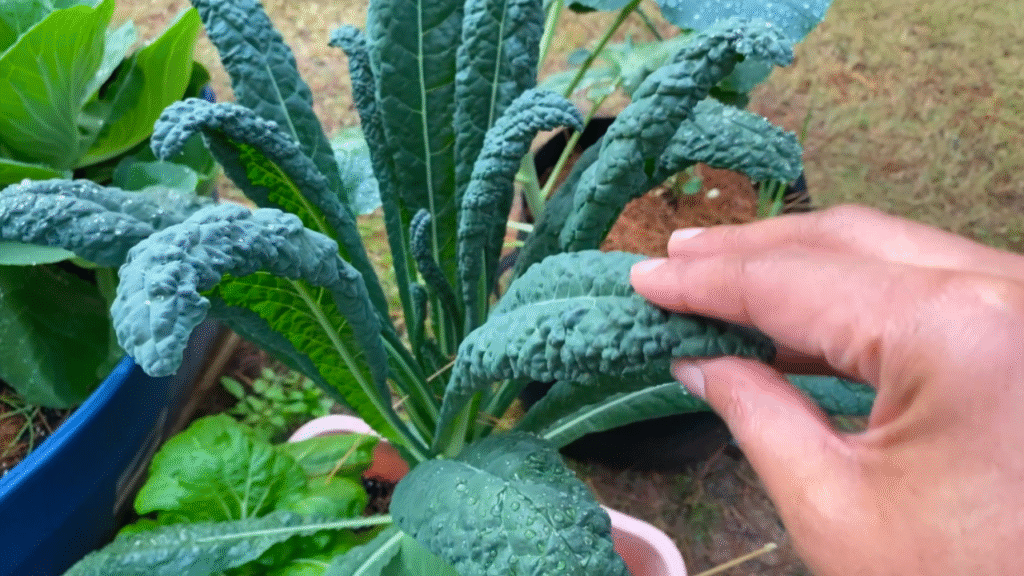
Kale is one of the hardiest and most beginner-friendly cool-season crops, but like other brassicas, it attracts pests such as cabbage worms, loopers, and aphids. Pairing kale with the right companions can drastically reduce pest pressure while improving overall plant health. In my garden, I’ve paired kale with several helpful neighbors (including beets) and the results show how effective companion planting can be.
Best Companion Plants for Kale
1. Onions, Scallions & Garlic (Alliums)
Alliums are some of the most reliable companion plants for kale. Their strong, pungent scent helps repel many of the pests that love brassicas. Because alliums grow vertically and don’t require much soil space, they fit perfectly into container gardens without crowding kale.
Why they’re effective:
- Repel cabbage moths and loopers
- Mask kale’s scent
- Thrive in the same cool-season conditions
2. Dill
Dill is an excellent companion because it attracts beneficial insects (especially parasitic wasps) that prey on caterpillars. Even if your dill is planted a short distance away, the aroma and flowers help create a pest-balanced environment.
3. Beets
This pairing works beautifully in my garden. Beets grow downward, forming roots deep beneath the soil, while kale grows upward. This vertical separation prevents competition and makes full use of your container’s space.
Benefits:
- No competition for root space
- Efficient use of container depth
- Compatible growth habits
Why Kale Benefits From Companions
Kale is a nutrient-demanding plant that thrives when pests are controlled naturally and when soil conditions are stable. Companion planting helps maintain that balance, especially in cooler weather when growth slows.
Universal Companion Plants for Any Garden
As you look across your fall and winter garden, you’ll notice a clear pattern: certain plants consistently show up beside your broccoli, collards, carrots, kale, bok choy, onions, and lettuce. These are what I call universal companion plants. They are the reliable, hard-working crops and herbs that benefit almost everything you grow. Whether you’re gardening in raised beds or small containers like I do, adding these universal companions can dramatically improve your garden’s health, pest resistance, and productivity.
These plants support your garden in three big ways:
- They repel or confuse pests
- They attract beneficial insects
- They enhance soil health and biodiversity
Let’s break down the all-stars.
1. Alliums (Onions, Garlic, Scallions, Leeks)
If there’s one plant family every gardener should weave throughout the garden, it’s the alliums. Their sharp scent confuses pests, especially those that target brassicas and root vegetables. They also take up very little space and grow well in containers, which is why you’ve tucked scallions and onions all over your garden.
Benefits:
- Natural pest deterrent
- Thrives in cool weather
- Low-maintenance and compact
2. Herbs: Dill, Cilantro, Basil, Thyme, Sage
These herbs do the heavy lifting by attracting pollinators and predator insects such as parasitic wasps, lacewings, ladybugs, and hoverflies. Their scents help create a balanced ecosystem while offering additional pest control.
Why they’re essential:
- Improve flavor and plant health
- Repel harmful insects
- Non-competitive, especially thyme and sage
Thyme, in particular, works beautifully under larger crops without stealing nutrients.
3. Flowers: Marigolds & Lavender
Both marigolds and lavender are fantastic for keeping soil pests and harmful insects in check. Marigolds release natural compounds that repel nematodes, while lavender’s fragrance confuses moths and beetles. You’ve already seen how scattering these plants adds both beauty and function to your containers.
These universal companions form the foundation of a healthier, more resilient garden, especially in small spaces where every plant needs to pull its weight.
Grab My Monthly Planting Guide
If you’ve ever struggled with knowing what to plant each month or when to start your seeds, my Monthly Planting Guide is exactly what you need. It’s designed for beginners, small-space gardeners, and anyone who wants a simple, clear roadmap for the entire year. The guide shows you what to plant every month based on your zone, including what to start indoors and what you can direct sow outdoors.
It removes the guesswork and keeps your garden productive season after season.
You can find the guide linked right here.
Final Thoughts
Companion planting is one of those gardening techniques that seems simple at first, but once you start applying it intentionally, it completely changes the way your garden behaves. In my small-space Zone 8 garden, pairing the right crops together has helped me manage pests naturally, make better use of every container, and grow healthier plants overall. It’s a strategy that doesn’t require extra garden beds, expensive products, or complicated steps. It just needs a little bit of knowledge and thoughtful planning.
What I love most is that companion planting works for every skill level. Whether you’re growing broccoli, collards, onions, carrots, lettuce, bok choy, or kale, the right plant partnerships can support your crops through the entire season. And because these relationships are rooted in nature, your garden becomes more balanced, resilient, and enjoyable to care for.
As you continue learning and experimenting, remember that gardening is a journey. Some combinations will amaze you, and others will teach you what not to repeat. That’s the beauty of it. If you want even more guidance on what to plant month by month in your specific zone, don’t forget to check out my Monthly Planting Guide, your roadmap to growing food all year long.
Here’s to healthier plants and happier harvesting!