Skip to content
Feeding Time Matters
It’s early in the morning, and the garden is calling. The air is still cool, the sun hasn’t fully risen yet, and this is my favorite time to be outside, feeding time. Every weekend, I grab my watering can, fertilizers, and head straight to the containers to check on everyone. My plants have become part of my routine now, and learning how to fertilize has completely changed how I garden.
When I first started growing food, I had no idea that fertilizing was even a thing. I honestly thought if I just kept my plants watered and prayed for the best, they’d grow. My first attempt was cabbage, and it taught me a humbling lesson: plants need food just like we do. Water alone wasn’t enough, and the sad, tiny leaves that barely formed were proof of that.
Over time, I started researching how to fertilize plants properly, testing different methods, and paying attention to how each crop responded. It wasn’t instant success. I made plenty of mistakes. But eventually, I figured out a rhythm that worked. Now, my brassicas, herbs, and greens are thriving because I’ve learned what “feeding time” really means.
In this post, I’m sharing exactly how to fertilize your plants, what I use, how often I feed, and what I wish I’d known from the start. My goal is to make fertilizing feel less intimidating and more like what it truly is which is giving your plants what they need to grow, thrive, and reward you in return.
Understanding the Basics of How to Fertilize Plants
Before I ever picked up a bag of fertilizer, I used to think that soil was enough. I figured if the dirt looked dark and rich, my plants would automatically have everything they needed. But after a few failed attempts and a lot of trial and error, I learned that understanding how to fertilize is one of the most important parts of gardening, especially when you’re growing in containers.
The simplest way to think about fertilizing is that you’re feeding your plants. Just like people need balanced meals to stay healthy, plants rely on a mix of nutrients to grow strong roots, healthy leaves, and produce those harvests we all look forward to. Fertilizers are like vitamins for plants. They provide what the soil can’t always supply.
When you’re learning about fertilizers, you’ll come across something called NPK, those three letters you see on every fertilizer bag. N stands for nitrogen, which helps your plants grow lush, green leaves. P stands for phosphorus, which encourages strong root development and healthy blooms. K stands for potassium, which helps plants handle stress from heat, pests, and disease. Every plant needs all three, just in different amounts depending on what you’re growing.
There are also micronutrients, things like calcium, magnesium, and sulfur, that help plants absorb and use those major nutrients effectively. That’s why using organic fertilizers like worm castings or compost can make such a difference. They don’t just feed the plant; they feed the soil life that supports the plant.
If you garden in containers like I do, fertilizing becomes even more critical. Every time you water, some of the nutrients wash out through the drainage holes. Unlike in-ground gardens, container soil doesn’t naturally rebuild itself. That means you need to step in and replenish those nutrients regularly.
Once I realized that feeding my plants wasn’t optional but essential, everything about my garden changed. My greens grew faster, my leaves got deeper in color, and my harvests started looking like something out of a seed catalog. Learning how to fertilize your plants is really about learning how to care for them, consistently and intentionally.
How I Fertilize My Plants: Step-by-Step
When it comes to fertilizing, I’ve found that the most important part isn’t just what you feed, but how you prepare the soil before you even start planting. A healthy feeding routine starts from the ground up. Literally. Over time, I’ve built a system that works for my container garden, and it’s simple enough for anyone to follow.
My Soil Base and First Feeding
Every plant I grow starts with a rich, balanced soil foundation. Because I grow primarily in containers, I can’t rely on the ground to provide nutrients. I have to create that environment myself. My base mix looks like this:
- Organic Potting Mix: This gives structure and drainage. I like to use one formulated for vegetables.
- Black Kow Compost: Adds organic matter and feeds soil microbes.
- Bone Meal: Encourages strong root growth and helps plants develop sturdy stems and healthy blooms.
- Blood Meal: A fast-acting nitrogen source that keeps my greens vibrant and deeply colored.
- 4-4-4 All-Purpose Organic Fertilizer: My go-to balanced fertilizer that slowly releases nutrients over time.
- Worm Castings: A gentle nutrient booster that keeps the soil alive with beneficial organisms.
- Eggshell Powder: Adds calcium and helps prevent issues like blossom end rot or leaf curling.
When I transplant my seedlings, I mix these amendments directly into the soil. I don’t dump them in randomly. Each has a role. This step acts as the plant’s first meal before I ever begin a feeding schedule.
Understanding My Feeding Routine
Once my plants are established, I switch into a simple two-part fertilizing rhythm:
- Every 3–4 weeks: Apply a slow-release fertilizer (4-4-4).
- Once per week: Apply a liquid fertilizer (fish fertilizer).
This rotation ensures that my plants get both long-term and short-term nutrition. The slow-release fertilizer breaks down gradually, feeding the soil and plants over time. The fish fertilizer provides quick energy, a “snack” between meals.
Applying Dry Fertilizer (4-4-4)
For the 4-4-4 fertilizer, I treat it like a steady meal.
Here’s my process:
- Sprinkle 2–3 tablespoons around each plant, keeping it an inch or two away from the base.
- Lightly mix it into the top layer of soil using my fingers or a small hand rake.
- Water thoroughly to activate it.
This fertilizer contains balanced amounts of nitrogen, phosphorus, and potassium, which support leaf growth, root strength, and disease resistance. I repeat this every 3–4 weeks, especially for heavy feeders like kale, collards, and broccoli.
Mixing and Applying Liquid Fertilizer (Fish Fertilizer)
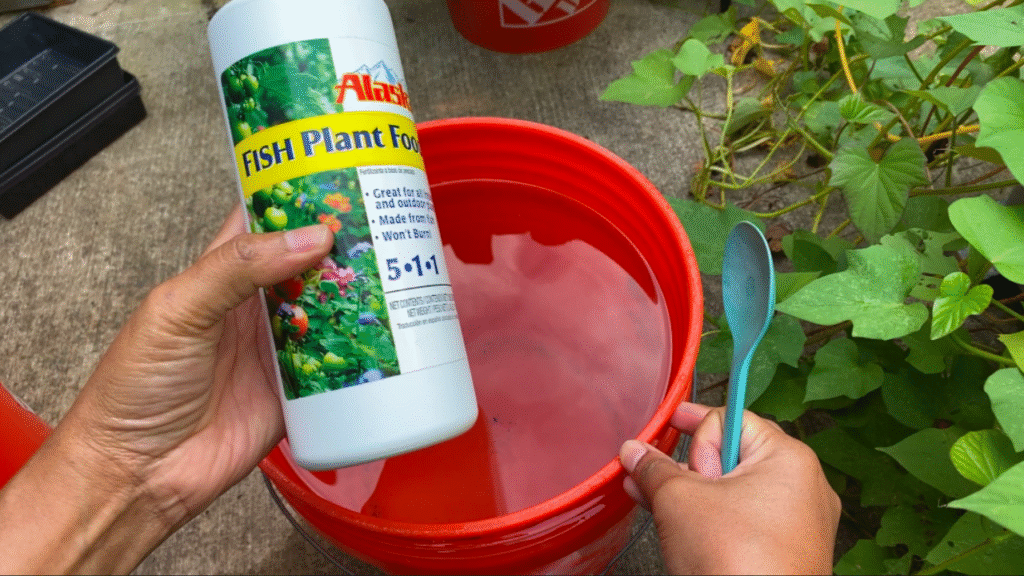
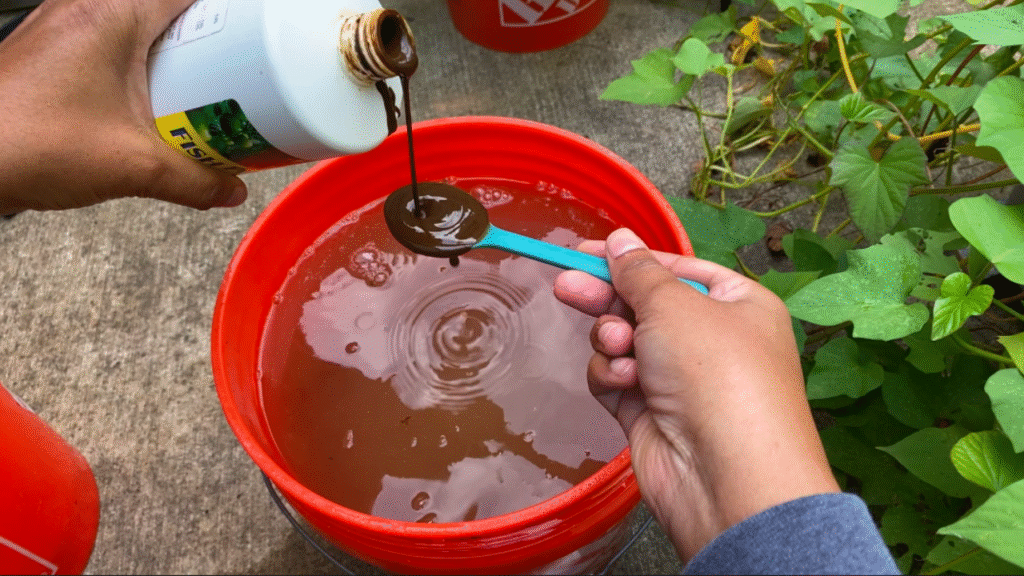
Fish fertilizer is my plants’ favorite. It smells terrible, but the results are undeniable. The plants have greener leaves and noticeable growth within days.
Here’s my process for liquid feeding:
- Mix 1 tablespoon of fish fertilizer per gallon of water.
- Stir thoroughly.
- Before feeding, I water the plants with plain water to “wake up” the roots.
- Then I go back and add one cup of the fertilizer mix per plant.
This helps prevent fertilizer shock and ensures better absorption. I apply fish fertilizer once a week, usually on weekends.
Why I Measure Everything
When fertlizing plants, consistency matters more than quantity. Fertilizers are powerful, and little goes a long way. That’s why I measure everything. Using too much blood meal, for example, can burn your plants, while overusing fish fertilizer can attract pests. By measuring carefully, I save money and protect my garden from nutrient overload.
How My Soil Feeds My Plants Over Time
The combination of compost, worm castings, and slow-release fertilizer keeps my soil “alive.” Each time I water, a bit of those nutrients trickle down to the roots. Over time, this creates a self-sustaining cycle where the soil remains rich, airy, and full of beneficial life.
It isn’t about memorizing rules, it’s about observing, adjusting, and staying consistent. When your plants thrive, you’ll know you’re doing it right.
My Fertilizing Schedule for Healthy Growth
Once my plants are settled in their containers, the next step is keeping them consistently fed. Over the years, I’ve learned that understanding this isn’t just about what you give them, it’s about when and how often you do it. Timing is everything. Too much too soon can overwhelm the roots, while feeding too little can leave your plants struggling to grow. Finding that rhythm made all the difference in my garden.
For me, the key has been a simple two-part schedule that I stick to religiously:
- Every 3–4 weeks: a slow-release, granular fertilizer for long-term nutrition
- Once a week: a liquid fertilizer for quick absorption and steady energy
The slow-release feeding is like the plant’s main meal. I use my 4-4-4 organic fertilizer because it’s perfectly balanced. There are equal parts nitrogen (for green growth), phosphorus (for root development), and potassium (for stress resistance). I like to apply it early in the morning, when the soil is still cool and can absorb nutrients without drying out too fast. I sprinkle a few tablespoons around each plant, mix it into the top inch of soil, and water it in deeply. That’s it. For the next few weeks, the nutrients slowly break down and release into the soil.
Then there’s my weekly feeding, which I do using fish fertilizer. I mix about a tablespoon per gallon of water, and before applying it, I always pre-water the plants with plain water to wake up the roots. After that, I pour the mixture slowly around each base, allowing it to soak in rather than run off. It might sound tedious, but this method has kept my plants consistently vibrant.
This alternating schedule, slow-release every few weeks, liquid every week, creates a steady balance. My brassicas, lettuce, and arugula stay lush and green, while my soil stays active and healthy. The best part? It’s simple enough to remember, even on busy mornings. Once you find a rhythm that works for your garden, how to fertilize plants becomes second nature. It’s no longer a guessing game; it’s just part of nurturing life in the soil and watching your garden reward you for it.
Why It Works: The Results I’ve Seen
When I finally figured out how to fertilize plants the right way, everything about my garden changed. It wasn’t overnight, but over the weeks, I started noticing small differences that eventually turned into big results. My collards, kale, and bok choy went from pale and flimsy to bold, deep green, and full of life. The leaves grew larger, the stems thickened, and the plants bounced back faster after pruning or heavy rain. That’s when I realized, fertilizing isn’t just about growth; it’s about resilience.
In the early days, I used to wonder why my plants weren’t thriving even though I watered consistently. Now, I understand that water alone can’t build strong roots or lush leaves. Nutrients are what drive that transformation. Once I committed to my feeding routine (the 4-4-4 slow release every few weeks and the weekly fish fertilizer), I noticed a rhythm developing. My garden stopped surviving and started thriving. Each feeding felt like giving the plants exactly what they had been waiting for.
The most satisfying part is watching how quickly the plants respond. Within a few days of a feeding, my greens perk up, colors deepen, and new leaves start forming. There’s a visible difference between a fed plant and a neglected one. Even when the weather turns unpredictable (too much rain, too little sun, or cooler nights), my plants continue to push through because the soil stays nutrient-rich.
What really confirmed it for me was seeing how long my garden now produces. My brassicas and leafy greens grow fuller for longer, and I’ve been able to extend my harvest season simply because they’re healthier. Learning how to fertilize plants correctly has taken the guesswork out of gardening for me. It’s no longer about luck or hoping something grows. It’s about consistency, observation, and understanding that feeding your plants is an act of care. Healthy soil leads to healthy plants, and healthy plants lead to a more rewarding garden.
Common Fertilizing Mistakes (and How to Avoid Them)
When I started my garden, I made just about every mistake you could think of. I either didn’t feed enough, fed too much, or used the wrong kind of fertilizer altogether. The truth is, fertilizing is one of those areas where small missteps can make a big difference. The good news? Once you know what to look out for, it’s easy to avoid these common pitfalls.
1. Overfertilizing: Thinking More Is Better
This is one of the biggest mistakes new gardeners make. It’s easy to think that if a little fertilizer helps, a lot will help even more, but that’s not how it works. Plants can only take in so many nutrients at a time. When you give them too much, the excess can actually burn the roots, causing the leaves to yellow or curl and sometimes even killing the plant. I’ve done this myself in the early days with blood meal. I got carried away, thinking an extra scoop would make my greens grow faster. Instead, I ended up with stressed plants that took weeks to recover.
How to fix it: Always follow the label instructions and measure carefully. If you’re unsure, start with half the recommended amount and see how your plants respond. Fertilizing should be consistent, not excessive.
2. Skipping the Pre-Watering Step
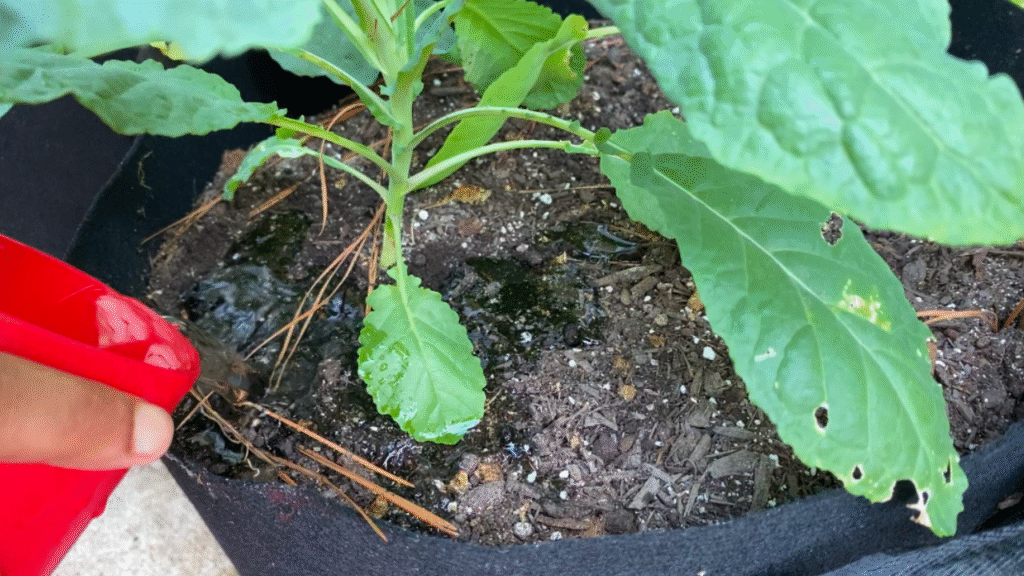
One of the most important parts of how to fertilize plants is what you do before you even feed them. I used to pour fertilizer water straight into dry soil, not realizing that roots absorb nutrients better when they’re already moist. Dry roots can’t take in fertilizer effectively, and instead of nourishing the plant, much of that liquid just drains away.
How to fix it: Before feeding, always water your plants with plain water to “wake up” the roots. Then come back and apply your fertilizer slowly, giving it time to soak into the soil. This one change made a big difference in how quickly my plants started responding after feedings.
3. Using the Wrong Fertilizer for the Wrong Plant
Not all plants have the same nutrient needs. For example, leafy greens like collards, kale, and bok choy love nitrogen because it promotes lush green growth. Root crops like carrots and beets need more phosphorus for strong roots, while fruiting plants like tomatoes prefer higher potassium to support blossoms and fruit production. In my early gardens, I used one fertilizer for everything. Believe me, it showed. My leafy crops did fine, but my root vegetables were stunted.
How to fix it: Match your fertilizer to your plant type. Use a balanced fertilizer like 4-4-4 for leafy crops, a higher phosphorus blend for roots, and a bloom or fruit formula for tomatoes and peppers. Understanding your plants’ needs will save you from disappointment at harvest time.
4. Inconsistent Feeding
I used to fertilize whenever I remembered; sometimes every two weeks, sometimes not for a whole month. Plants need steady nourishment to grow well, especially in containers where nutrients wash out faster. Inconsistency can cause uneven growth and weak plants.
How to fix it: Create a simple schedule. I feed every weekend ( fish fertilizer weekly and granular 4-4-4 every three to four weeks). It’s predictable, easy to follow, and my plants thrive on that routine.
It isn’t about perfection; it’s about awareness. Once you start observing your plants and understanding how they respond, you’ll make fewer mistakes and gain more confidence. Fertilizing becomes less of a chore and more of a conversation between you and your garden. One where you’re finally speaking the same language.
Troubleshooting: When Plants Still Look Unhappy
Even after learning how to fertilize plants and sticking to a solid schedule, you might still have moments where your garden doesn’t look its best. Maybe the leaves are yellowing, growth seems slow, or something just feels off. I’ve been there too. Sometimes, the problem isn’t your fertilizer at all. It’s something else quietly affecting how your plants grow.
The first thing I do when I notice unhappy plants is not panic. Instead, I start by checking the basics. Most of the time, issues come down to one of four things:
- Overwatering or underwatering: Too much water can drown roots and wash away nutrients, while too little prevents them from absorbing anything.
- Poor drainage: If water can’t escape your container, roots suffocate. Always make sure your pots have drainage holes and well-aerated soil.
- Sunlight: Even the best-fed plants can struggle without enough light. Some crops, especially brassicas, need a minimum of six hours of sun.
- Temperature stress: A sudden cold snap or heatwave can cause plants to wilt or yellow, no matter how perfect your feeding routine is.
If all of those conditions check out, then I revisit my fertilizing routine. Sometimes I discover I’ve gone a little too light on nutrients or waited too long between feedings. Other times, the soil may need refreshing with compost or worm castings to restore microbial life.
Learning how to fertilize plants isn’t just about feeding, it’s about observing. Your plants will tell you what they need if you slow down and look closely. Healthy soil, consistent feeding, and regular observation are the real keys to getting your garden back on track when something doesn’t look quite right.
Tools and Products I Recommend
When I share my routine for how to fertilize plants, I always get questions about what specific products I use. The truth is, I keep things simple. I stick to organic, reliable brands that have consistently helped my garden thrive. Below is a list of the tools and fertilizers that I personally use and trust (the same ones you’ve seen me apply in my videos). Each of these can be found easily on Amazon, and if you purchase through my links, I earn a small commission at no extra cost to you.
My Go-To Fertilizers and Soil Amendments
- Dr. Earth Organic 4-4-4 All Purpose Fertilizer
This is my long-term, slow-release fertilizer. It’s perfect for leafy greens and heavy feeders. It contains balanced nitrogen, phosphorus, and potassium for steady growth. - Alaska Fish Fertilizer 5-1-1
My weekly “snack” for the plants. It’s a fast-acting liquid fertilizer that keeps everything green, vibrant, and full of life. The smell might turn you away at first, but your plants will love it. - Blood Meal
A powerful source of nitrogen that keeps brassicas and greens looking lush. I use it sparingly because it’s strong (a little goes a long way). - Espoma Bone Meal
Essential for strong roots and early plant establishment. I mix a few tablespoons into my soil before transplanting seedlings. - Worm Castings
My secret weapon for rich, living soil. Worm castings improve soil texture, boost beneficial microbes, and help nutrients stay available longer. - Black Kow Composted Manure
I use this as a base amendment for organic matter. It improves drainage and keeps soil moisture consistent.
These are the staples in my fertilizing routine, and they’ve helped me build a thriving container garden from the ground up. Whether you’re just starting or refining your method, having quality fertilizers makes all the difference in fertilizing effectively.
Want to Make Fertilizing Easier? Try My Monthly Planting Guide
If you’ve made it this far, you already know that learning about fertilizers is all about consistency and timing. But keeping up with when to feed, what to plant, and how to rotate crops can feel overwhelming, especially when you’re just starting out. That’s exactly why I created my Monthly Planting Guide. It’s the same tool I use to stay organized and confident throughout the gardening season.
The guide walks you through exactly what to start indoors, what to direct sow, and when to fertilize, all based on your USDA growing zone. No more second-guessing whether it’s too early or too late to feed your plants or start your next round of seedlings. It’s designed to take the confusion out of planning so you can focus on actually growing.
I also built the guide with small-space and container gardeners in mind. It includes easy-to-follow charts, notes for heavy feeders vs. light feeders, and a space to track your fertilizing dates and soil amendments. It’s perfect if you’re like me and enjoy having a visual plan to stay on top of your garden routine.
It’s a practical resource that turns guesswork into confidence and keeps your garden thriving month after month. You can grab your copy directly from my website and start planning your next feeding today.
Feeding Is Caring
When I look back at my first garden, I can still remember how lost I felt. I had no idea what my plants needed, and I assumed that watering alone would be enough. It wasn’t until I learned about fertilizing plants properly that everything started to click. Feeding my plants became less of a task and more of a relationship. One that is built on observation, patience, and care.
What I’ve learned over the seasons is that fertilizing isn’t just about making plants grow; it’s about helping them thrive. It’s about creating soil that’s alive, full of nutrients and beneficial organisms that work together to support strong, healthy growth. Once I understood that, my garden changed. My plants became more resilient, my harvests larger, and the process itself more rewarding.
Now, fertilizing feels like second nature. I know when to feed, how much to give, and what each plant responds to best. And even though I still make mistakes, I’ve come to appreciate that gardening is an ongoing conversation.
If you’re just beginning your journey and trying to figure out how to fertilize plants, start simple. Use good soil, be consistent, and pay attention to how your plants respond. Over time, you’ll develop your own rhythm, just like I did. And when you see those deep green leaves and strong stems, you’ll know the effort was worth it.
Feeding is more than a gardening step. It’s an act of care. Every scoop of compost, every measured tablespoon of fertilizer, and every early-morning watering is a small investment that yields something bigger: growth, nourishment, and the quiet joy of watching life flourish right before your eyes.
- This post contains affiliate links. As an Amazon Associate, I earn from qualifying purchases at no additional cost to you.