Skip to content
There’s nothing quite like slicing into a homegrown watermelon and tasting the sweetness of something you nurtured from seed. When I first decided to try growing sugar baby watermelons, I honestly didn’t know what to expect. I’d seen photos of gardeners holding up big, round melons, and I dreamed of harvesting several from my own small garden. But the reality? My harvest was far from perfect—and that’s exactly why I want to share this story with you.
In this post, I’ll take you through my personal journey with sugar baby watermelons, including what worked, what didn’t, and the lessons I learned along the way. More importantly, I’ll break down a step-by-step guide on how to grow watermelon from seed—so whether you’re planting in a backyard bed or a container on your patio, you’ll have the tools you need to succeed.
We’ll cover everything: the right containers, soil, fertilizers, watering habits, and even how to know when your watermelon is ready to harvest. Plus, I’ll share the products I use so you can replicate my setup at home.
Alright…let’s dig in.
My First Experience Growing Sugar Baby Watermelons
When I planted sugar baby watermelons for the first time, I was filled with excitement and high expectations. I pictured my container garden overflowing with vines and several perfect melons hanging from my trellis. The reality turned out to be much different, but the lessons I learned were worth every bit of the effort.
I started with three sugar baby watermelon plants, placing two of them together in a 45-gallon container. For anyone wondering if that’s enough space, I’ll be honest—squeezing two melon plants into one container was definitely stretching it. Sugar babies may be smaller than full-sized watermelons, but they are still vining plants that love to spread out and claim their territory. If I could go back, I’d give each plant its own container—at least 15 to 20 gallons each—to give the roots and vines room to thrive.
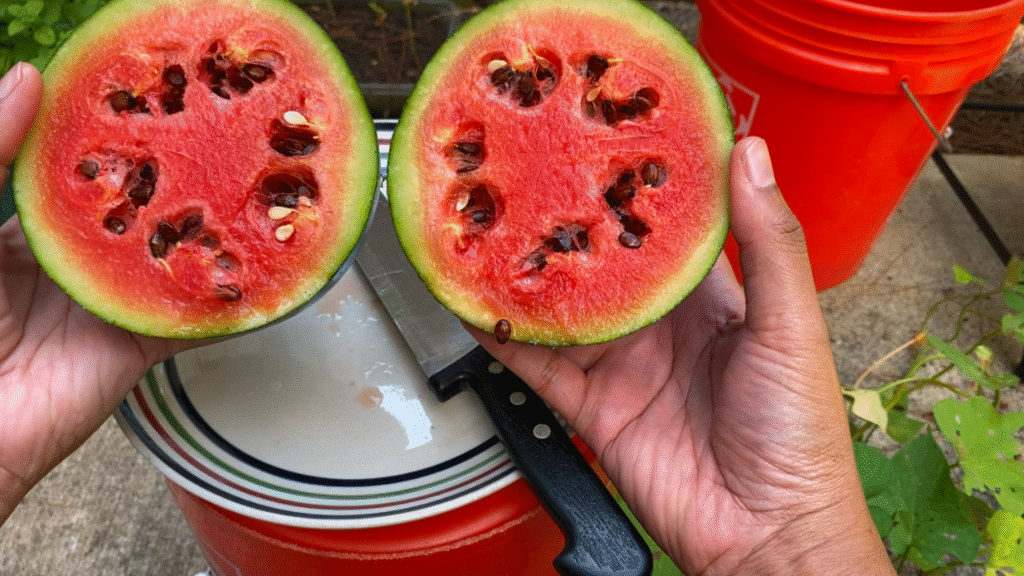
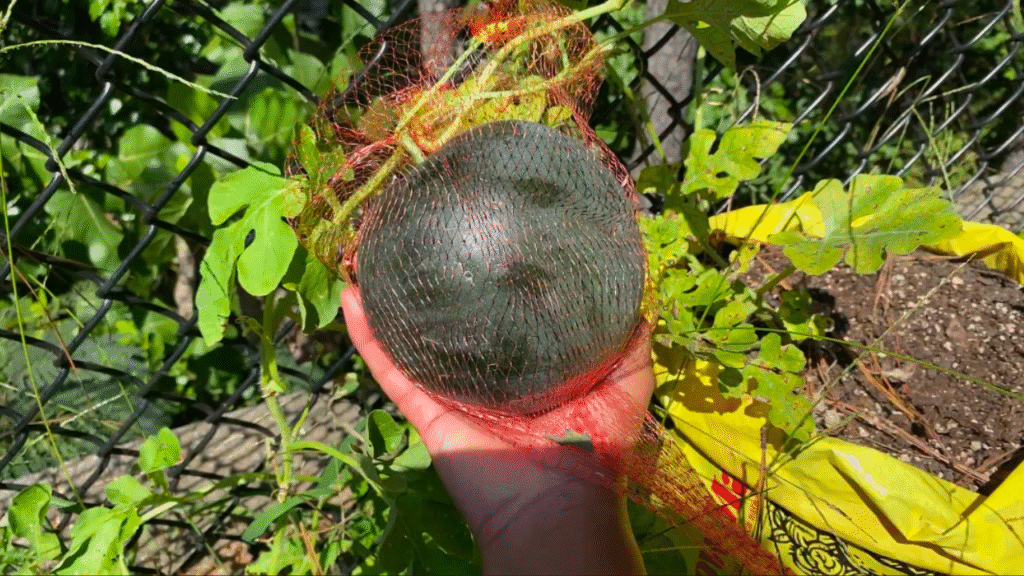
Even though I cared for them daily, the results weren’t what I hoped for. Out of those two plants, one produced a single melon that never grew past the size of a softball before cracking, and the other gave me one small but delicious fruit. The third plant, which I placed separately, gave me one melon that was bigger than the others but still nowhere near the four-pound size sugar babies are known for.
The challenge, I realized, wasn’t my effort—it was my setup and my growing conditions. I watered faithfully every day, especially in the Georgia heat, but I didn’t mulch around the base to help regulate soil temperature and retain moisture. That was mistake number one. I also tried to trellis my plants vertically to save space, but I later learned that watermelons tend to do better sprawling on the ground where their vines can stretch naturally.
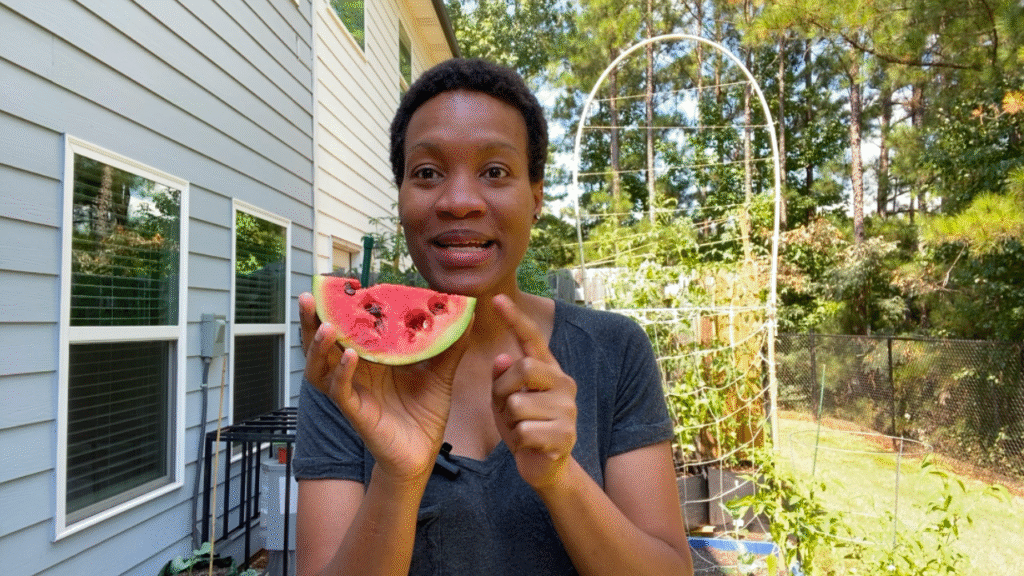
Despite the struggles, the moment I sliced open that first ripe melon, all the frustration melted away. It was one of the sweetest fruits I had ever tasted—juicy, vibrant, and proof that even a less-than-perfect harvest can still be rewarding. I may not have had size on my side, but I did have flavor, and that gave me the motivation to keep trying.
Looking back, I see my first season as a training ground. I discovered that container size, mulching, and watering consistency play a huge role in watermelon success. More importantly, I learned that gardening is less about perfection and more about progress. Each attempt brings you one step closer to the harvest you dream of. And next time? I’ll be ready to give my sugar babies the space and care they truly need.
Why Choose Sugar Baby Watermelons?
When you’re learning how to grow watermelon from seed, the variety you choose makes a huge difference. Sugar baby watermelons are one of the best options for beginners because they’re smaller, faster to mature, and easier to handle compared to traditional, full-sized watermelons that can sprawl across an entire backyard.
Sugar baby watermelons typically produce fruits that weigh between 6–12 pounds when grown in the ground. In containers, the size can be smaller, but the flavor is just as sweet, sometimes even more concentrated. This makes them a perfect choice for gardeners who don’t have acres of space but still want the satisfaction of harvesting a juicy, homegrown melon.
Another reason I recommend them for first-time growers is the shorter maturity period. While some watermelon varieties take over 100 days to ripen, sugar babies are usually ready in 70–85 days. That’s an entire month saved—giving you a better chance at success even if your season is short or your climate is unpredictable.
If you’re thinking about growing sugar baby watermelon in containers, this variety adapts well. Just make sure you use a container that’s at least 15–20 gallons for one plant. From my experience, a 45-gallon grow bag with two plants was overcrowded, but one plant in 20 gallons would have been ideal.
Whether you’re a backyard gardener or working with a small patio, sugar babies give you the joy of growing a watermelon without needing a farm-sized plot. If you’re ready to try them yourself, start with a reliable pack of Sugar Baby Watermelon Seeds so you can enjoy your own sweet harvest this season.
How to Grow Watermelon from Seed (Step-by-Step Guide)
Learning how to grow watermelon is one of the most rewarding gardening experiences you can have. Watermelons may seem intimidating, but with the right setup, patience, and a little trial and error, even beginner gardeners can enjoy sweet, juicy fruit grown right at home. In this section, I’ll walk you through every step of the process—while sharing what worked (and what didn’t) in my own garden—so you’ll know exactly what to do for a better harvest.
Step 1: Choose the Right Seeds
The first step in growing sugar baby watermelon is choosing the right variety of seeds. Watermelons come in many sizes, but if you’re working with limited space, sugar baby watermelons are the way to go.
- Why sugar baby watermelons? They’re small, typically 6–12 pounds, and mature in about 70–85 days. This makes them easier to manage in small gardens or containers compared to larger varieties that take over 100 days.
- Where to get them: Always buy high-quality seeds from a trusted source. You can even save seeds from your sweetest watermelon to use the following year, but starting with a reliable pack ensures strong germination.
Recommended product: Sugar Baby Watermelon Seeds
I saved seeds from my first harvest because the flavor was so good—even if the melon itself was smaller than I expected. It’s one of the joys of gardening: every season builds on the last.
Step 2: Decide When and Where to Plant
Timing is everything when you’re growing watermelon.
- Soil temperature: Watermelon seeds need warmth to germinate. Wait until soil temperatures are consistently above 70°F before planting outdoors.
- Frost-free date: In most areas, that means planting 2–3 weeks after your last frost date. If you want a head start, you can sow seeds indoors in biodegradable pots 3–4 weeks before your last frost, then transplant them once conditions are warm enough.
Recommended products:
In Zone 8 (Georgia), the soil warms quickly, but the summers get very hot. Starting early outdoors worked for me, but I had to stay on top of watering because the heat was brutal.
Step 3: Pick the Right Container or Garden Spot
If you’re growing in the ground, choose a sunny location with at least 6–8 hours of direct sunlight daily. If you’re growing sugar baby watermelons in containers, container size is critical.
- Container size: At least 15–20 gallons per plant. Larger is better.
- Soil depth: Containers should be at least 18 inches deep to allow roots to spread.
- Drainage: Choose a pot with good drainage holes.
Recommended products:
I made the mistake of planting two watermelon plants in a single 45-gallon container. While it sounded like plenty of space, it wasn’t enough for both to thrive. The vines competed, and I ended up with just two melons in total. Next season, I’ll give each plant its own container so it can stretch out.
Step 4: Prepare Your Soil
Healthy soil is the foundation of healthy watermelons. They’re heavy feeders, so start with a nutrient-rich base.
- Soil mix for containers: A blend of potting mix, compost, and perlite for drainage.
- Amendments to add: Bone meal for phosphorus (roots and flowers), blood meal for nitrogen (leafy growth), and compost for overall fertility.
Recommended products:
- Espoma Organic Potting Mix
- Perlite for Drainage
- Bone Meal
- Worm Castings
I amended my soil with banana peel water and kelp weekly because I knew melons needed potassium and phosphorus. That definitely helped flavor, but I think my soil still lacked some balance for size growth.
Step 5: Planting Your Seeds
Once your soil is ready:
- Plant seeds 1 inch deep.
- Sow 2–3 seeds per hole.
- Thin to the strongest seedling once true leaves form.
If planting in containers, stick to one plant per container for best results.
Personal tip: Don’t crowd them. I planted too many in one space and my vines didn’t spread properly.
Step 6: Fertilizing Watermelons
Watermelons need different nutrients at different growth stages:
- Early growth (leaves and vines): Use a balanced fertilizer like Espoma Garden-Tone (3-4-4).
- Flowering & fruiting: Switch to a fertilizer higher in phosphorus and potassium, like FoxFarm Tiger Bloom (2-8-4).
Recommended products:
- Espoma Garden-Tone
- FoxFarm Tiger Bloom
- Liquid Kelp Fertilizer
I fertilized with banana peel water (rich in potassium) and kelp, which my melons loved. But looking back, I think I didn’t feed them heavily enough during fruiting. Next season, I’ll be more intentional with fertilizer timing.
Step 7: Watering the Right Way
Watering is one of the most common struggles. They need consistent moisture, but too much or too little at the wrong time can cause problems.
- Seedling stage: Keep soil evenly moist, but not soggy.
- Flowering stage: Water deeply, 1–2 inches per week.
- Fruiting stage: Consistency is key—irregular watering can cause melons to crack.
Recommended products:
I watered daily during the hot Georgia summer, but without mulch my soil dried out fast. I believe inconsistent soil moisture was part of why one of my melons cracked and stopped growing.
Step 8: Mulching and Shade Protection
Mulch helps conserve moisture, regulate soil temperature, and reduce weeds.
- Best mulches: Straw, shredded leaves, or coconut coir.
- Shade cloth: In extremely hot climates, shade cloth prevents stress and sunscald.
Recommended products:
- Organic Straw Mulch
- Coconut Coir Mulch
- Shade Cloth with Clips
I’ll admit—I didn’t mulch my melons the first year. It was a mistake. The Georgia sun baked the soil, and I was constantly battling dryness. Next season, mulching is non-negotiable.
Step 9: Supporting the Vines
Watermelon vines can sprawl 6–10 feet or more. In containers, you can either:
- Let them sprawl: Natural growth, less stress on fruit.
- Use a trellis: Saves space, but may require slings to support fruit.
Recommended products:
- Garden Trellis Netting
- Soft Plant Ties
I tried trellising, but next year I’ll let them sprawl. My vines seemed stressed when climbing, and I think that limited fruit size.
Step 10: Pollination
Watermelons produce separate male and female flowers. In small gardens, you may need to hand-pollinate if pollinators aren’t doing the job.
- How to hand-pollinate: Use a small paintbrush to transfer pollen from the male flower (no tiny melon at the base) to the female flower (tiny melon visible).
Recommended product: Fine-Tip Paintbrush Pack
Step 11: Watching for Pests and Diseases
Common pests include cucumber beetles, aphids, and squash bugs.
- Neem oil is a natural solution.
- Row covers help protect seedlings early on.
Recommended products:
Step 12: Harvesting Your Sugar Baby Watermelon
Knowing when to harvest watermelon is just as important as growing.
- Yellow spot: A creamy yellow patch where the melon sat on the soil.
- Dry tendril: The curly tendril closest to the fruit turns brown and dry.
- Hollow sound: A “thump” when you tap the melon.
I harvested one too late and noticed soft spots—signs of overripeness. Another I picked at the right time, and it was one of the sweetest things I’ve ever tasted.
Recommended product: Bypass Pruners for clean harvest cuts.
Step 13: Saving Seeds for Next Year
If you love your harvest, you can save seeds from your best melon.
- Scoop out seeds, rinse, and remove pulp.
- Spread them on a paper towel to dry completely.
- Store in a paper envelope in a cool, dark place.
Recommended product: Seed Storage Envelopes
Growing sugar baby watermelons in containers isn’t always easy, but it’s worth it. By starting with good soil, choosing the right container size, fertilizing at the right times, and mulching to protect against heat, you’ll set yourself up for success.
My first year was full of trial and error, but the flavor of that small watermelon reminded me why we do this. If I can get a sweet harvest from my less-than-perfect setup, you can absolutely learn how to grow watermelon from seed and enjoy even better results.
Common Problems When Growing Sugar Baby Watermelons in Containers
Even with the best intentions, growing watermelon in containers can come with challenges. When I first started, I quickly realized that container gardening magnifies every small mistake. Watermelons are heavy feeders with big vines, and while they adapt well to containers, there are a few common problems you should prepare for.
1. Small Fruits That Don’t Size Up
One of the biggest issues I faced was that my sugar baby melons stayed tiny. Instead of reaching their typical 6–10 pounds, mine were closer to a pound or two. In my case, I believe container crowding played a role—I had two plants in a 45-gallon grow bag. While it sounds big enough, those vines competed for space, nutrients, and water. For best results, stick to one plant per 15–20 gallon container.
Fix: Give each plant its own grow bag, feed consistently with a balanced fertilizer, and mulch to keep roots cool.
2. Cracked or Split Watermelons
Another problem I ran into was a melon that simply stopped growing, then cracked. Cracking often happens when the plant goes from dry soil to suddenly receiving a lot of water. The fruit swells too quickly and splits. I watered daily in the Georgia heat, but because I didn’t mulch, the soil dried out faster than I realized, creating inconsistency.
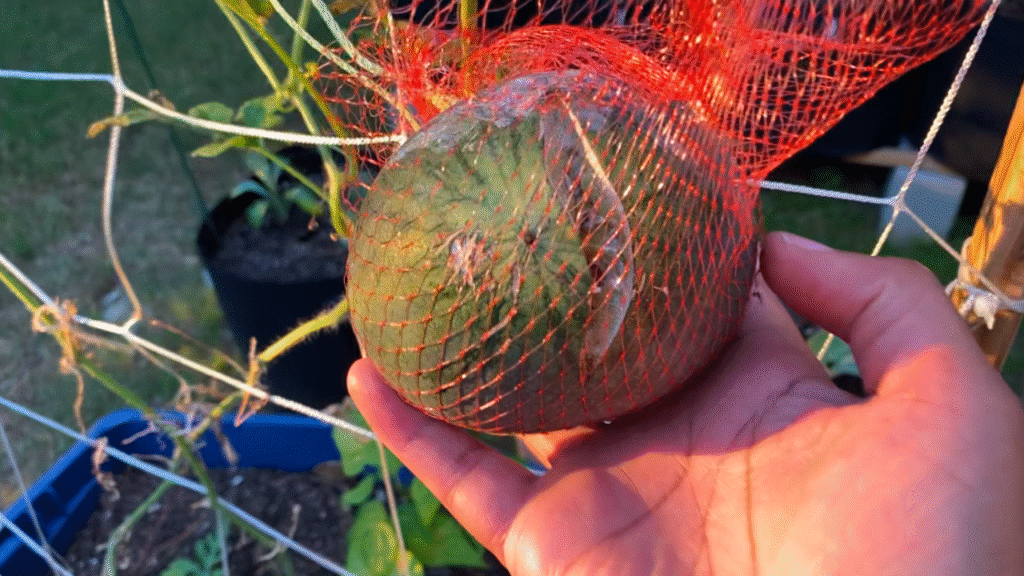
Fix: Use organic straw mulch or coconut coir mulch to hold in moisture. Pair this with a drip irrigation kit or soaker hose to deliver even watering.
3. No Fruit or Poor Pollination
Sugar baby watermelons produce separate male and female flowers. In containers, if pollinators don’t visit, fruits may not form. Hand pollination is an easy solution. I used a small paintbrush to move pollen from male to female flowers, which helped ensure fruit set.
Fix: Watch for the tiny “baby melon” at the base of the female flower. If it isn’t swelling, you may need to step in and pollinate manually.
4. Heat Stress in Containers
In hot climates like mine (Zone 8 Georgia), the soil in containers heats up much faster than garden beds. This can stress the roots, leading to smaller fruits and weaker plants. I didn’t use mulch or shade cloth my first year, and my plants suffered because of it.
Fix: Add mulch to insulate the soil and use a shade cloth during the hottest part of the day.
The truth is, when you’re figuring out how to grow watermelon from seed, especially in containers, problems are part of the journey. Don’t be discouraged if your first harvest is small or imperfect. Each mistake teaches you how to improve for the next season. With better container sizing, consistent watering, and proper mulching, your sugar baby watermelons will have a much better chance of reaching their full, sweet potential.
Final Thoughts – Lessons Learned from My First Sugar Baby Watermelon Harvest
Looking back on my first attempt at growing sugar baby watermelons, I can honestly say it was one of the most rewarding learning experiences in my garden. The results weren’t perfect—my fruits were smaller than expected, one melon cracked, and I didn’t get the four-watermelon harvest I had hoped for. But each challenge taught me something that will make me a better gardener next season.
The biggest lesson was the importance of container size. Watermelons need space, and while sugar babies are smaller, they still require at least 15–20 gallons each. I also learned that mulching isn’t optional—it helps conserve moisture and keeps roots from baking in the heat. And perhaps most importantly, I realized that consistency in watering and fertilizing can make the difference between a cracked melon and a sweet, juicy harvest.
Even with the struggles, the flavor of that ripe sugar baby reminded me why I wanted to learn how to grow watermelon from seed in the first place. Gardening isn’t about perfection; it’s about progress. Each season is an opportunity to grow, both in your garden and as a gardener. Next year, I know my harvest will be even sweeter.
Get Help Planning Your Garden
One of the biggest lessons I’ve learned from growing sugar baby watermelons is that timing matters. Planting too early, too late, or choosing the wrong crops for your zone can make the difference between a thriving harvest and a disappointing season. That’s why I created my Monthly Planting Guide—to take the guesswork out of gardening.
This guide shows you exactly what to plant each month based on your USDA zone. Whether you’re growing in containers like me or have a backyard garden, it helps you stay on track so you always know what’s in season and what will succeed in your climate. It’s especially helpful for beginners who don’t want to waste time and money planting the wrong crops at the wrong time.
I use this guide myself to plan out my small-space garden, rotate crops, and make sure I always have something growing year-round. If you’ve ever found yourself wondering, “What should I be planting right now?”—this resource is for you.
You can grab your copy of the Monthly Planting Guide directly on my website. It’s simple, beginner-friendly, and built to make gardening easier for you.
If you’re ready to try growing sugar baby watermelons in containers or even in a backyard plot, here are the products I recommend. These are the same types of tools and supplies I’ve used (or wished I had used) during my first season learning how to grow them.
| Category | Product | Why It Helps |
|---|---|---|
| Seeds | Sugar Baby Watermelon Seeds | The variety I grew—compact, sweet, and perfect for small-space gardening. |
| Containers & Soil | 20+ Gallon Fabric Grow Bags | Best for growing sugar baby watermelons in containers; one plant per bag ensures healthy growth. |
| Raised Garden Bed | Great alternative if you prefer letting vines sprawl on the ground. | |
| Organic Potting Mix with Compost | Lightweight, nutrient-rich soil base for container gardens. | |
| Perlite | Improves drainage and prevents compacted soil. | |
| Soil Amendments & Fertilizers | Bone Meal | Boosts root strength and flowering. |
| Worm Castings | Adds organic matter and beneficial microbes. | |
| Espoma Garden-Tone (3-4-4) | Balanced fertilizer for strong early vine and leaf growth. | |
| FoxFarm Tiger Bloom (2-8-4) | Supports flowering and fruiting stages for better harvests. | |
| Liquid Kelp Fertilizer | Builds plant resilience and overall health. | |
| Watering & Mulching | Soaker Hose Irrigation Kit | Provides even watering, helping prevent cracked melons. |
| Moisture Meter | Takes the guesswork out of watering. | |
| Organic Straw Mulch | Keeps soil cool and conserves moisture in hot climates. | |
| Coconut Coir Mulch | A sustainable, long-lasting mulch option. | |
| Plant Support & Protection | Garden Trellis Netting | Space-saving way to train vines vertically. |
| Soft Plant Ties | Gentle support for vines and stems. | |
| Shade Cloth with Clips | Shields plants during extreme summer heat. | |
| Neem Oil Spray | Natural pest control for cucumber beetles, aphids, and more. | |
| Garden Row Covers | Protects seedlings from early pests. | |
| Tools & Accessories | Bypass Pruners | Clean cuts when harvesting fruit or trimming vines. |
| Fine-Tip Paintbrush Pack | Handy for hand-pollination in small gardens. | |
| Seed Storage Envelopes | Keep seeds from your sweetest melon for next season. |
Conclusion: Growing Watermelons Is a Journey
Learning how to grow watermelon from seed is one of the most rewarding experiences you can have in the garden. Sugar baby watermelons, in particular, are a fantastic choice for beginners because they’re smaller, quicker to mature, and can even be grown in containers if you’re short on space.
My first attempt at growing sugar baby watermelons in containers wasn’t perfect—I dealt with tiny fruits, cracked melons, and the challenges of Georgia heat. But the moment I cut into that ripe, sweet melon, I knew it was worth it. Gardening isn’t about instant perfection; it’s about learning, adjusting, and celebrating every harvest, no matter the size.
If you’re ready to try growing sugar baby watermelon yourself, start with the right seeds, containers, and soil, and don’t skip the mulch. With consistent care, you’ll be amazed at the flavor of a homegrown melon compared to anything you can buy at the store.
And if you want help planning your entire garden season—beyond just watermelons—be sure to check out my Monthly Planting Guide. It’s designed to show you exactly what to plant each month in your zone so you can enjoy fresh harvests all year long.
*This post contains affiliate links, which means I may earn a small commission at no extra cost to you if you make a purchase through the links provided.