Skip to content
Growing food in containers is not only possible—it’s incredibly rewarding. In this post, I’ll walk you through my recent experience planting basil and marigolds, companion planting them with my tomato plants, and why these combinations are a beginner gardener’s best friend. This journey has been filled with firsts for me: my first time growing basil, my first time growing marigolds, and my first time growing tomatoes in 15-gallon grow bags. Along the way, I’ve learned a few tricks that I’m excited to share!
Why Marigolds Belong in Your Garden
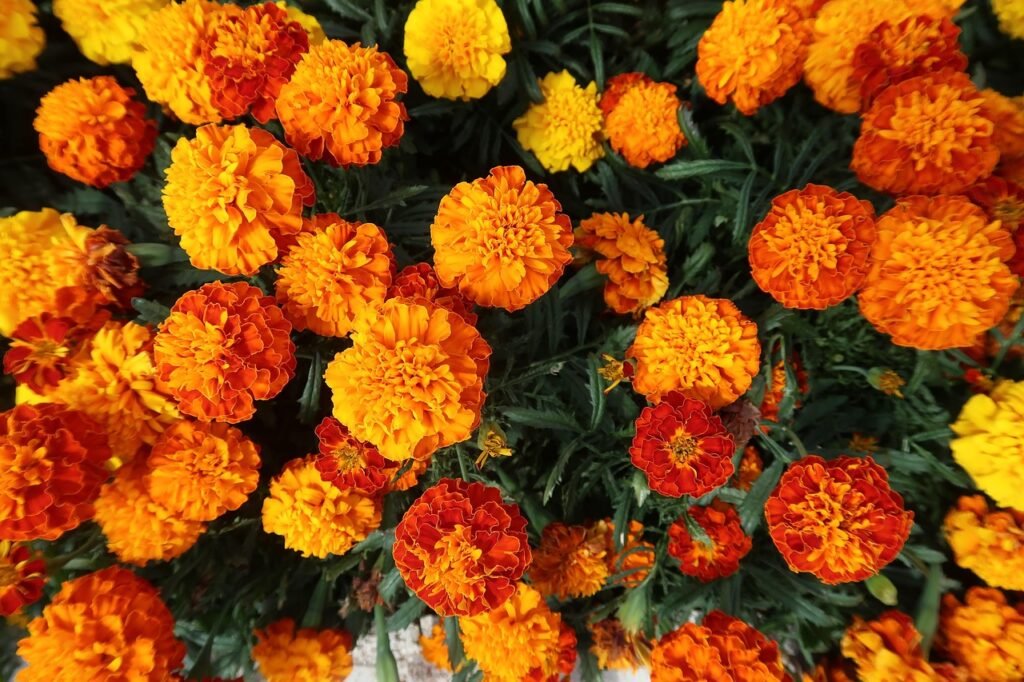
Marigolds aren’t just pretty faces in the garden. These vibrant, golden blooms are natural pest repellents. They emit a scent that deters pests like aphids and whiteflies, which often target tomatoes. That makes them perfect companions for tomato plants. But they don’t stop there—marigolds also attract beneficial insects like ladybugs and hoverflies, which help keep pest populations under control.
This was my first time growing marigolds, and I was surprised to learn they have shallow root systems, meaning they don’t compete with other plants for nutrients or water. They’re not only functional but beautiful—bringing color and life to the garden while doing the hard work of pest control.
Why Basil and Tomatoes Make a Great Team
Basil is another powerhouse when it comes to companion planting. Much like marigolds, basil helps to repel insects and pests that typically attack tomato plants. Additionally, it attracts pollinators, which helps improve overall plant health and production.
Some gardeners even believe that basil enhances the flavor of tomatoes when planted nearby. While there isn’t scientific proof to back this up, it’s a widely shared belief among home growers. With its shallow root system, basil coexists peacefully with tomatoes without competing for nutrients.
In this planting session, I moved the last of my basil plants from indoors to my container garden. The basil had clearly outgrown its small indoor pot, and it was time for it to join the others already thriving in my herb tower.
Prepping the Soil with Organic Fertilizers
Before planting, I took the time to amend the soil in my 15-gallon grow bags. Each bag already had a nutrient-rich base, but to give my plants an extra boost, I added:
- Worm castings – A gentle, natural fertilizer that improves soil structure and promotes healthy root growth.
- 4-4-4 Organic Fertilizer – A balanced fertilizer that provides essential nutrients for leafy greens and fruiting plants.
- Bone Meal – Rich in phosphorus, this helps support strong root development and flower production.
I sprinkled a bit of worm castings into each planting hole before transplanting the basil. This extra step ensures that the roots have immediate access to nutrients as they adjust to their new environment.
Planting Layout: Basil and Marigolds Together
I designed the layout of the grow bag with alternating basil and marigold placements: basil, marigold, basil, marigold. This strategy not only maximizes companion planting benefits but also creates a beautiful visual pattern. I spaced the basil plants about 6 to 8 inches apart, which gives each one enough room to breathe and expand.
As I prepared the marigold planting area, I learned that some marigold varieties can grow up to 12 feet tall! Though that may be rare, it’s always good to plan for upward growth and provide enough support or spacing if needed. I planted two seeds per hole and gave everything a gentle watering to settle the soil.
Unexpected Guests and Garden Moments
While planting, a bumblebee hovered nearby. I’ve read they’re friendly, but I decided to play it safe and put on a light jacket. Moments like these remind me that gardening isn’t just about growing food—it’s about connecting with nature and being present in the moment.
The Tomato Grow Bag Setup
In this final grow bag, I planted Roma tomato plants, which are known for their productivity and compact growth—perfect for containers. The bag already had some parsley from a previous planting, but there was plenty of room left. I added three basil plants into this grow bag and used the remaining basil plants in two other bags to ensure everything was used.
Even though some of the basil was getting oversized, I was thrilled to get them all planted. This is my first time growing basil, and it has been incredibly rewarding to watch them thrive from seed to transplant.
Final Thoughts
If you’re new to gardening or limited on space, I highly recommend trying companion planting in 15-gallon grow bags. Basil and marigolds are fantastic starter plants that support your tomatoes while creating a balanced and beautiful container garden.
With the right soil, spacing, and a little patience, even a back porch can become a thriving food garden. Don’t underestimate the power of a few containers and some well-planned plant combos—you’ll be amazed at what you can grow.
Happy growing, and if you haven’t already, grab your free Container Garden Kickstart Kit on my website to get started with your own porch-to-plate journey!
*This post contains affiliate links, which means I may earn a small commission at no extra cost to you.