Skip to content
If you’re wondering what to plant in June, the good news is that you’re not too late.
One of the biggest misconceptions I see among beginner gardeners is the belief that if they didn’t get their garden planted in Spring, they’ve missed their opportunity for the year. Fortunately, that’s simply not true. June is still an active planting month, especially if you’re growing heat-loving crops that thrive during the hottest part of the season.
In fact, some of my favorite crops are just getting started this time of year.
As I walk through my garden, I’m seeing basil take off, cucumbers producing, sweet potato slips getting established, and squash, eggplants, beans, and okra settling into their containers. While many of these plants are already growing in my garden, June is still a great time to start many of them from seed if you’re in a warm growing zone.
One thing I’ve learned over the years is that summer gardening requires a different mindset than Spring gardening.
Instead of focusing on cool-weather crops, June is all about selecting plants that can handle:
- Heat
- Humidity
- Heavy rain
- Intense sunlight
- Increased pest pressure
And trust me, summer gardening comes with its own set of challenges.
I’ve dealt with powdery mildew, pest outbreaks, nutrient loss from heavy rain, overcrowded containers, and plenty of gardening mistakes along the way. But every season teaches something new, and many of those lessons have helped me become a better gardener.
In this guide, I’ll walk you through the crops I’m growing this month, what I’ve learned from growing them, and why they’re great choices for container gardens and small spaces. Whether you’re starting your very first garden or looking for ideas to keep your summer harvest going, there’s still plenty you can plant in June.
Before You Plant Anything in June, Understand What Summer Gardening Requires
June can be one of the most productive months in the garden, but it can also be one of the most challenging.

By the time Summer arrives, gardeners are no longer dealing with the mild temperatures of Spring. Instead, plants have to contend with intense heat, humidity, heavy rain, and an increase in pest pressure. If you’re growing in containers, those challenges can become even more noticeable because containers dry out faster and nutrients can wash out more quickly after storms.
One of the biggest lessons I’ve learned is that successful Summer gardening isn’t just about choosing the right crops. It’s also about learning how to work with the season instead of fighting against it.
June Gardening Challenges
As temperatures rise, gardeners often find themselves dealing with:
- Extreme heat
- Heavy rainfall
- High humidity
- Nutrients washing out of containers
- Powdery mildew and fungal diseases
- Aphids, spider mites, squash bugs, and other pests
If you’ve ever had a plant look perfectly healthy one week and completely stressed the next, Summer weather is often the culprit.
What I’m Seeing in My Own Garden
This year, we’ve already experienced periods of heavy rain followed by intense heat. Some plants are thriving, while others are showing signs of stress. I’ve noticed that crops like basil, sweet potatoes, okra, and eggplants seem to enjoy the warmer temperatures, while other plants require a little more attention to keep them healthy.
I’ve also learned that Summer gardening requires flexibility.
Sometimes that means:
- Adding shade cloth
- Increasing airflow around plants
- Trellising more aggressively
- Watering more consistently
- Adjusting fertilizer schedules after heavy rain
The Goal Isn’t Perfection
One thing I want beginner gardeners to understand is that every gardener deals with challenges during the Summer.
You will encounter:
- Weather issues
- Pest problems
- Plants that struggle
- Crops that surprise you
That’s normal.
The goal isn’t to create a perfect garden. The goal is to learn how to adapt as conditions change. Once you understand that, Summer gardening becomes a lot less stressful and a lot more enjoyable.
Basil: One of the Easiest Herbs to Plant in June
If I could recommend just one herb for beginner gardeners to grow in June, it would be basil.
Not only is basil incredibly easy to grow from seed, but it absolutely loves the heat. While some plants struggle once temperatures start climbing, basil seems to thrive during the hottest part of the growing season. That’s one of the reasons I make room for it every year.
In fact, if you walked through my garden right now, you’d find basil tucked into containers all over the place.
Why Basil Is Perfect for Beginners
Basil is one of those crops that gives you a lot in return for very little effort.
Some of the reasons I love growing it include:
- Fast growth
- Easy to start from seed
- Thrives in Summer heat
- Works well in containers
- Produces continuously throughout the season
For gardeners with limited space, basil is also incredibly versatile. You can grow it in dedicated containers, tuck it between vegetables, or even plant it alongside tomatoes and peppers.

The Two Varieties I’m Growing
This season, I’m growing both sweet basil and holy basil.
Sweet basil is the variety most gardeners are familiar with. It’s great for cooking, produces heavily, and grows quickly once temperatures warm up.
Holy basil, on the other hand, is a new addition to my garden. I originally became interested in it after learning about some of its traditional uses and benefits. Since planting it, I’ve been impressed by how well it’s growing and how productive it has been.
A Great Crop for June Planting
One of the reasons basil deserves a place on this list is because June is actually an ideal time to start it.
Unlike many Spring crops that struggle once the heat arrives, basil welcomes warm temperatures. If you’re looking for an easy win in the garden, basil is one of the simplest crops you can grow from seed this month.
And the best part?
Once it gets going, you’ll likely have more basil than you know what to do with.
Squash: A Productive Summer Crop for Containers
If you’re looking for a vegetable that grows quickly and produces heavily, squash deserves a spot in your June garden.
This is actually my second time growing squash, and I’m hoping this season goes much better than the first. Like many beginner gardeners, I learned very quickly that squash can be both rewarding and frustrating at the same time.
The good news is that June is a great time to plant squash, especially if you’re growing in a warm climate.
Why Squash Is Worth Growing
Squash plants grow fast, produce a lot of food, and love warm weather.
Some of the reasons gardeners enjoy growing squash include:
- Fast-growing plants
- Large harvests from a single plant
- Easy to grow from seed
- Thrives in Summer heat
- Suitable for containers when given enough space
If you’re gardening in a small space, squash can still be a great option. You just need to be mindful of container size and plant spacing.
Give Squash More Space Than You Think It Needs
One mistake I see many gardeners make is underestimating how large squash plants become.
This year, I planted two squash seeds in one container. Both germinated successfully, but instead of keeping them together, I moved one into its own grow bag. Why?
Because squash plants get big.
If you’re growing squash in containers, I recommend using at least a 10-gallon container per plant. Giving the roots enough room can make a huge difference in the plant’s overall health and productivity.
Learn From My First Season
My first experience growing squash wasn’t exactly a success story.
One of the biggest challenges was disease pressure, particularly powdery mildew. Squash plants are notorious for developing fungal issues, especially when airflow is poor and humidity levels are high.
That’s one reason I’m trying a disease-resistant variety this season.
To help reduce problems:
- Avoid overcrowding plants
- Improve airflow
- Water the soil instead of the leaves when possible
- Remove severely damaged foliage
- Monitor plants regularly
Don’t Let Previous Failures Stop You
One thing gardening has taught me is that a disappointing season doesn’t mean a crop isn’t worth growing.
Sometimes it simply means you learned what not to do.
That’s exactly how I view squash.
This season, I’m taking the lessons from last year, making a few adjustments, and giving it another shot. And honestly, that’s what gardening is all about (learning, adapting, and trying again).

Eggplants Love Summer Heat
If there’s one crop that has completely surprised me this year, it’s eggplant.
Last season, my eggplants were a total disappointment. I started them from seed, had high hopes, and honestly, they never really took off. The plants struggled, growth was slow, and I never got the results I was hoping for. This year, however, has been a completely different experience.
That’s one of the reasons I wanted to include eggplant on this list of crops to plant in June.
Why Eggplants Thrive in Summer
Unlike cool-season vegetables that struggle once temperatures rise, eggplants love heat.
In fact, they often perform their best during the hottest months of the growing season.
Once temperatures consistently warm up, eggplants tend to:
- Grow more vigorously
- Produce flowers more readily
- Set fruit more consistently
- Thrive in full sun
If you’re gardening in a warm climate, June is an excellent time to get eggplants established.
What I’m Doing Differently This Year
One thing I’m paying much closer attention to this season is fertilizing.
As my eggplants began forming flower buds, I switched to a fertilizer that was higher in phosphorus and potassium. The goal is to encourage the plant to focus less on leafy growth and more on flowering and fruit production.
Many beginner gardeners assume that more nitrogen automatically means bigger harvests.
Sometimes the opposite happens.
Too much nitrogen can result in:
- Lots of leaves
- Lots of stems
- Very little fruit
Once flowering begins, it’s often beneficial to support the plant with nutrients that encourage blooming and fruit development.
Eggplant Growing Tips for Beginners
If you’re growing eggplants for the first time, focus on the basics:
- Give them full sun
- Keep the soil consistently moist
- Use a container that’s large enough for root growth
- Feed them appropriately once flowering begins
- Be patient
Eggplants are not always the fastest crop to get going, but once they settle in and the heat arrives, they can really take off.
And if you’re anything like me, seeing that first purple flower appear is incredibly exciting.
After a disappointing first season, watching my eggplants thrive this year feels like proof that sometimes success in gardening is simply a matter of learning, adjusting, and trying again.
Cucumbers: Learn From My Biggest Gardening Mistake
If you’re looking for a vegetable that produces quickly and keeps producing throughout the Summer, cucumbers are hard to beat.
This is my second year growing cucumbers, and while I’m still learning, I can already tell you one thing: I made a huge mistake during my first season. Looking back, it’s probably one of the biggest lessons I’ve learned as a gardener.

Why Cucumbers Are Great for June Planting
Cucumbers love warm weather and grow quickly once temperatures rise.
They’re also a great choice for:
- Container gardens
- Raised beds
- Small-space gardens
- Vertical gardening
One thing I love about cucumbers is how productive they can be. Before you know it, you’ll go from seeing a few flowers to harvesting cucumbers every few days.
The Mistake That Stressed My Plants
During my first season growing cucumbers, I became obsessed with pruning.
Every time I watched a gardening video or read an article, it seemed like someone was saying:
- Remove this leaf.
- Cut off that shoot.
- Prune this branch.
- Improve airflow.
And while some pruning is beneficial, I took it way too far.
I pruned my cucumber plants so heavily that they practically looked like skeletons. What I didn’t realize at the time was that the leaves were doing an important job.
The plant needs those leaves to:
- Produce energy
- Support fruit production
- Protect the stems
- Maintain healthy growth
Eventually, I started noticing yellow leaves and weak stems. Instead of realizing the plant was stressed from over-pruning, I assumed I needed to prune even more.
That only made things worse.
What I Do Differently Now
This season, my approach is much simpler.
Instead of pruning everything in sight, I focus on removing only what actually needs to go.
For example:
- Dead leaves
- Diseased leaves
- Severely damaged leaves
- Growth that’s creating serious airflow issues
If a leaf is healthy and helping the plant grow, I leave it alone.
Give Cucumbers Room to Grow
Another lesson I’ve learned is that cucumbers need space.
Whether you’re growing them in containers or raised beds, it’s important to:
- Trellis them vertically
- Avoid overcrowding
- Improve airflow around the leaves
- Support side shoots when necessary
Healthy airflow can help reduce disease pressure while still allowing the plant to keep enough foliage to support production.
Sometimes Less Is More
One of the biggest lessons gardening has taught me is that not every problem requires action.
Sometimes the best thing you can do is step back and let the plant do its job.
That’s the approach I’m taking with my cucumbers this year.
A little pruning? Absolutely.
Turning the plant into a skeleton? Never again.
Okra: One of the Best Vegetables for Hot Weather
When Summer temperatures start climbing and other crops begin to struggle, okra is just getting started.
In fact, if you’re gardening in a hot climate, okra may be one of the easiest vegetables you can grow during the hottest part of the season. While many plants slow down in extreme heat, okra seems to thrive in it.
That’s one of the reasons it deserves a place in your June garden.
Why Okra Loves Summer
Okra is a true heat-loving crop.
Once temperatures start rising, you’ll often see it grow quickly and vigorously. Unlike some vegetables that require cooler conditions, okra doesn’t seem bothered by hot afternoons, warm nights, or long stretches of sunshine.
Some of the benefits of growing okra include:
- Thrives in hot weather
- Easy to grow from seed
- Produces over a long period
- Great for container gardens
- Low-maintenance once established
If you’re looking for a crop that can handle Summer conditions, okra is hard to beat.
My Experience Growing Okra
Last year, I didn’t have much success with okra.
Like many crops, I learned that simply planting it isn’t enough. Container size, watering, weather, and overall plant health all play a role in how productive a crop becomes. This year, I’m giving okra another shot and growing several plants in different containers to see what performs best.
One thing I’ve learned is that okra needs more root space than many beginners realize.
Give Okra Plenty of Room
If you’re growing okra in containers, don’t underestimate how large the root system can become.
I recommend:
- Minimum 10-gallon container
- 15 to 20 gallons if possible
- One plant per container
When seedlings first emerge, it’s tempting to keep multiple plants together. But overcrowding often leads to competition for water, nutrients, and root space.
Giving each plant room to grow can make a big difference in the size and productivity of your harvest.
A Crop Worth Trying
If you’ve never grown okra before, June is an excellent time to start.
It’s productive, heat tolerant, and well suited for container gardening. And if you’re gardening in a Southern climate, there’s a good chance your okra will be one of the happiest plants in your entire garden.

Beans: A Great Crop for Continuous Summer Harvests
If you’re looking for a crop that grows quickly and keeps producing throughout the Summer, beans are one of the best vegetables you can plant in June.
Whether you’re growing bush beans, pole beans, or yard-long beans, June is still a great time to sow seeds and keep the harvests coming. In fact, beans are one of the easiest crops to succession plant, which means you can sow new seeds every few weeks for a longer harvest season.
The Types of Beans I’m Growing
I’m growing several types of beans, including:
- Yard-long beans
- Pole beans
- Bush beans
One thing I enjoy about growing different varieties is seeing how each one responds to the same growing conditions. Sometimes two plants can be growing just a few feet apart and perform completely differently.
And that’s exactly what I’m seeing in my garden right now.
Gardening Doesn’t Always Give You Answers
One thing I’ve learned is that gardening can be humbling.
Some of my bean plants look fantastic. Others look stressed, even though they’re receiving similar care.
The reality is that weather, temperature fluctuations, rainfall, pests, and soil conditions can all affect how a plant performs.
Sometimes you know exactly what’s causing a problem.
Sometimes you don’t.
And that’s okay.
One of the biggest lessons gardening has taught me is that not every issue has an immediate answer. Sometimes the best thing you can do is observe, make adjustments, and continue learning.
Why Beans Are Great for Beginners
Beans are one of the most beginner-friendly crops you can grow because they:
- Germinate quickly
- Grow fast
- Produce heavily
- Require minimal maintenance
- Work well in containers and raised beds
For small-space gardeners, pole beans and yard-long beans are especially useful because they grow vertically, allowing you to maximize your growing space.
Don’t Forget About Succession Planting
One mistake many gardeners make is planting beans once and calling it done.
Instead, consider planting a new round of seeds every few weeks.
This simple strategy can:
- Extend your harvest season
- Replace older plants as they decline
- Provide a more consistent supply of beans throughout Summer
If you’re wondering what to plant in June, beans should definitely be near the top of your list. They’re productive, beginner-friendly, and one of the easiest ways to keep fresh vegetables coming out of the garden all season long.
Swiss Chard: A Summer Green Worth Trying
When most gardeners think about leafy greens, they think about Spring and Fall.
That’s understandable because many greens struggle once the Summer heat arrives. Lettuce bolts, spinach gives up, and before you know it, you’re left wondering if fresh greens are even possible during the hottest months of the year.
That’s exactly why Swiss chard surprised me.
Why I Decided to Grow Swiss Chard
I’ll be honest, I was hesitant about growing Swiss chard this season.
Like many gardeners, I tend to associate leafy greens with cooler weather. But after doing some research, I learned that Swiss chard handles heat much better than many other greens.
That made me curious.
Could I actually harvest fresh greens throughout the Summer?
So far, the answer appears to be yes.
What Makes Swiss Chard Different?
One of the biggest advantages of Swiss chard is its heat tolerance.
While other greens may struggle in June, Swiss chard often continues growing through Summer with the right care.
Some reasons to consider growing it include:
- More heat tolerant than many leafy greens
- Easy to grow from seed
- Continuous harvests
- Beautiful foliage
- Suitable for containers and raised beds
For gardeners who want fresh greens without constantly replanting, Swiss chard can be a great option.
Growing Swiss Chard in Summer
Just because Swiss chard tolerates heat doesn’t mean it enjoys being stressed.

During hot weather, you’ll still want to:
- Water consistently
- Mulch around plants
- Monitor for heat stress
- Use shade cloth during extreme heat if necessary
One thing I’m learning about Summer gardening is that having shade cloth available can make a huge difference. Even crops that enjoy the sun can benefit from a little protection during intense heat waves.
Don’t Give Up on Greens in Summer
If you’ve assumed that fresh greens are only for Spring and Fall, Swiss chard might change your mind.
It’s productive, attractive, and surprisingly resilient.
And if you’re gardening in containers or a small space, it can be an excellent way to keep harvesting leafy greens long after other crops have called it quits for the season.
Melons and Watermelons Can Still Be Started in June
If you’ve been thinking about growing melons but haven’t gotten around to planting them yet, don’t panic.
June is still a great time to start many melon varieties, especially in warm growing zones where Summer temperatures stick around for months. In fact, melons thrive in the exact conditions that many other crops struggle with—heat, sunshine, and warm soil.
Melons Love Summer
Melons are true warm-season crops.
They prefer:
- Warm soil
- Long sunny days
- Consistent moisture
- Plenty of growing space
That’s why June is often an ideal planting month. Once the weather heats up, melon plants can grow surprisingly fast.
My Experience Growing Watermelons
This year, I’m growing Sugar Baby watermelons.
Originally, I started a watermelon plant indoors, hoping to get a head start on the season. Unfortunately, it never really took off the way I wanted. Rather than giving up on the crop entirely, I decided to direct sow another seed outdoors.
That’s one thing gardening has taught me:
Always have a backup plan.
Sometimes seeds outperform transplants. Sometimes transplants outperform seeds. The important thing is being willing to adapt when something isn’t working.
Planning Ahead for the Vines
One thing beginners often underestimate is how much space melon plants need.
These aren’t small plants.
Before planting melons, think about:
- Where the vines will grow
- Whether you’ll use a trellis
- How much sunlight the area receives
- How you’ll access nearby containers
In small-space gardens, every square foot matters. That’s why I try to plan ahead before those vines start taking over everything.
Don’t Be Afraid to Experiment
If you’re new to growing melons, don’t be intimidated.
Start with one plant.
Give it plenty of sun, consistent water, and a little patience.
Because if there’s one thing I’ve learned from gardening, it’s that sometimes the crops that struggle at first end up teaching you the most. And sometimes all it takes is one healthy plant to completely change your confidence as a gardener.
June Is Prime Time for Sweet Potato Slips
If there’s one crop that gets me excited this time of year, it’s sweet potatoes.
While many vegetables are already well established by June, sweet potatoes are just getting started. In fact, if you’re in a warm growing zone, June is one of the best times to plant sweet potato slips because they absolutely love heat.
Unlike many crops that struggle during the hottest months of the year, sweet potatoes seem to thrive in those conditions.
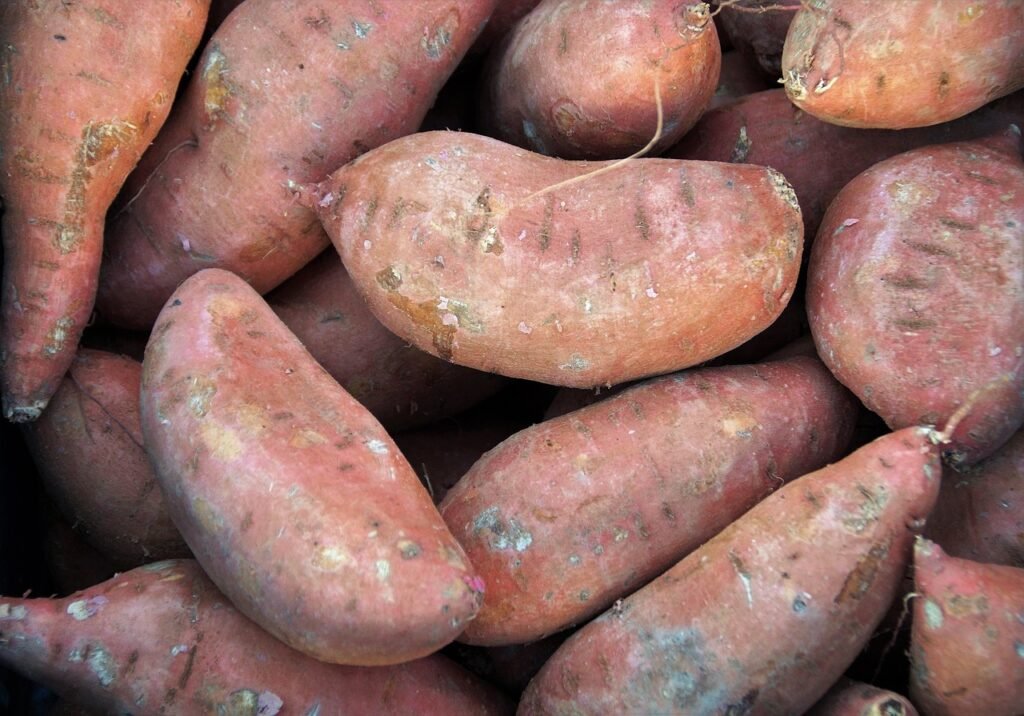
What Are Sweet Potato Slips?
If you’re new to growing sweet potatoes, you may be wondering what a slip actually is.
A sweet potato slip is simply a rooted shoot that grows from a sweet potato.
You can:
- Grow your own slips at home
- Purchase slips online
- Buy slips from local garden centers
This year, I did both.
I grew some slips from sweet potatoes at home, but I also purchased slips as a backup. I wasn’t sure how my homegrown slips were going to perform, and I didn’t want to miss my planting window. Looking back, I’m glad I had a backup plan.
Why Sweet Potatoes Are Great for Small Spaces
One of the biggest misconceptions about sweet potatoes is that they require a huge garden.
They don’t.
I’ve grown sweet potatoes successfully in:
- Large containers
- Grow bags
- Small-space gardens
As long as you provide enough soil volume and allow the vines room to grow, sweet potatoes can be incredibly productive in container gardens.
What Sweet Potatoes Need Most
One thing I’ve learned from growing sweet potatoes is that gardeners often overcomplicate them.
Early in the season, your main focus should be:
- Consistent watering
- Warm soil
- Adequate space
- Healthy slips
That’s it.
Many beginners worry about fertilizing schedules, special amendments, and complicated growing techniques. While nutrition matters, establishing healthy slips is the priority during those first few weeks after planting.
Be Patient
Sweet potatoes are not a quick crop.
You’re not going to plant slips today and harvest next month.
In most cases, you’ll be waiting several months before harvest time.
But that’s part of what makes them so rewarding.
You plant a few slips in June, nurture them throughout the Summer, watch the vines spread across your garden, and eventually dig up a harvest that feels like opening a treasure chest.
And for me, that’s one of the most exciting parts of growing sweet potatoes.
The Biggest Challenges You’ll Face in a June Garden (And How to Adapt)
If there’s one thing I’ve learned about Summer gardening, it’s that growing the crops is often the easy part.
Managing everything else is where the real challenge begins.
By June, many of your warm-season crops are actively growing, flowering, and producing. But they’re also entering one of the most stressful periods of the year. Heat, humidity, heavy rain, pests, and disease all start showing up at the same time.
And unfortunately, they don’t usually take turns.
Summer Gardening Can Be Brutal
When I first started gardening, I thought Summer would be the easiest season.
After all, plants love sunshine, right?
Well, yes and no.
While crops like sweet potatoes, basil, okra, and eggplants enjoy the heat, extreme weather can create an entirely different set of problems.
Some of the most common Summer gardening challenges include:
- Extreme heat
- Heavy rainfall
- High humidity
- Nutrients washing out of containers
- Powdery mildew and fungal diseases
- Aphids, spider mites, squash bugs, and other pests
The tricky part is that many of these problems happen at the same time. One week your plants look amazing, and the next week you’re wondering what happened.
Container Gardeners Face Additional Challenges
If you’re growing in containers like I am, Summer weather can be even more challenging.
Heavy rain can:
- Saturate the soil
- Wash nutrients out of containers
- Increase disease pressure
Then, a few days later, intense heat arrives and suddenly the containers are drying out much faster than expected.
It’s a constant balancing act.
That’s one reason I pay close attention to things like mulch, airflow, watering, and plant spacing throughout the Summer.
The Solution Isn’t Perfection – It’s Adaptation
One of the biggest mindset shifts I’ve had as a gardener is realizing that every season comes with challenges.
No matter how experienced you become, you’ll still encounter:
- Pest outbreaks
- Weather damage
- Diseases
- Crop failures
- Unexpected setbacks
The goal isn’t to prevent every problem.
The goal is to learn how to respond when problems appear.
For example:
- If temperatures become extreme, use shade cloth.
- If plants become overcrowded, improve airflow.
- If heavy rain washes nutrients away, adjust your fertilizing schedule.
- If pests arrive, focus on managing them before they become a major infestation.
Gardening is often less about controlling nature and more about learning how to work alongside it.
You’re Not Doing It Wrong
This is something I wish more beginner gardeners understood.
If your plants are struggling during Summer, it doesn’t automatically mean you’re doing something wrong.
Sometimes the weather is simply challenging.
Sometimes pests show up.
Sometimes a crop that did well last year struggles this year.
That’s gardening.
Every season teaches new lessons, and every challenge helps you become a better gardener.
The gardeners who succeed aren’t the ones who avoid problems altogether.
They’re the ones who keep learning, adapting, and growing right alongside their plants.
A Simple Way to Know What to Plant Every Month
One of the biggest mistakes I made when I first started gardening had nothing to do with watering, fertilizing, or pests.
It was timing.
I would start crops too early, start crops too late, or completely miss the ideal planting window. And when you’re growing food, timing can make a huge difference in how successful your garden is.
That’s one of the reasons I created my Monthly Planting Guide.
Instead of trying to remember what to plant and when, the guide helps simplify the process by breaking everything down month by month and by growing zone.
Inside the guide, you’ll find:
- What to start indoors
- What to direct sow outdoors
- Zone-specific planting recommendations
- Monthly planting schedules
- Succession planting guidance
Whether you’re growing in containers, raised beds, or a traditional garden, the goal is to remove as much guesswork as possible.
Because honestly, gardening is challenging enough.
You shouldn’t have to spend hours searching the internet every month trying to figure out what crop should be planted next.
If you’re looking for a simple way to stay organized and keep your garden productive throughout the year, my Monthly Planting Guide can help you plant with more confidence and less confusion.
Conclusion
If there’s one thing I hope you take away from this article, it’s that June is far from the end of the planting season.
In fact, many heat-loving crops are just getting started.
Whether you’re growing basil, cucumbers, beans, okra, squash, eggplants, melons, or sweet potatoes, there are still plenty of opportunities to fill your garden with food this month.
As you’ve seen throughout this article, gardening isn’t about getting everything perfect. Every season brings new lessons, unexpected challenges, and opportunities to improve. Some crops will thrive, some may struggle, and that’s all part of the process.
My advice?
Start with what you have.
Start with the space you have.
And most importantly, don’t let the fear of making mistakes stop you from planting something.
Because every successful gardener started exactly where you are now, learning as they go.
June is still a great month to grow food. So grab some seeds, get them in the soil, and see what happens. You might be surprised by just how much you can grow, even in a small space.
Frequently Asked Questions About What to Plant in June
Is June too late to start a vegetable garden?
No. June is actually a great time to start many warm-season crops. While some Spring vegetables may be finishing up, heat-loving plants like basil, beans, cucumbers, okra, squash, sweet potatoes, and melons can still be planted in many growing zones.
What vegetables grow best in June?
Some of the best vegetables to plant in June include:
- Cucumbers
- Squash
- Beans
- Okra
- Eggplant
- Sweet potatoes
- Melons
These crops thrive in warm soil and benefit from the longer days and higher temperatures of Summer.
Can you still grow food in containers during Summer?
Absolutely.
In fact, most of the crops discussed in this article can be grown successfully in containers. The key is choosing the right container size, watering consistently, and monitoring plants closely during periods of extreme heat.
How often should container gardens be watered in June?
There isn’t a one-size-fits-all answer.
The best approach is to check the soil regularly. During hot weather, some containers may need water daily, while others may hold moisture longer. Always check the soil before watering rather than watering on a strict schedule.
What crops tolerate Summer heat best?
Some of the most heat-tolerant crops include:
- Basil
- Okra
- Sweet potatoes
- Eggplant
- Yard-long beans
These plants generally perform well during the hottest months of the growing season.
Should you use shade cloth in Summer?
Shade cloth can be extremely helpful during periods of intense heat.
Even sun-loving crops can experience stress when temperatures become excessive. Providing temporary shade during heat waves can help reduce plant stress and prevent leaf scorch.
Can you succession plant in June?
Yes.
June is an excellent time to succession plant crops like:
- Bush beans
- Pole beans
- Cucumbers
Planting a new round every few weeks can help extend your harvest season and keep fresh vegetables coming from the garden.
What is the easiest crop to grow in June?
For most beginner gardeners, basil is one of the easiest crops to grow in June.
It germinates quickly, loves heat, grows well in containers, and produces continuously throughout the season, making it a great choice for gardeners of all experience levels.